
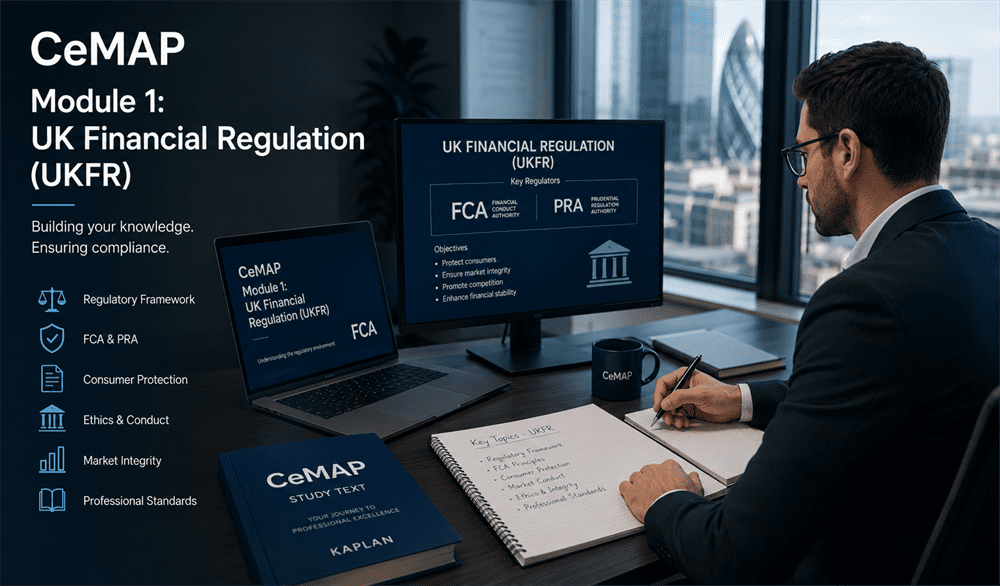
The Certificate in Mortgage Advice and Practice (CeMAP) is the benchmark standard for mortgage advisors in the United Kingdom. Regulated by the Financial Conduct Authority (FCA) and awarded by The London Institute of Banking & Finance (LIBF), passing CeMAP 1 is your vital first step toward a highly lucrative career in financial services.
1. Market Demand & Industry Growth
The UK mortgage and housing market remains one of the largest pillars of the national economy. With millions of homeowners looking to remortgage annually and a steady influx of first-time buyers navigating fluctuating interest rates, the demand for qualified, regulated mortgage advice has never been higher.
The FCA strictly mandates that anyone giving mortgage advice must hold an approved qualification. This statutory requirement creates an absolute barrier to entry, insulating the profession and ensuring a perpetual pipeline of high-demand positions across high street banks, independent brokerages, and boutique financial consultancies.
2. Salary, Commission & Earning Opportunities
A primary catalyst for pursuing the CeMAP qualification is its exponential earning trajectory. Financial rewards in this sector scale dynamically based on your employment structure, geographical region, and expertise:
- Employed Mortgage Advisors: Typically start with a secure base salary ranging from £22,000 to £30,000. When structured with modest corporate performance bonuses, realistic On-Target Earnings (OTE) frequently sit between £35,000 and £45,000 in the first 12–18 months.
- Senior or Specialized Advisors: Working within major wealth management firms or established property networks, senior personnel regularly command base packages exceeding £50,000, pulling in total compensation packages of £70,000 to £90,000+ via complex volume commissions.
- Self-Employed / Independent Brokers: This avenue offers uncapped financial horizons. Independent brokers retain up to 100% of broker fees (ranging from £300 to £1,000+ per client) along with backend proc fees paid directly by lenders. Successful self-employed advisors routinely generate revenues clearing £100,000+ per annum.
3. Career Boost & Professional Benefits
Completing CeMAP does not simply teach you about mortgages; it grants you a licensed professional status that carries distinct long-term career advantages:
| Benefit Pathway | Long-Term Value Realization |
|---|---|
| Uncapped Career Mobility | Transition smoothly between commercial banking, specialized bridging finance, protection advising, or private wealth management. |
| Entrepreneurial Freedom | Gain the regulatory clearance required to establish your own mortgage brokerage, set your hours, and build direct business equity. |
| Professional Credibility | Earn the right to utilize specialized designatory letters behind your name, demonstrating rigorous regulatory adherence to consumers. |
4. Core Syllabus Breakdowns: What is UKFR?
CeMAP 1 consists of two distinct modules. Module 1: UK Financial Regulation (UKFR) builds the mandatory foundation. It sets the ground rules for the entire financial sector, ensuring you understand consumer protection, legal frameworks, and regulatory oversight before moving into product specific details.
The UKFR syllabus is rigorously structured across several critical sub-units:
Unit 1: Government Policy & the UK Financial Services Framework
This section explores the macro-economic environment, detailing how government fiscal policies affect consumer disposable income and borrowing patterns. Candidates will learn about the roles of the Bank of England, the Monetary Policy Committee (MPC), and how changing interest rates drive the broader mortgage market.
Unit 2: FCA Regulation, Principles & Conduct of Business
This forms the core regulatory chunk of the module. You will be tested heavily on the FCA's operational objectives: securing an appropriate degree of protection for consumers, protecting and enhancing the integrity of the UK financial system, and promoting effective competition. Key areas include the 11 Principles for Businesses (PRIN) and the Senior Managers and Certification Regime (SM&CR).
Critical Exam Insight: Treating Customers Fairly (TCF)
The FCA's TCF initiative is heavily featured in Module 1. Focus intensely on the six core consumer outcomes. Questions will often place you in scenario-based dilemmas where you must identify which outcome has been breached by an advisor.
Unit 3: Consumer Anti-Money Laundering, Data Protection & Financial Crime
Advisors act as frontline defense against illicit funds. This unit covers the Proceeds of Crime Act (POCA), Money Laundering Regulations, and the Joint Money Laundering Steering Group (JMLSG) guidance. Expect explicit questions regarding tipping-off offenses, Suspicious Activity Reports (SARs), and strict compliance with the UK GDPR and Data Protection Act 2018.
5. Exam Mechanics & High-Yield Study Strategies
The CeMAP 1 Module 1 assessment is structured as a computer-based, 2-hour exam containing 50 multiple-choice questions. The passing score threshold is 70% (meaning you must score at least 35 out of 50 correct answers).
To clear this hurdle seamlessly on your first attempt, implement these proven preparation strategies:
- Isolate Regulatory Terminology: The exam relies heavily on precise legal definitions. Create comprehensive flashcards distinguishing between rules (binding mandates) and guidance (explanatory context) within the FCA handbook.
- Deconstruct Scenario-Based Triggers: LIBF exam writers use long paragraphs describing a fictional client. Train yourself to strip out irrelevant filler data and identify the core legal or regulatory issue being tested.
- Exhaust Past Papers & Mock Exams: Do not just read the text. Practice under strict exam-timed conditions to calibrate your pacing. Analyze every incorrect mock answer deeply to understand the specific regulatory logic applied by the examiners.