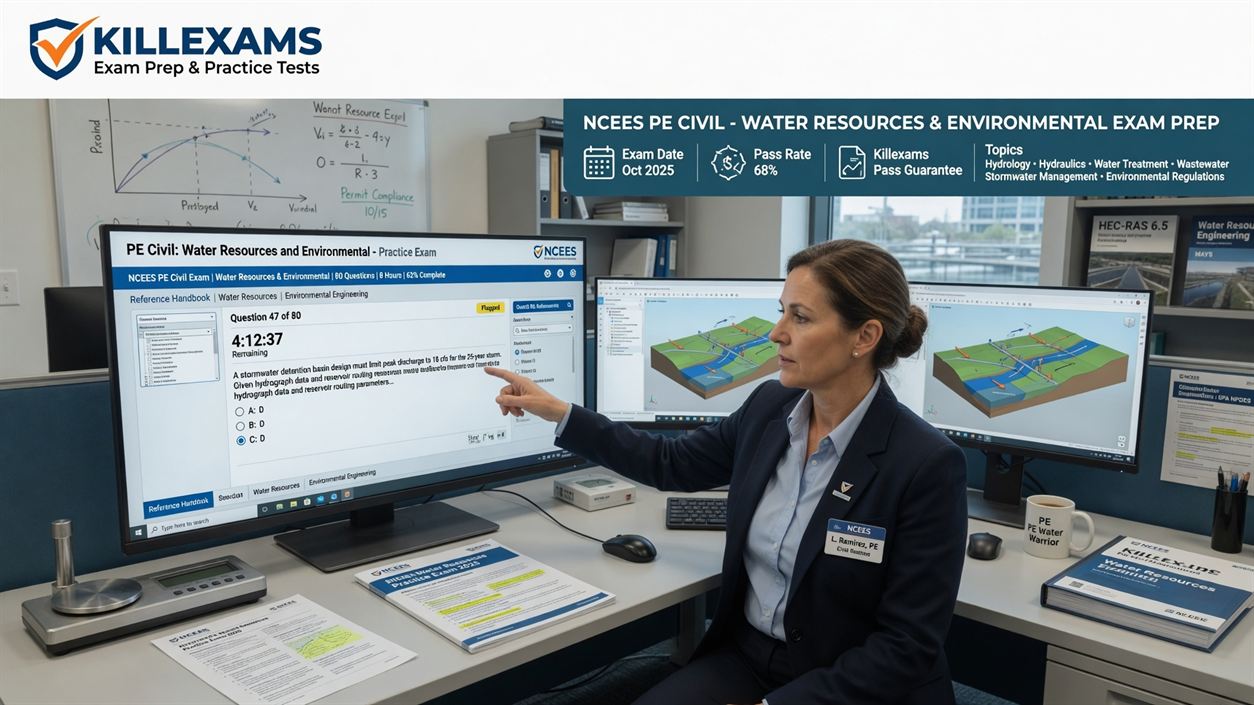
NCEES PE Civil Engineering: Water Resources and Environmental Exam Preparation Guide
The NCEES PE Civil Engineering: Water Resources and Environmental (NCEES PE Civil-WRE) examination is one of the most respected professional engineering licensing exams in the United States. Passing this examination is a significant milestone toward becoming a licensed Professional Engineer (PE), demonstrating advanced competency in civil engineering design, water resources, environmental engineering, public health protection, and infrastructure development.
The PE license is recognized by employers, government agencies, consulting firms, and engineering organizations as evidence of professional competence, ethical responsibility, and technical expertise. Licensed Professional Engineers often qualify for leadership positions, greater project responsibility, consulting opportunities, and higher earning potential throughout their careers.
Download NCEES PE Civil-WRE Preparation Resources
Exam Information
https://killexams.com/pass4sure/exam-detail/NCEES-PE-Civil-WRE
Free Sample Questions PDF
https://killexams.com/sample-pdf/NCEES-PE-Civil-WRE.pdf
Complete Practice Test & Test Engine
https://killexams.com/exam-price-comparison/NCEES-PE-Civil-WRE
Why Earn the PE Civil Engineering License?
Professional Engineer (PE) licensure represents one of the highest professional achievements in civil engineering. Unlike many technical certifications, a PE license grants engineers the legal authority to approve engineering designs, sign and seal engineering drawings, supervise engineering projects, and accept professional responsibility for public infrastructure.
Many public-sector positions, consulting firms, engineering contractors, and utility companies require engineers to obtain PE licensure before advancing into senior technical or management roles. The credential also enhances professional credibility when working with regulatory agencies, clients, municipalities, and multidisciplinary engineering teams.
What Does the NCEES PE Civil-WRE Exam Measure?
The Water Resources and Environmental discipline focuses on the planning, design, operation, and maintenance of systems that protect public health and manage water resources responsibly. Candidates are expected to demonstrate practical engineering judgment while solving complex real-world problems involving hydraulics, hydrology, stormwater systems, drinking water treatment, wastewater collection and treatment, groundwater, environmental regulations, sustainability, and infrastructure resilience.
The computer-based examination emphasizes engineering analysis, application of engineering principles, interpretation of standards, and the ability to select appropriate design methodologies rather than simple memorization of formulas. Success requires a strong understanding of engineering fundamentals together with practical project experience.
Why This Examination Matters
Rapid urban development, aging infrastructure, climate resilience initiatives, water conservation programs, environmental protection regulations, and increasing demand for sustainable infrastructure continue to expand the need for licensed civil engineers specializing in water resources and environmental engineering. Governments and private organizations rely on qualified Professional Engineers to design safe drinking water systems, wastewater treatment facilities, flood control projects, stormwater management systems, dams, canals, pumping stations, and environmental remediation projects.
Passing the NCEES PE Civil-WRE examination demonstrates that you possess the technical knowledge and professional judgment required to protect public safety while delivering reliable engineering solutions for complex infrastructure challenges.
Knowledge Areas Covered by the NCEES PE Civil-WRE Exam
The NCEES PE Civil Engineering: Water Resources and Environmental examination evaluates a candidate's ability to apply engineering principles to practical design, analysis, and decision-making problems encountered in professional engineering practice. Successful candidates demonstrate technical competence, sound engineering judgment, and familiarity with industry standards used throughout the water resources and environmental engineering profession.
- Project planning and engineering economics
- Hydraulics and pipe flow analysis
- Hydrology and watershed management
- Open channel flow and hydraulic structures
- Stormwater collection and drainage systems
- Floodplain management and flood control
- Groundwater engineering
- Water supply systems
- Water treatment processes
- Wastewater collection systems
- Wastewater treatment and disposal
- Solid and hazardous waste management
- Environmental regulations and permitting
- Surface water quality management
- Air pollution fundamentals
- Engineering sustainability and resilience
- Construction administration and engineering ethics
- Professional engineering standards and codes
Who Should Take the NCEES PE Civil-WRE Exam?
This examination is intended for engineers who have completed the educational and experience requirements established by their state engineering licensing board and are pursuing Professional Engineer (PE) licensure with a specialization in Water Resources and Environmental Engineering. Although licensing requirements vary by jurisdiction, candidates typically possess several years of progressive engineering experience under the supervision of licensed Professional Engineers.
- Civil Engineers
- Water Resources Engineers
- Environmental Engineers
- Municipal Engineers
- Public Works Engineers
- Hydraulic Engineers
- Stormwater Engineers
- Wastewater Engineers
- Water Treatment Engineers
- Consulting Engineers
- Infrastructure Engineers
- Government Engineering Professionals
- Engineering Project Managers
- Transportation Engineers expanding into water infrastructure
Benefits of Becoming a Licensed Professional Engineer
Obtaining Professional Engineer licensure provides benefits that extend well beyond passing a professional examination. The PE credential signifies technical excellence, ethical responsibility, and professional accountability. Many engineering organizations require PE licensure before assigning engineers to lead complex infrastructure projects or approve engineering designs submitted to regulatory agencies.
Licensed Professional Engineers often enjoy expanded career opportunities, increased leadership responsibilities, higher compensation, greater professional credibility, and the ability to establish independent consulting practices. The credential is widely respected throughout both the public and private sectors and demonstrates a long-term commitment to engineering excellence.
- Authority to sign and seal engineering documents where permitted by law
- Greater eligibility for senior engineering and management positions
- Enhanced professional credibility with clients and regulatory agencies
- Improved opportunities for consulting and independent engineering practice
- Higher long-term earning potential
- Competitive advantage in government and infrastructure projects
- Recognition as a qualified engineering professional
- Eligibility for additional engineering leadership roles
Industries That Value PE Civil-WRE Professionals
Licensed engineers specializing in water resources and environmental engineering are employed across a broad range of industries responsible for designing, constructing, operating, and maintaining critical infrastructure. Demand continues to grow as governments and private organizations invest in sustainable development, climate resilience, environmental compliance, and modernization of aging water systems.
- Civil engineering consulting firms
- Municipal water authorities
- State and federal government agencies
- Environmental consulting organizations
- Construction and infrastructure companies
- Water and wastewater utilities
- Transportation authorities
- Industrial manufacturing facilities
- Energy and utility companies
- Mining and natural resource organizations
- Engineering design firms
- International development organizations
Career Opportunities After Passing the PE Civil-WRE Examination
Professional Engineers with expertise in water resources and environmental engineering play a critical role in protecting public health, preserving natural resources, and developing sustainable infrastructure. As communities continue investing in resilient water systems, flood mitigation, environmental restoration, and regulatory compliance, demand for licensed engineers remains exceptionally strong across both public and private sectors.
The PE license is frequently required or strongly preferred for engineering leadership positions involving project management, infrastructure design, regulatory review, municipal engineering, consulting, and public works. Employers recognize licensed Professional Engineers as trusted technical leaders capable of making engineering decisions that directly affect public safety.
| Career Position | Employment Outlook |
|---|---|
| Water Resources Engineer | Excellent |
| Environmental Engineer | Excellent |
| Civil Design Engineer | Very High |
| Municipal Engineer | High |
| Stormwater Engineer | Excellent |
| Hydraulic Engineer | High |
| Wastewater Treatment Engineer | Excellent |
| Engineering Project Manager | Very High |
| Senior Civil Engineer | Excellent |
| Engineering Consultant | Excellent |
Salary Analysis for PE Civil-WRE Licensed Professionals
Engineers who earn the Professional Engineer (PE) license often experience increased earning potential, expanded leadership opportunities, and greater professional recognition. Compensation depends on experience, geographic location, employer, project complexity, and industry sector. Engineers specializing in water resources and environmental engineering are particularly valuable as organizations continue investing in sustainable infrastructure, water treatment facilities, flood mitigation, environmental compliance, and climate resilience projects.
| Job Position | Typical Annual Salary (USD) |
|---|---|
| Civil Engineer | $75,000 – $100,000 |
| Water Resources Engineer | $85,000 – $115,000 |
| Environmental Engineer | $90,000 – $125,000 |
| Municipal Engineer | $95,000 – $130,000 |
| Senior Civil Engineer (PE) | $115,000 – $150,000 |
| Engineering Project Manager | $120,000 – $165,000 |
| Engineering Consultant / Principal Engineer | $140,000 – $200,000+ |
In addition to competitive salaries, licensed Professional Engineers frequently receive annual bonuses, profit-sharing opportunities, retirement benefits, flexible work arrangements, and expanded consulting opportunities. PE licensure also increases long-term career stability because many engineering leadership positions either require or strongly prefer licensed engineers.
How to Prepare Successfully for the NCEES PE Civil-WRE Exam
1. Study the Official Exam Specifications
Begin by understanding every knowledge area covered by the examination. Organize your study schedule around the official exam specifications so that each subject receives sufficient preparation time.2. Master Engineering Fundamentals
Review hydraulic analysis, hydrology, environmental engineering, water treatment, wastewater systems, groundwater, stormwater management, engineering economics, and professional ethics. Strong engineering fundamentals make solving complex design problems much easier.3. Practice Engineering Calculations Regularly
The examination emphasizes practical engineering applications. Solve a wide variety of quantitative problems involving flow calculations, hydraulic structures, water distribution systems, treatment processes, and environmental engineering design.4. Become Comfortable with the Electronic Reference Handbook
Since the examination uses an electronic reference handbook, practice locating equations, tables, conversion factors, and engineering references efficiently. Familiarity with the handbook saves valuable time during the examination.5. Take Full-Length Practice Exams
Timed practice examinations improve confidence, strengthen problem-solving speed, and help identify weak subject areas before the actual licensing examination.Why Choose Killexams NCEES PE Civil-WRE Practice Test?
Preparing for a professional engineering licensing examination requires more than simply reading textbooks. Candidates benefit from realistic practice questions that reinforce engineering concepts, improve analytical thinking, and simulate actual examination conditions. The Killexams Practice Test is designed to help candidates evaluate their readiness while building confidence before exam day.
- Latest and regularly updated practice questions
- Realistic computer-based exam simulation
- Professional Test Engine for self-assessment
- Printable PDF study guide for offline preparation
- Detailed explanations for better concept understanding
- Performance tracking and progress monitoring
- Flexible learning on desktop and mobile devices
- Practice designed around the current exam objectives
- Efficient review of engineering concepts through repeated testing
Benefits of the Killexams Test Engine
The Killexams Test Engine creates an interactive learning experience that closely resembles the actual computer-based examination. Candidates can practice under timed conditions, review detailed explanations, analyze their performance, and concentrate additional study time on weaker engineering topics.
Consistent practice using the Test Engine improves confidence, enhances time management, strengthens engineering judgment, and prepares candidates for solving practical engineering scenarios within the allotted examination time.
Download Free NCEES PE Civil-WRE Sample Questions
Review the quality and format of the practice questions before purchasing the complete preparation package by downloading the free sample PDF.
Download FREE NCEES PE Civil-WRE Sample Questions PDF
Get the Complete NCEES PE Civil-WRE Practice Test & Test Engine
The complete Killexams preparation package includes the latest practice questions, detailed explanations, printable PDF study guide, and the advanced Test Engine to help you prepare efficiently for one of the most important engineering licensing examinations.
Get the Complete NCEES PE Civil-WRE Practice Test & Test Engine
Final Thoughts
The NCEES PE Civil Engineering: Water Resources and Environmental examination is a major milestone for engineers seeking Professional Engineer licensure. Successfully passing the exam demonstrates technical competence, sound engineering judgment, ethical responsibility, and readiness to design infrastructure that protects public health, supports sustainable development, and serves communities for generations.
Combining practical engineering experience, systematic study, and regular practice using the Killexams NCEES PE Civil-WRE Practice Test and Test Engine can significantly improve your confidence and exam readiness while reinforcing the engineering knowledge required for long-term professional success.
NCEES PE Civil-WRE Practice Test, NCEES PE Civil WRE Practice Test, PE Civil Water Resources and Environmental Practice Test, PE Civil-WRE Exam Questions, NCEES PE Civil-WRE Exam Questions, PE Water Resources Exam, PE Environmental Engineering Exam, Professional Engineer Practice Test, PE Civil Engineering License Exam, PE Civil Water Resources Certification, NCEES PE Civil-WRE Study Guide, NCEES PE Civil-WRE PDF Questions, PE Civil-WRE Practice Exam, PE Civil-WRE Mock Exam, PE Civil-WRE Test Engine, Water Resources Engineering Exam, Environmental Engineering PE Exam, Civil Engineering Licensure Exam, Professional Engineer License Preparation, Hydraulic Engineering Practice Test, Hydrology Exam Preparation, Stormwater Engineering Exam, Water Treatment Engineering Exam, Wastewater Engineering Exam, Civil Engineering Practice Questions, Engineering License Exam Preparation, NCEES PE Civil-WRE Exam Prep, PE Civil Water Resources Study Guide, Killexams NCEES PE Civil-WRE, Killexams PE Civil-WRE Practice Test, Civil PE Exam Questions, PE Civil CBT Exam, Professional Engineer Water Resources Exam, Environmental Engineering Practice Questions, Water Resources Engineering Certification