


CertDITL314 Exam Questions PDF
| Questions and Answers | 1318 (Complete Set) |
| File Format | |
| Latest Update | November 20, 2026 |
| Files Delivery | Instant (5 to 10 min.) |
| Compatibility | All Desktop and Mobile Devices |
| Delivery Method | Download Account |
The ABBE Level 3 Certificate in Domestic Infrared Thermography Operators trains people to use thermal imaging cameras to find heat loss, insulation gaps, air leakage and moisture in homes. It covers the physics of infrared radiation, camera settings and operation, survey conditions, image interpretation, reporting and limitations.
ABBE, the Awarding Body for the Built Environment, is an Ofqual regulated awarding organisation in the UK that focuses on construction, property, fire safety, energy assessment and related sectors. Its qualifications are delivered through approved centres and are designed around occupational standards, so they test the knowledge people actually use on site, in the office or in front of clients.
The Certificate in Domestic Infrared Thermography Operators (Level 3) assessment checks that you understand the standards, methods and safety requirements behind the work, and in many cases it includes a practical element. Familiarity with the relevant codes and instruments is essential.
A closer look at the content shows how each area is built. Thermography Principles covers infrared radiation, emissivity and reflected temperature. Within Camera Operation, candidates should be comfortable with settings, focus and range. Survey Planning focuses on temperature difference, weather and building preparation. The Image Interpretation area includes heat loss, thermal bridges and air leakage.
Preparing for the CertDITL314 exam requires not only understanding the exam topics but also practicing with exam style questions. Our Certificate in Domestic Infrared Thermography Operators (Level 3) exam questions in practice tests help candidates review key concepts and familiarize themselves with the format and difficulty of exam.
At Killexams.com, our team works to maintain up-to-date practice content for exam preparation. We continuously review and refine our question sets and explanations to cover the latest relevant syllabus areas and help learners strengthen their understanding of core topics before facing the official exam. These Practice tests allow you to identify areas where you need improvement by measuring your readiness, and provide you exam questions to polish those areas.
CertDITL314 Exam Questions Preview
Assessment usually combines knowledge questions and practical image analysis. Learn emissivity, reflected apparent temperature and the conditions needed for a valid survey, such as a minimum inside to outside temperature difference.
ABBE publishes the official format for CertDITL314, including how many questions are asked, how long you have and what score is needed to pass. Use those figures to set up timed practice that mirrors the format, and aim to finish practice tests with some time to spare.
Candidates preparing for CertDITL314 usually benefit from a topic by topic schedule. Allow roughly 6 weeks, giving each major area its own block: begin with Thermography Principles, continue with Camera Operation, Survey Planning and Image Interpretation, and finish with Reporting; and Standards and Safety. For each area, collect key definitions, a few examples and the mistakes you made in practice, then review them weekly. Leave the final week for full timed practice tests and targeted review of weak areas.
Connect each topic in CertDITL314 to real site or plant situations, such as defects you have seen or inspections you have carried out. Practical questions are easier when you can picture the equipment and conditions.
| Detail | Information |
|---|---|
| Awarding Body | ABBE |
| Level | Level 3 |
| Regulation | Ofqual regulated |
| Sector | Domestic thermography |
| Key Standard | BS EN 13187 |
To help you evaluate our material, you may download free sample pdf with example questions and answers that we provide. This sample allows you to review content and approach before deciding on Premium materials..
The Certificate in Domestic Infrared Thermography Operators (Level 3) practice test files contains 1318 Questions, are compatible with multiple devices, including Windows, macOS, iOS, and Android, and can be used for both online and offline study. The PDF format is printable, making it easy to study during travel or when away from a computer. Access to updated materials is available through your online account.
After purchase, you will receive your username and password immediately, allowing you to log in and download your study files without delay. Our goal is to support exam preparation at your pace with practice content designed for reinforcement and understanding of key concepts.
Killexams.com questions and answers cover thermography principles, camera operation and image interpretation. Practice tests help operators confirm knowledge.
Questions in the killexams.com CertDITL314 bank are grouped to match the exam sections, including Thermography Principles, Camera Operation, Survey Planning and Image Interpretation. Explanations accompany every answer, and repeated timed sessions build the speed and confidence needed on exam day.
The CertDITL314 material from killexams.com is available as a PDF for reading on any device and as practice test software that simulates the exam environment, with timed sessions, review marking and score reports. Many candidates read the questions and answers during the week and use the practice test at weekends to measure progress.
Online Test Engine
| Exam Questions | 1318 (Complete Set) |
| Testing Limit | Unlimited |
| Access Type | Online |
| Latest Update | November 20, 2026 |
| Access Activation | Instant (5 to 10 min.) |
| Supported OS | Mac, Windows, Android, iPhone / iPad, Linux |
| Delivery Method | Username / Password |
Killexams.com provides an Online Test Engine designed to help candidates practice exam questions in a structured and interactive environment. The Test Engine is compatible with iPhone, iPad, Android, Windows, and Mac, allowing you to study and practice on the device that best fits your schedule.
The CertDITL314 Online Test Engine enables candidates to simulate exam-style practice sessions, review answers, and track progress over time. This learning approach helps users practice exam questions, question formats and improve time management while preparing for the Certificate in Domestic Infrared Thermography Operators (Level 3) exam.
The Test Engine includes features that support effective learning, such as customizable practice sessions, question review modes, and progress tracking. These tools are designed to assist candidates in identifying knowledge gaps and reinforcing key concepts through repeated practice rather than memorization alone.
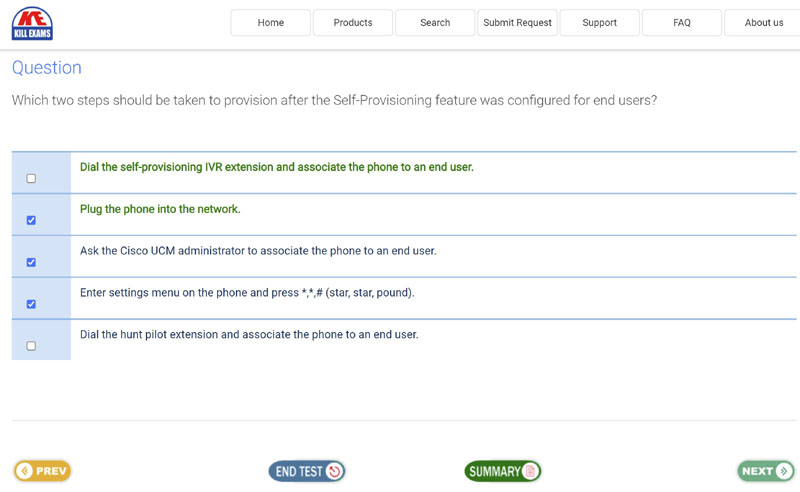
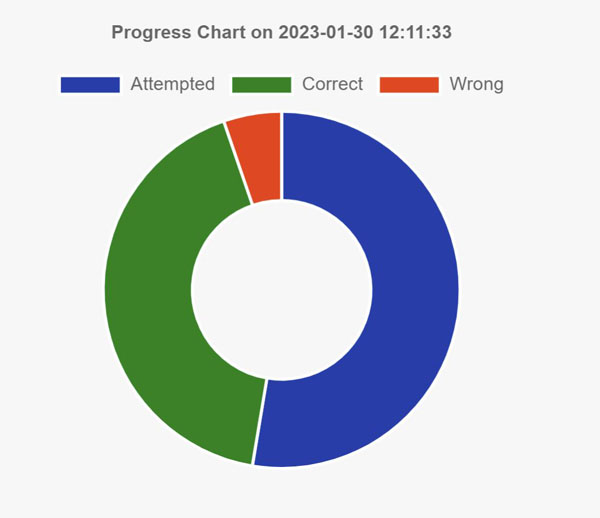
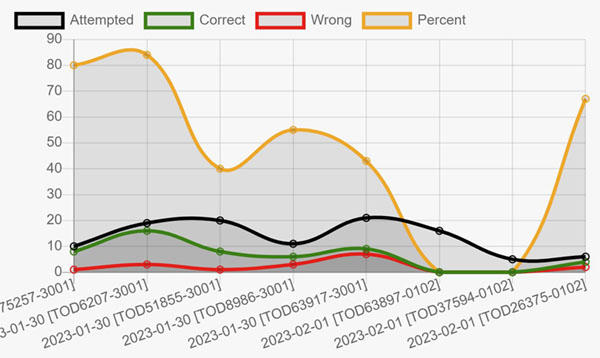
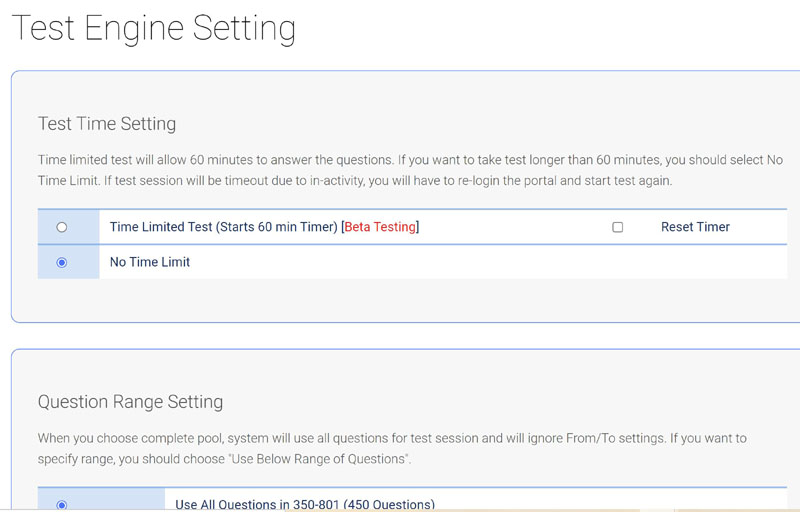
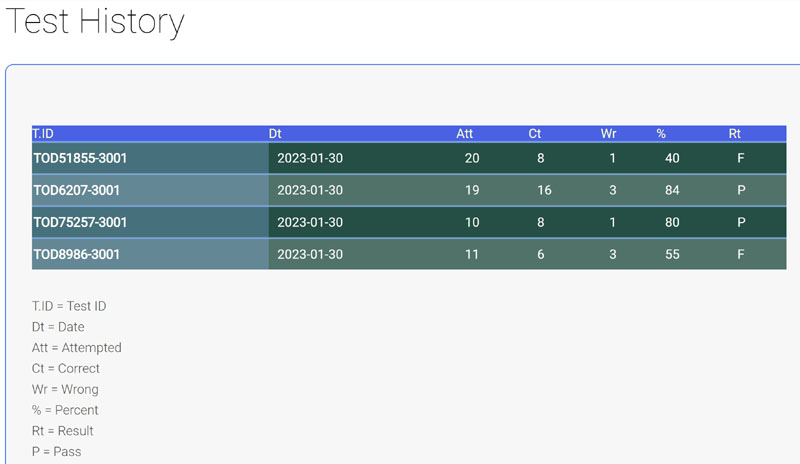
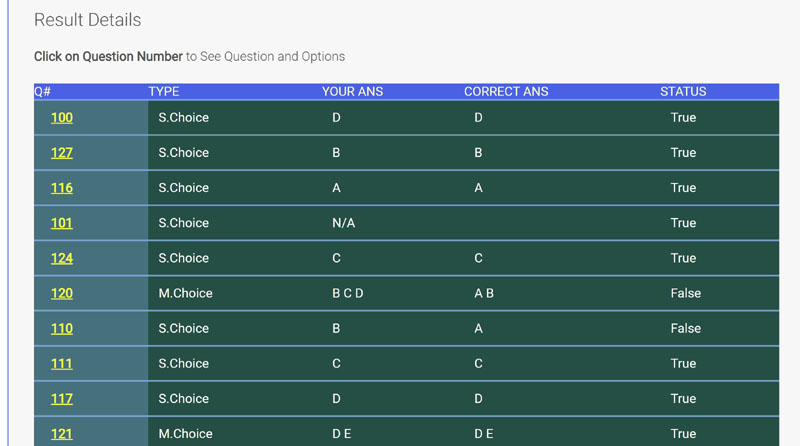
The Online Test Engine maintains practice history, performance summaries, and visual progress reports. Where available, questions may include explanations or reference information to support better understanding of exam topics. Content is reviewed and updated periodically to reflect relevant syllabus changes and maintain consistency with exam objectives.
Desktop Test Engine
| Exam Questions | 1318 (Complete Set) |
| Software Version | 2026 |
| Access | Unlimited |
| Latest Update | November 20, 2026 |
| Access Activation | Instant (5 to 10 min.) |
| Supported OS | Windows (All Versions) |
| Delivery Method | Username / Password |
| Test Engine Trial Software | Killexams Test Engine 2026 |
The Killexams Desktop Test Engine (version 2026) is a dedicated test preparation software designed to support candidates preparing for the CertDITL314 exam. The simulator provides a structured desktop based practice environment that allows users to work through exam style questions and review their performance in detail.
By practicing with the Certificate in Domestic Infrared Thermography Operators (Level 3) Exam Simulator, candidates can become familiar with question formats, exam navigation, and time based testing conditions similar to those used in official exams. This experience helps users build confidence across testing environment, time management, exam topics and identify areas that may require additional study.
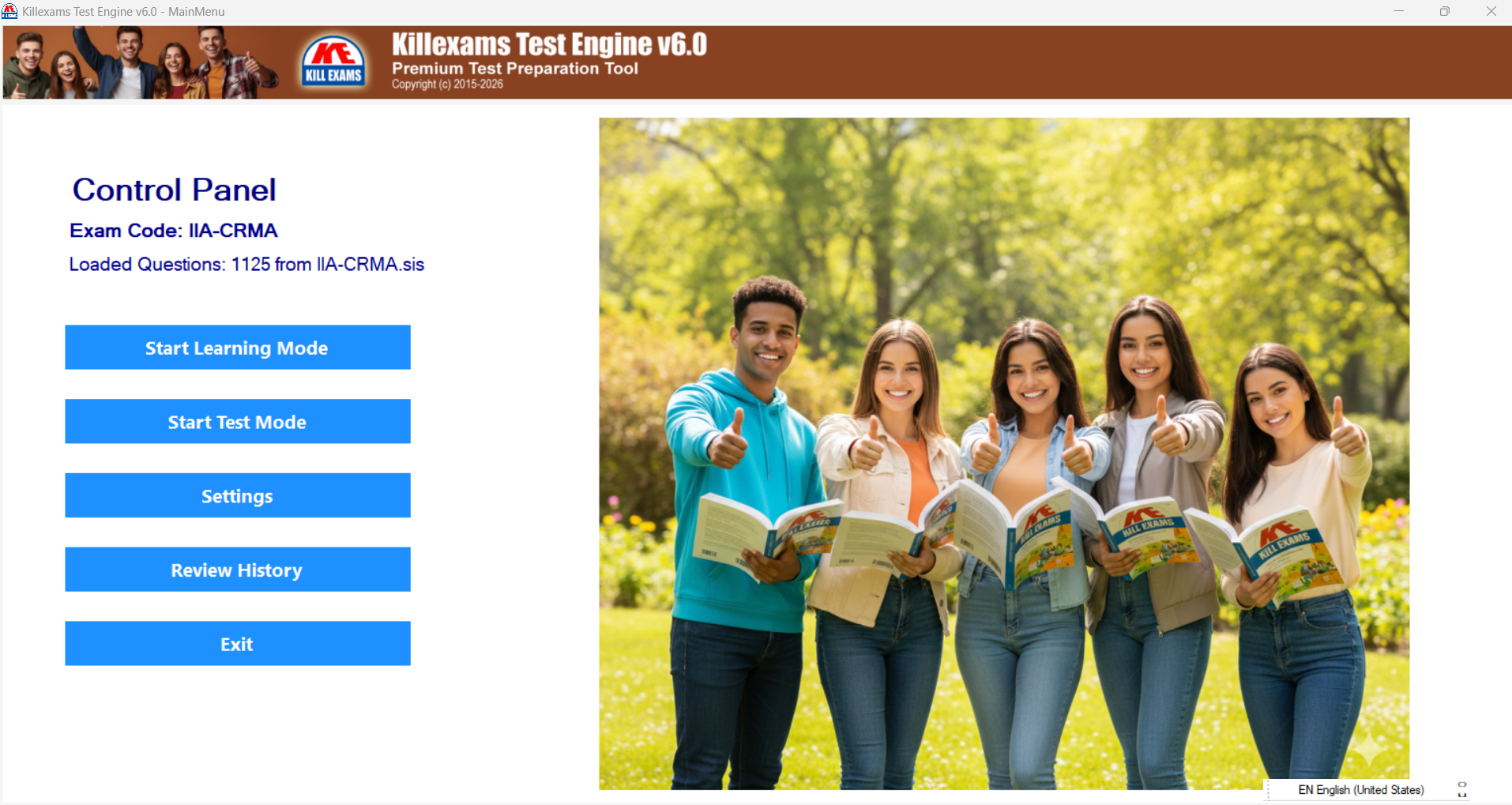
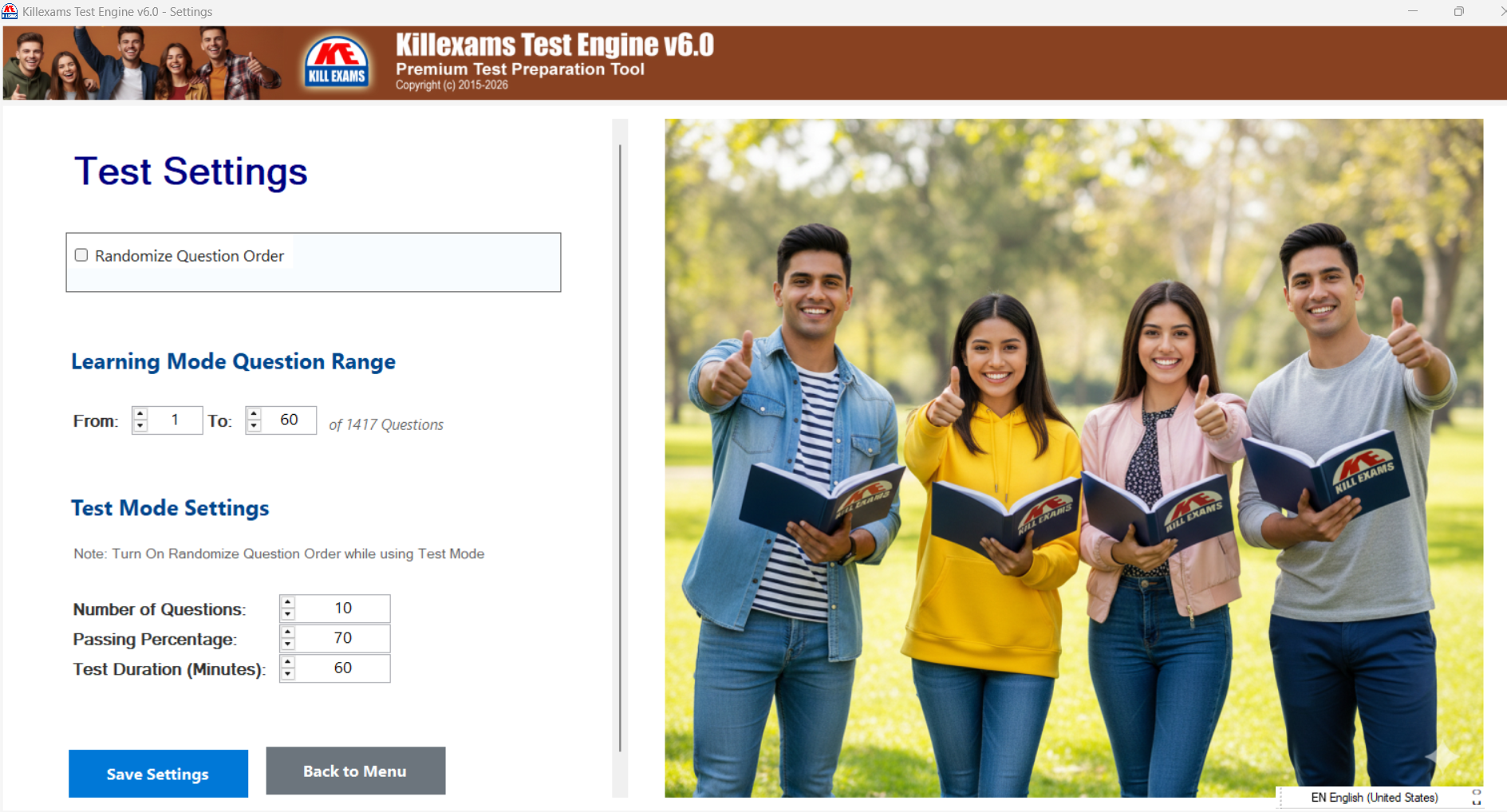
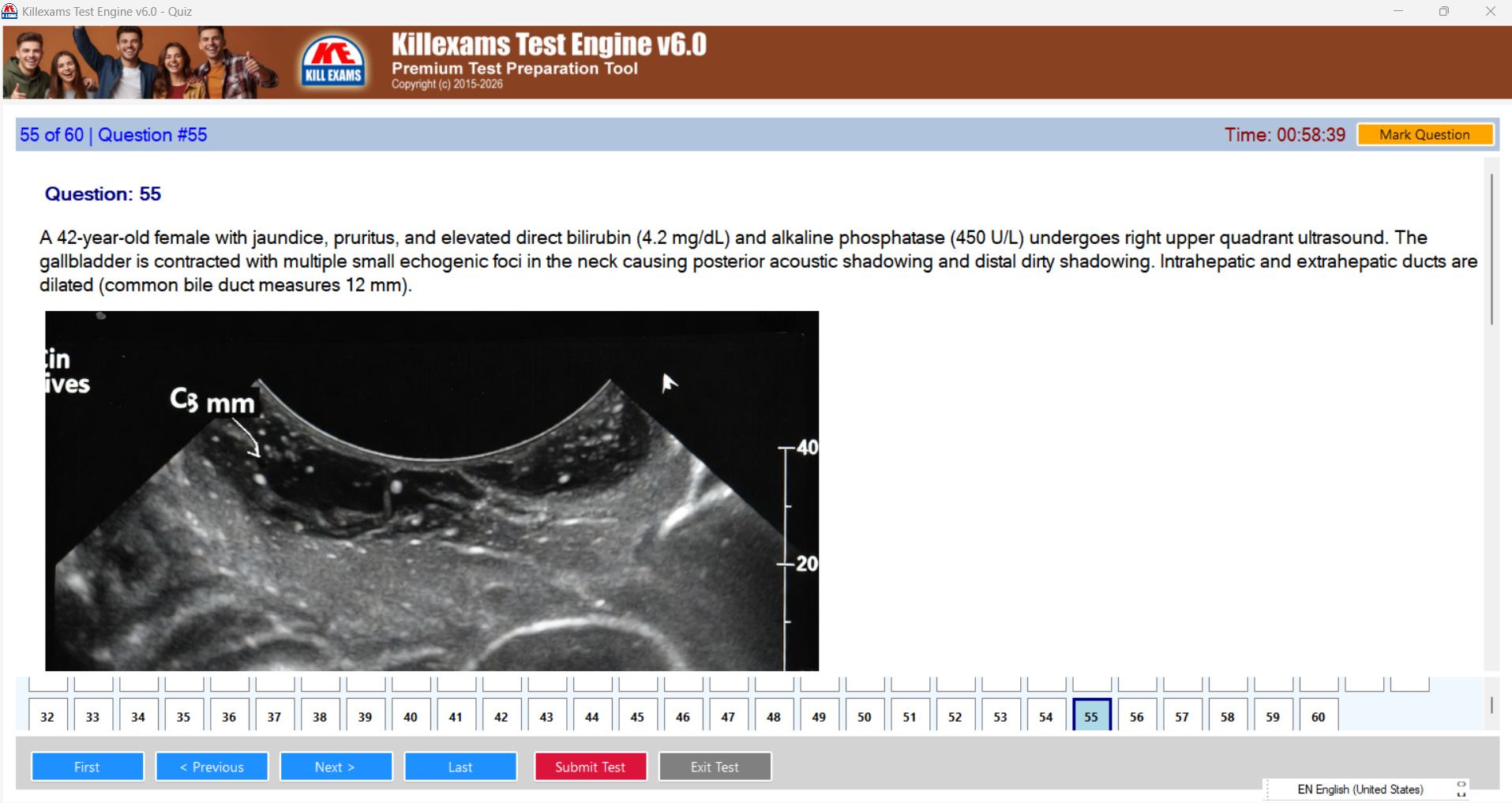
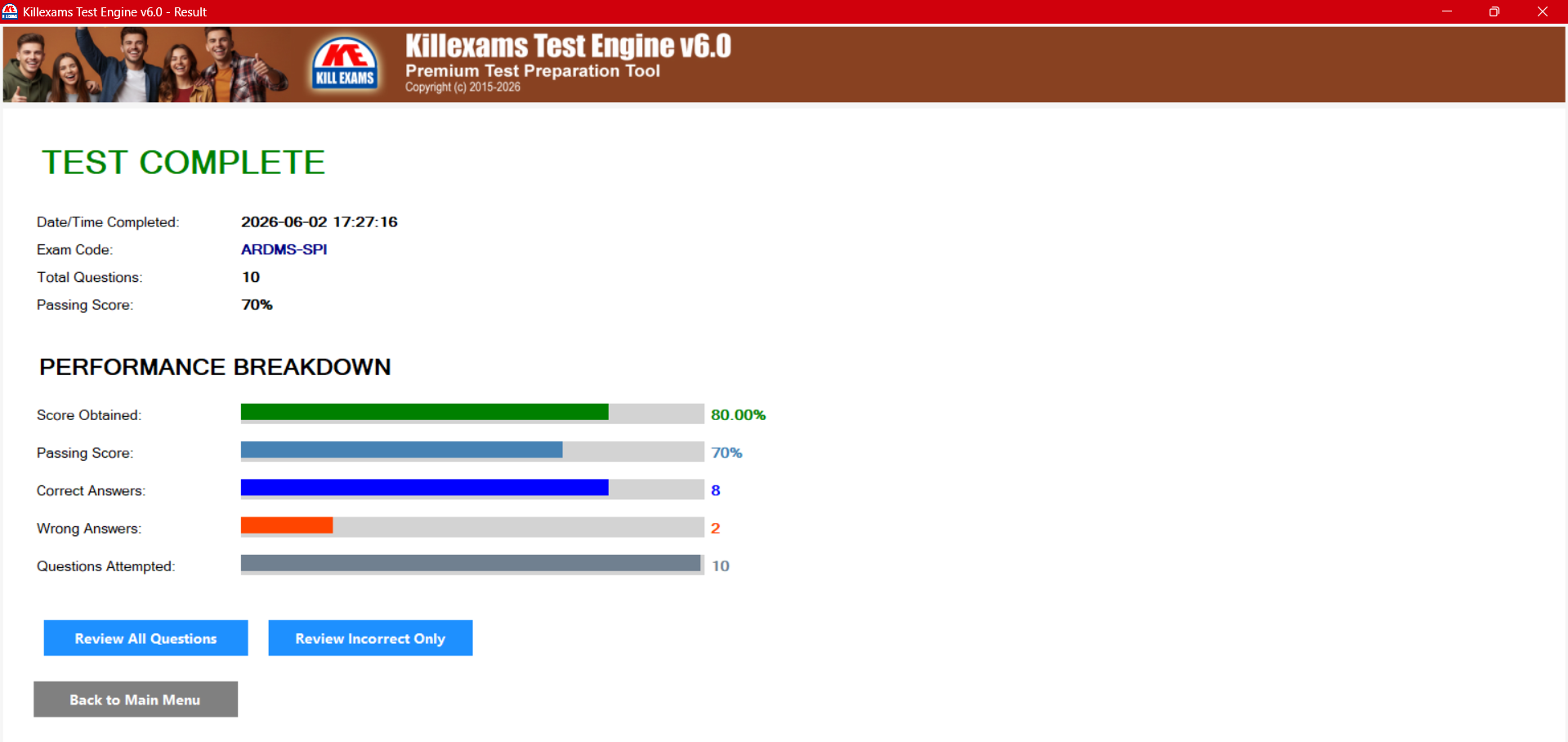

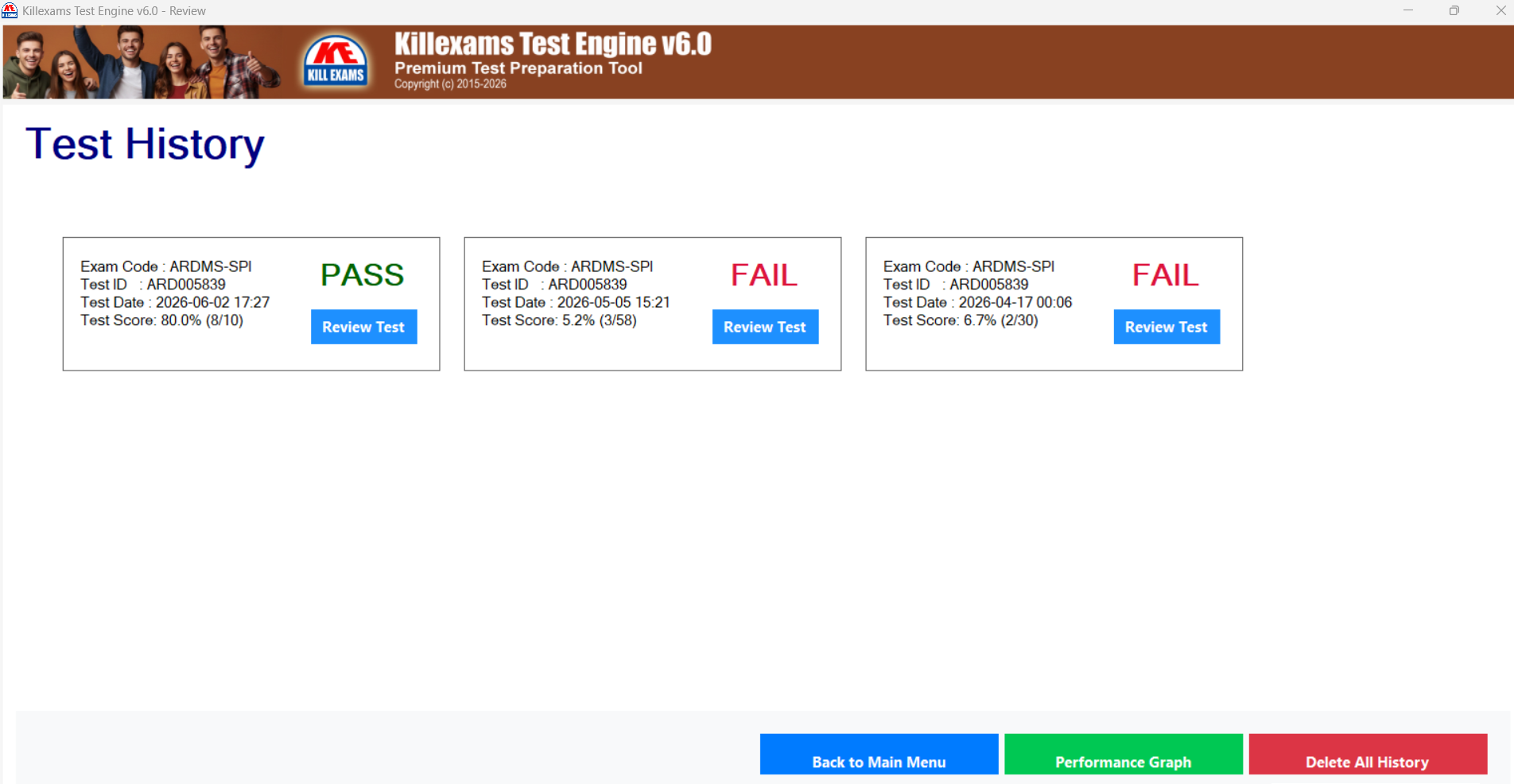
The Desktop Exam Simulator records practice history, performance summaries, and graphical progress reports. Where available, questions may include explanations or reference information to support understanding of correct and incorrect answers. The simulator content is reviewed and updated periodically to remain aligned with current exam objectives and syllabus requirements.
|
3 Months Update
|
6 Months Update
|
12 Months Update
|
|
|---|---|---|---|
What is 3 Months Update?
During 3 months, all future updates in PDF and Test Engine will be provided in your MyAccount with download links. An Intimation email on each update will be sent to you to re-download the updated exam files.
|
What is 6 Months Update?
During 6 months, all future updates in PDF and Test Engine will be provided in your MyAccount with download links. An Intimation email on each update will be sent to you to re-download the updated exam files.
|
What is 12 Months Update?
During 12 months, all future updates in PDF and Test Engine will be provided in your MyAccount with download links. An Intimation email on each update will be sent to you to re-download the updated exam files.
|
|
| Files | PDF / Test Engines | PDF / Test Engines | PDF / Test Engines |
| Premium Access | ✔ | ✔ | ✔ |
| Online Test Engine | ✔ | ✔ | ✔ |
| Instant Download Access | ✔ | ✔ | ✔ |
| Comprehensive Q&A | ✔ | ✔ | ✔ |
| Latest Topics | ✔ | ✔ | ✔ |
| Updated Regularly | ✔ | ✔ | ✔ |
| Portable Files | ✔ | ✔ | ✔ |
| Unlimited Download | ✔ | ✔ | ✔ |
| 100% Secured | ✔ | ✔ | ✔ |
| Confidentiality | 100% | 100% | 100% |
| Syllabus Coverage | Latest | Latest | Latest |
| Any Hidden Cost | No | No | No |
| Auto Renewal | No | No | No |
| Updates Intimation | by Email | by Email | by Email |
| Technical Support | Free | Free | Free |
| PDF Compatibility | Windows, Mac, Android, iOS, Linux | Windows, Mac, Android, iOS, Linux | Windows, Mac, Android, iOS, Linux |
| Desktop Test Engine Compatibility | Windows All Versions | Windows All Versions | Windows All Versions |
| Online Test Engine Compatibility | Mac / Windows / Android / iOS / Linux | Mac / Windows / Android / iOS / Linux | Mac / Windows / Android / iOS / Linux |
CertDITL314 Exam Format | Course Contents | Course Outline | Exam Syllabus | Exam Objectives
Exam Name: Certificate in Domestic Infrared Thermography Operators
Unit 1: Conduct building infrared thermography in a safe- effective and professional manner
- Understand the health and safety requirements when undertaking building infrared thermography
- Explain the relevant legal duties for health- safety and security in the workplace
- Identify the health- safety and security risks that could exist in different locations- and the action to take to minimise or mitigate risks
- Identify the risks to self which are associated with lone working
- Explain why it is important to remain alert to the presence of risks in the workplace
- Explain the importance of personal conduct in maintaining the health- safety and security of yourself or others
- Explain how to make use of relevant suppliers and manufacturers instructions for the safe use of equipment- materials and products
- Explain who should be informed of any conflicts between different health- safety and security requirements
- Describe the procedures for different types of emergency
- Identify the types of suggestions for improving health- safety and security at work that could be made and who should be given them
- Identify the actions that may be taken to protect clients property
- Understand the nature of professional conduct required when conducting building infrared thermography
- Explain why it is important to promote goodwill and trust when working with others and ways in which this can be achieved
- Explain how to identify the information you require and the potential sources of such information
- Describe how to respond to enquiries from others and how to clarify their information needs
- Explain how to respond to enquiries which are outside your authority or area of expertise
- Describe the ways in which disputes or differences of opinion should be handled and resolved to minimise offence and maintain respect
- Describe the formal complaints procedure that covers your work
- Identify the range of potential conflicts of interest that you may encounter and the action required to manage these
- Explain why it is important to present a positive personal and professional image when dealing with people and how this can be achieved
- Describe the ways in which you may develop yourself within your role
- Describe how to deliver an appropriate level of service to meet client expectations
- Explain the importance of providing a prompt response to enquiries
- Understand the legislation- codes of conduct and compliance requirements in relation to building thermography
- Describe the relevant policies and legislation on combating climate change and the reduction of carbon emissions from buildings
- Describe the relevant legislation covering the energy performance of buildings
- Describe your specific responsibilities under prescribed codes of conduct and ethical standards
- Explain why it is important to comply with mandatory and advisory codes of best practice
- Explain the importance of obtaining and maintaining appropriate professional indemnity insurance (PII) cover and the extent and limitations of this
- Be able to comply with organisational and legal requirements at all times
- Carry out work in accordance with the relevant legal requirements and advisory and mandatory codes of practice
- Carry out work in accordance with the auditing and monitoring requirements of the relevant certification organisation(s)
- Record client contact information in accordance with organisational and legal requirements
- Identify and maintain appropriate evidence to support your decisions and assumptions when carrying out building infrared thermography
- Be able to maintain health- safety and security at work
- Take action to mitigate health- safety- security and welfare risks
- Ensure personal conduct does not endanger the health- safety- security and welfare of self and other people
- Take action to ensure the protection of clients property and buildings
- Adhere to workplace policies and suppliers or manufacturers instructions for the safe use of equipment- personal protective equipment (PPE)- materials and products
- Identify and implement procedures for different types of emergency
- Make recommendations for improving health- safety and security in the workplace to the relevant person/s
- Be able to develop and maintain effective working relationships with colleagues- professionals- clients and others
- Request information from colleagues- professionals- clients and others in a polite- clear and professional manner
- Identify and use further sources of help when required
- Deal promptly with enquiries from colleagues-professionals- clients and others and seek clarification where necessary
- Handle enquiries which are outside own authority or area of expertise
- Handle and resolve disputes and/or differences of opinion
- Adhere to the formal complaints procedure when dealing with a complaint
- Be able to conduct building infrared thermography in a professional manner
- Deal with colleagues- professionals- clients and others in a tactful- courteous and equitable manner
- Carry out work in accordance with prescribed codes of conduct- ethical standards and recognised good practice
- Record all evidence to support the assumptions and decisions made during the assessment
- Demonstrate effective management of work activities- personal and professional development
- Respond appropriately to any pressure that may affect own judgment
- Demonstrate delivery of the appropriate level of client service
- Assess client expectations as to the outcomes of the building infrared thermography or advice process
Unit 2: Understand basic thermal imaging camera technology and operation
- Understand the basic principles of infrared thermography
- State the fundamental principles of energy and heat
- List the standard temperature scales and conversions
- Describe the electromagnetic spectrum in general and the infrared region in particular
- Describe the key processes of heat transfer by conduction- convection and radiation
- Explain the processes of emittance- reflectance and transmittance
- Explain the principles of heat flow and heat capacity
- Describe the process of phase changes and latent heat in materials
- Explain the emissivity of materials
- State the factors that affect the emissivity of materials
- Explain the differences in reflectivity of specular and diffuse surfaces
- Describe how material properties are modified by heat- air and moisture flow
- State the key laws of physics as they relate to infrared thermography:
- Kirchhoffs Law
- Fouriers Law
- Newtons Law of Cooling
- Stefan Boltzmanns Law
- Know the basic construction- capabilities and limitations of a typical TI camera
- List the key components of an infrared camera
- Describe the purpose of the key components of an infrared camera
- Describe the features and usage of an infrared camera screen display
- Describe the fittings on- and accessories for- an infrared camera
- List the typical software functions and menu options of an infrared camera
- Explain the purpose of an infrared cameras software functions and menu options
- Describe the physical limitations of an infrared camera in the domestic built environment
- Describe how to optimise the capabilities of an infrared camera in typical domestic scenarios
- Describe the storage and maintenance requirements of an infrared camera
- Understand the basic operation and control of a typical TI camera in the domestic built environment
- List the ISO 6781-1 General Procedures
- Describe the environmental conditions necessary for successful infrared thermography
- Describe the operating limitations of an infrared camera
- Describe the controls and menu features required to operate an infrared camera
- Explain how to set up an infrared camera prior to carrying out an infrared thermographic survey
- Explain how to control an infrared camera during an infrared thermographic survey
- Describe how to mark the location of an infrared thermographic anomaly/defect on a domestic property
- Describe the health and safety issues that may arise during the operation of an infrared camera
- Describe the occasions on which it would not be appropriate to continue with an infrared thermographic survey
- Know how to conduct a basic interpretation of thermal images
- List typical problems and defects that can be identified by an infrared camera in the domestic built environment
- Describe the situations that can lead to a false interpretation of an infrared thermographic image
- Describe the information displayed on an infrared camera thermographic image
- xplain occasions on which advice would be sought in the interpretation of an infrared thermographic image
Unit 3: Understand domestic building construction- thermal properties and heat loss mechanisms
- Understand the construction of a domestic building
- Explain the purpose of a domestic building
- List the materials used in the construction of a domestic building
- Describe the purpose of each of the materials used in a domestic building
- List the key elements (structural- envelope and fabric) of a domestic building
- Describe the purpose of each domestic building element and how the building elements are combined in the overall structure of a domestic building
- Explain how to determine the construction of a domestic building by non-invasive internal and external inspection techniques
- Describe how changes to a building over time may be determined by comparison with similar properties in the area
- List the circumstances that can cause rising and penetrating damp in a domestic building
- Understand the thermal properties of building elements
- Explain how heat is transferred by the processes of conduction- convection and radiation
- Describe what is meant by ‘thermal resistance
- Explain how thermal resistance varies with the type of material and its use
- Describe the relationship between thermal resistance and Uvalue
- Describe how U-values are used in determining rates of heat loss from a building
- State the typical U-value ranges for each of the key building elements
- Describe how an elements u-value may be degraded through:
- anomalies between as-designed and as-built detailing
- natural material degradation over time
- material degradation with use/modification
- Understand the processes of heat loss from a building
- List the main heat sources within a domestic building
- Sketch and quantify in percentage terms the heat flows within and out from a domestic building
- Describe the difference between a buildings ‘Asset Rating and its ‘Operational Rating
- Explain the impact of geographical location- orientation and exposure on the rates of heat gain and loss to and from a domestic building
- Explain the term ‘Thermal Bridging
- List typical thermal bridges in a domestic building
- Explain the purpose of ventilation in a domestic building
- Describe the differences between ventilation and infiltration/exfiltration
- List the key sources of infiltration/exfiltration in a domestic building
- List the processes of moisture transport in a domestic building
- Describe impact of excessive moisture in a domestic building
- Understand problems associated with building occupation
- Describe the key problems associated with the occupation of a domestic property
- List the sources of moisture in a domestic property
- Describe the circumstances under which excessive moisture can lead to problems such as damp- condensation and mould
- List the causes of lack of ventilation within a property
- Describe the impact of a lack of ventilation within a domestic property
Unit 4: Prepare to carry out an infrared thermographic assessment of domestic buildings
- Understand the restrictions and limitations of a building infrared thermographic assessment
- Describe the environmental conditions needed to carry out an infrared thermographic survey
- List sources of information used to determine environmental conditions
- Explain the requirements of ISO 6781 as they apply to domestic properties
- Be able to agree and confirm instructions with a client to undertake building infrared thermographic assessment
- Obtain advance information from the client to draw up and agree the objectives for the infrared thermographic survey
- Explain to the client the terms and conditions under which the infrared thermographic survey will be carried out
- Draw up a scope of works based on all information gathered and agreed
- Present the scope of works to the client and agree the fee for carrying out and reporting on the infrared thermographic survey
- Describe the circumstances that could prevent a thermographic assessment from taking place such as:
- survey requirements beyond current level of competence
- difficulty in gaining access
- conflicts of interest
- environmental conditions
- health and safety issues
- Explain to the client why a thermographic survey cannot proceed
- Offer a client alternative arrangements should it not be possible to carry out a thermographic survey on the agreed date
- Be able to prepare for an infrared thermographic assessment of a domestic building
- Draw up a method statement for the survey based on the agreed scope of works
- Prepare or refresh the survey equipment checklist based on the method statement
- Conduct a web-based survey of the local geographical and property-specific features
- Explain the purpose of all the equipment needed to carry out an infrared thermographic survey
- List the checks to be carried out to ensure proper functionality of all survey and supporting equipment
- Conduct pre-usage checks on all survey and supporting equipment
- Confirm whether environmental conditions are likely to be suitable for the survey
- Draw up a preliminary health and safety risk assessment for the property visit
Unit 5: Carry out an infrared thermographic assessment of domestic buildings
- Be able to attend property to carry out a domestic building infrared thermographic assessment
- Conduct a risk assessment at the property to:
- identify and record risks and mitigating measures
- identify any circumstances at the property that prevent the thermographic survey from continuing
- Introduce themselves to the client and verify their credentials before commencing the inspection
- Be able to carry out a domestic building infrared thermographic assessment
- Set up and check correct operation of infrared camera together with its accessories and other equipment
- Identify and correct any basic fault condition that occurs with the infrared camera or its accessories and other equipment
- Use the infrared camera and accessories/other equipment correctly to undertake a methodical infrared thermographic survey of a domestic building as agreed in the scope of works
- Take action as necessary to prevent- minimise or control poor data and error sources
- Recognise- take account of and correct the causes of poor quality or anomalous readings
- Identify- highlight and- where necessary- seek advice on areas of concern
- Be able to create- collate and maintain a complete and accurate record of all information collected during a building infrared thermographic assessment
- Carry out a basic survey of the domestic building and its immediate local area to record its location- alignment- topography- site layout- dimensions and other relevant information
- Produce a written and photographic record of the information collected during the basic survey
- Create a record of activities while carrying out the scope of work and any additional actions deemed necessary to complete the thermographic survey
- Maintain a database of results from the thermographic survey and trends observed
Unit 6: Produce infrared thermographic assessment reports of domestic buildings
- Be able to prepare an infrared thermographic assessment report
- Describe the layout of the domestic infrared thermographic assessment report
- Assemble and collate information from the infrared thermographic survey- and from other relevant and reliable sources
- Carry out a basic analysis of information obtained from the infrared thermographic survey- and from other relevant and reliable sources
- Identify infrared thermographic features from the survey that should be included in the report
- Produce an infrared thermographic assessment report that satisfies the agreed scope of work and meets accepted professional practice
- Develop recommendations for basic corrective actions for repair and remediation
- Check the report to ensure it is clear- complete and satisfies the agreed scope of work and accepted professional practice
- Be able to present an infrared thermographic assessment report to a client in a professional manner
- Issue the report to the client
- Explain to the client the findings and recommendations contained within the report and their implications
- Respond to any questions or queries that the client might have on the report- its findings or recommendations
- Be able to maintain and preserve infrared thermographic assessment reports
- List the reasons for safely retaining and maintaining records that can be accessed by external/independent authorities as required in the future
- Ensure that the authorship- validity and date of production of the reports can be audited by an independent authority as required in the future
- Maintain and preserve records and reports in accordance with best practice ensuring that they are protected against physical (theft- fire- flood) and technological (hard drive failure- virus- malware) risks
Reviews (1)3.00 Overall
★★★★★
0%
★★★★
0%
★★★
100%
★★
0%
★
0%
|
Submit ReviewYou must be logged in to submit a review. Sign In to Submit Review |
Customer Reviews
CertDITL314 Exam FAQs
What topics does the CertDITL314 exam cover, and how are they weighted?
The CertDITL314 exam covers 6 sections: Thermography Principles; Camera Operation; Survey Planning; Image Interpretation; Reporting; Standards and Safety.
How should I prepare for CertDITL314?
Start with the official CertDITL314 exam outline and study materials from ABBE, then build exam readiness with timed practice. A killexams.com premium account gives you the full pool of 1,318 CertDITL314 practice questions and answers in PDF and Test Engine formats, so you can practice every objective and review the answers before exam day.
How long does it take to prepare for CertDITL314?
At a steady pace of 100 practice questions a day, working through all 1,318 CertDITL314 questions takes about 14 days. Add extra days to repeat the questions you got wrong.
Is CertDITL314 hard? Who is it for?
The ABBE Level 3 Certificate in Domestic Infrared Thermography Operators trains people to use thermal imaging cameras to find heat loss, insulation gaps, air leakage and moisture in homes. It is a Level 3 exam.
How many practice questions do you have for CertDITL314?
The killexams.com CertDITL314 practice test contains 1,318 questions and answers.
Is there a free CertDITL314 sample?
Yes. A free CertDITL314 sample PDF is available on this page, so you can review the question style before you buy.
What formats are included in the CertDITL314 practice test?
The CertDITL314 practice test is available as a PDF, an Online Test Engine and a Desktop Test Engine.
Do the CertDITL314 practice questions cover the current exam objectives?
Yes. The CertDITL314 practice questions cover the complete syllabus and current exam objectives.
How do I get the files after purchase, and how long is access valid?
Your MyAccount login details are delivered by email. You can download the files from the member area until your account expires, after 3, 6 or 12 months depending on the plan you bought.
Can I use the CertDITL314 Test Engine on Mac or mobile?
Yes, with the Online Test Engine, which runs on Mac, iOS, Android, Linux and other platforms. The Desktop Test Engine is for Windows only.
What if I fail the CertDITL314 exam after using your material?
You can choose one of three options: 1) a refund, 2) a free 3-month account extension, or 3) a new exam of your choice.
How many practice questions are available for CertDITL314?
The CertDITL314 practice test contains 1,318 practice questions and answers covering the current exam objectives.
What formats are available for CertDITL314 preparation?
The CertDITL314 practice test is available as PDF, Online Test Engine, Desktop Test Engine. All formats can be downloaded instantly after purchase.
Is there a free CertDITL314 sample?
Yes. You can preview and download a free CertDITL314 sample PDF on this page before you buy.