

CQE Exam Questions PDF
| Questions and Answers | 1302 (Complete Set) |
| File Format | |
| Latest Update | November 19, 2026 |
| Files Delivery | Instant (5 to 10 min.) |
| Compatibility | All Desktop and Mobile Devices |
| Delivery Method | Download Account |
The Certified Quality Engineer credential from ASQ recognizes engineers who understand product and process quality, statistics, reliability and quality systems.
ASQ is a global membership organization for quality professionals. Its certifications are based on detailed bodies of knowledge and are widely recognized in manufacturing, healthcare, software and service industries.
Questions on the Certified Quality Engineer exam often describe a situation in a project or team and ask for the best next step. Understanding the intent behind each practice, not just its name, is what makes these questions straightforward.
Many professionals take Certified Quality Engineer to formalize experience they already have, while others use it to move into project, agile, quality or analysis roles. Either way, the exam syllabus provides a clear structure for building knowledge.
A closer look at the content shows how each area is built. Management and Leadership covers quality philosophies. Within Quality System, candidates should be comfortable with elements. Product, Process and Service Design focuses on design tools. The Product and Process Control area includes control plans.
Preparing for the CQE exam requires not only understanding the exam topics but also practicing with exam style questions. Our Certified Quality Engineer exam questions in practice tests help candidates review key concepts and familiarize themselves with the format and difficulty of exam.
At Killexams.com, our team works to maintain up-to-date practice content for exam preparation. We continuously review and refine our question sets and explanations to cover the latest relevant syllabus areas and help learners strengthen their understanding of core topics before facing the official exam. These Practice tests allow you to identify areas where you need improvement by measuring your readiness, and provide you exam questions to polish those areas.
CQE Exam Questions Preview
The CQE exam has 160 questions over five and a half hours.
Many candidates find it useful to build a week by week plan around the published topics. Allow roughly 7 weeks, giving each major area its own block: begin with Management and Leadership, continue with Quality System; Product, Process and Service Design; and Product and Process Control, and finish with Continuous Improvement; Quantitative Methods and Tools; and Risk Management. For each area, collect key definitions, a few examples and the mistakes you made in practice, then review them weekly. Close your preparation with at least two complete timed practice sessions and a careful review of every missed question.
Timed practice is especially important for CQE, because the exam often includes long scenario questions. Aim to finish practice tests with time to spare and review all explanations.
For CQE, read the official guide or syllabus once quickly, then a second time slowly, mapping each concept to your own experience. Practice scenario questions and ask yourself what the framework intends, not what your current workplace does.
| Detail | Information |
|---|---|
| Questions | 160 |
| Duration | 5.5 hours |
| Provider | ASQ |
To help you evaluate our material, you may download free sample pdf with example questions and answers that we provide. This sample allows you to review content and approach before deciding on Premium materials..
The Certified Quality Engineer practice test files contains 1302 Questions, are compatible with multiple devices, including Windows, macOS, iOS, and Android, and can be used for both online and offline study. The PDF format is printable, making it easy to study during travel or when away from a computer. Access to updated materials is available through your online account.
After purchase, you will receive your username and password immediately, allowing you to log in and download your study files without delay. Our goal is to support exam preparation at your pace with practice content designed for reinforcement and understanding of key concepts.
Killexams.com CQE questions and answers cover quality engineering with explanations.
Because the killexams.com CQE questions follow the official topic areas such as Management and Leadership; Quality System; Product, Process and Service Design; and Product and Process Control, you can focus practice exactly where it is needed. Score reports after each session show which section needs more work, and the explanations turn mistakes into learning.
Candidates who use the killexams.com CQE question bank often begin with a diagnostic session to see which sections need the most attention, then return to those sections repeatedly before taking a final full length practice test.
Killexams.com keeps the CQE question bank current by reviewing it when the exam outline changes, and each question includes an explanation so you learn the reasoning, not just the answer. The practice test can be repeated with questions in a different order, which helps you focus on understanding rather than memorizing positions.
Online Test Engine
| Exam Questions | 1302 (Complete Set) |
| Testing Limit | Unlimited |
| Access Type | Online |
| Latest Update | November 19, 2026 |
| Access Activation | Instant (5 to 10 min.) |
| Supported OS | Mac, Windows, Android, iPhone / iPad, Linux |
| Delivery Method | Username / Password |
Killexams.com provides an Online Test Engine designed to help candidates practice exam questions in a structured and interactive environment. The Test Engine is compatible with iPhone, iPad, Android, Windows, and Mac, allowing you to study and practice on the device that best fits your schedule.
The CQE Online Test Engine enables candidates to simulate exam-style practice sessions, review answers, and track progress over time. This learning approach helps users practice exam questions, question formats and improve time management while preparing for the Certified Quality Engineer exam.
The Test Engine includes features that support effective learning, such as customizable practice sessions, question review modes, and progress tracking. These tools are designed to assist candidates in identifying knowledge gaps and reinforcing key concepts through repeated practice rather than memorization alone.
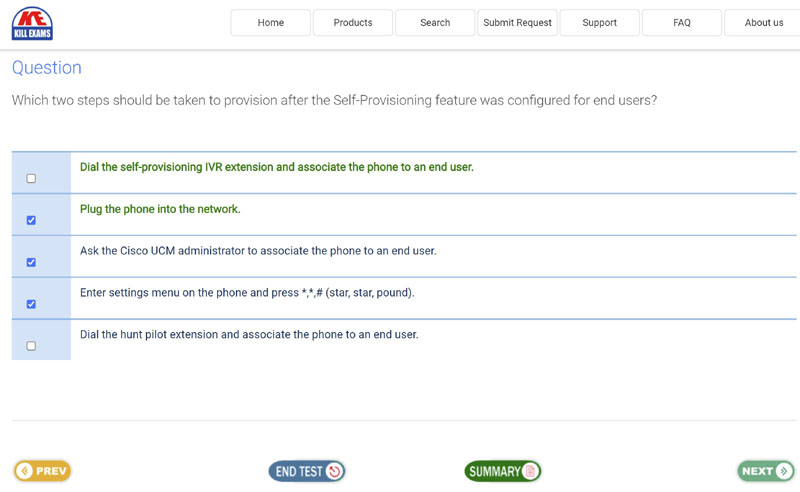
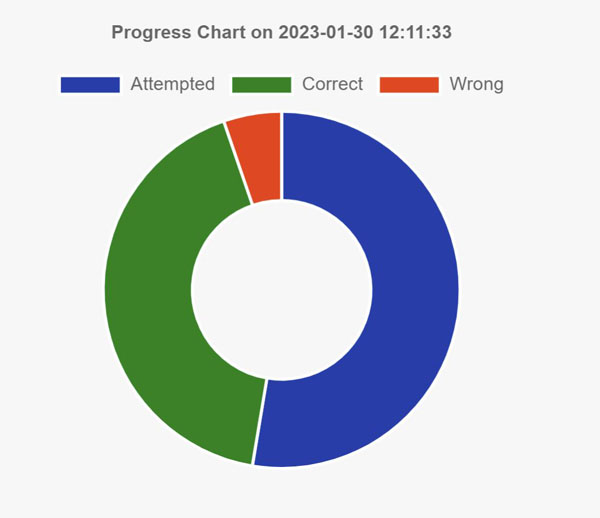
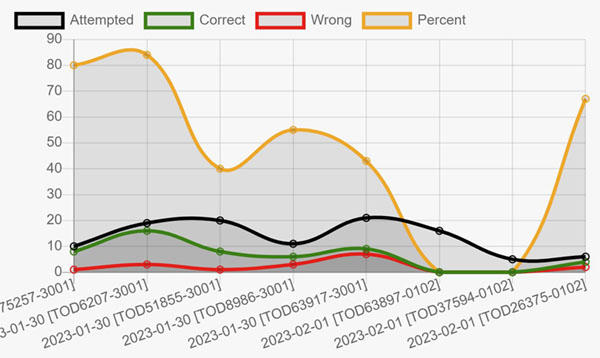
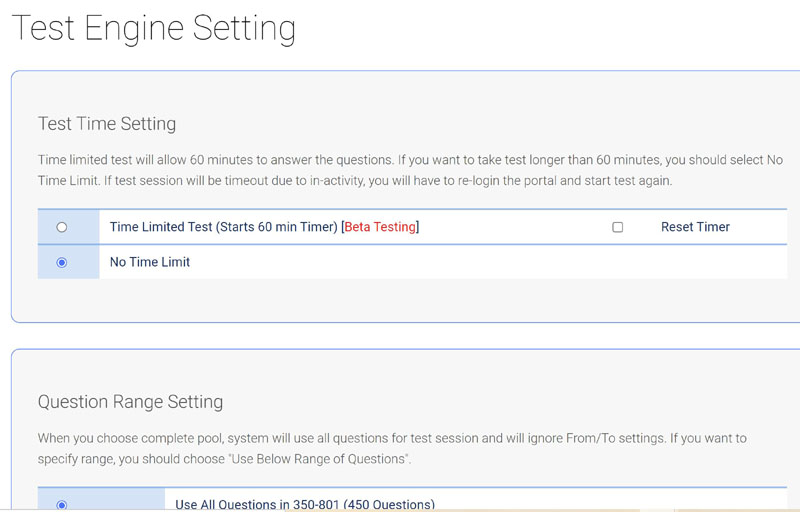
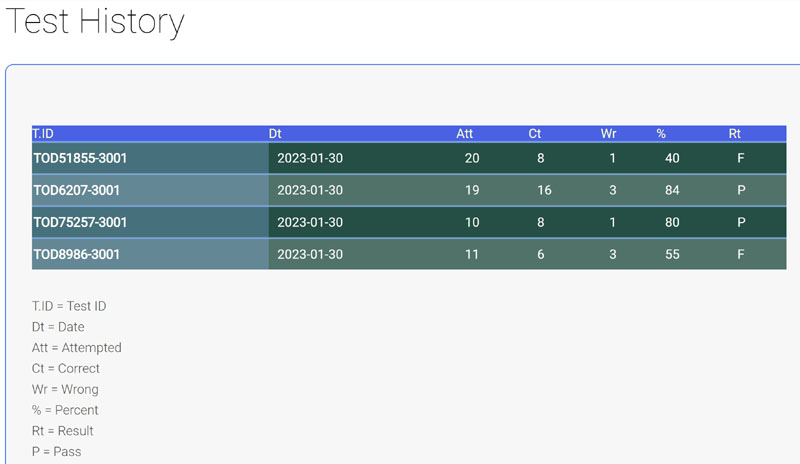
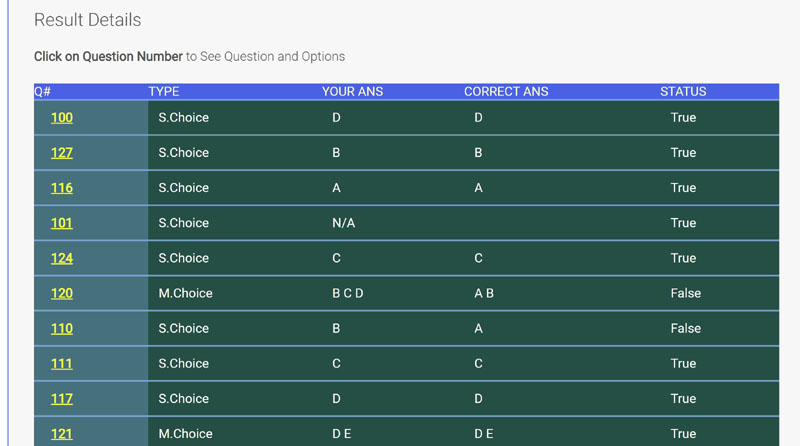
The Online Test Engine maintains practice history, performance summaries, and visual progress reports. Where available, questions may include explanations or reference information to support better understanding of exam topics. Content is reviewed and updated periodically to reflect relevant syllabus changes and maintain consistency with exam objectives.
Desktop Test Engine
| Exam Questions | 1302 (Complete Set) |
| Software Version | 2026 |
| Access | Unlimited |
| Latest Update | November 19, 2026 |
| Access Activation | Instant (5 to 10 min.) |
| Supported OS | Windows (All Versions) |
| Delivery Method | Username / Password |
| Test Engine Trial Software | Killexams Test Engine 2026 |
The Killexams Desktop Test Engine (version 2026) is a dedicated test preparation software designed to support candidates preparing for the CQE exam. The simulator provides a structured desktop based practice environment that allows users to work through exam style questions and review their performance in detail.
By practicing with the Certified Quality Engineer Exam Simulator, candidates can become familiar with question formats, exam navigation, and time based testing conditions similar to those used in official exams. This experience helps users build confidence across testing environment, time management, exam topics and identify areas that may require additional study.
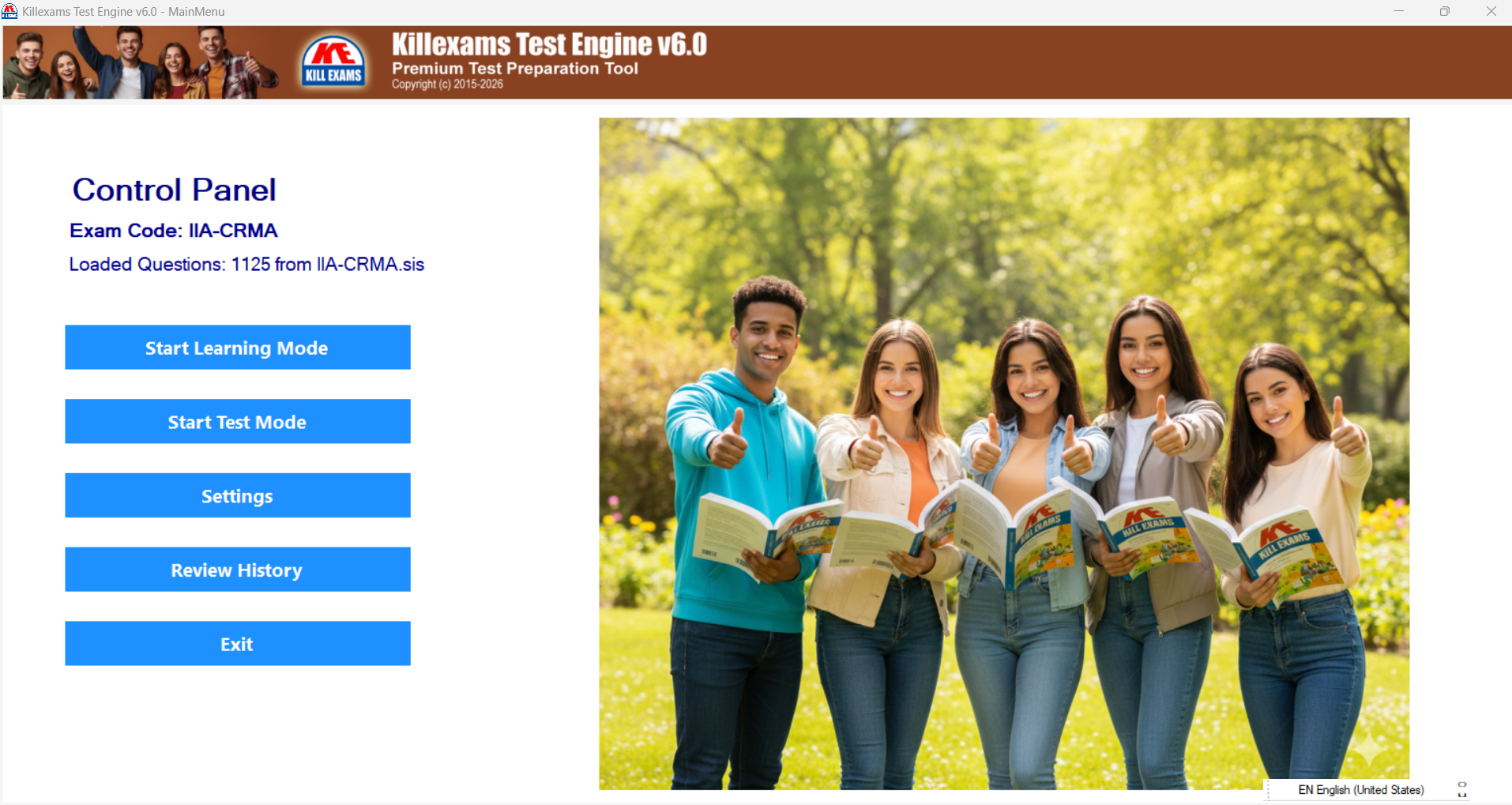
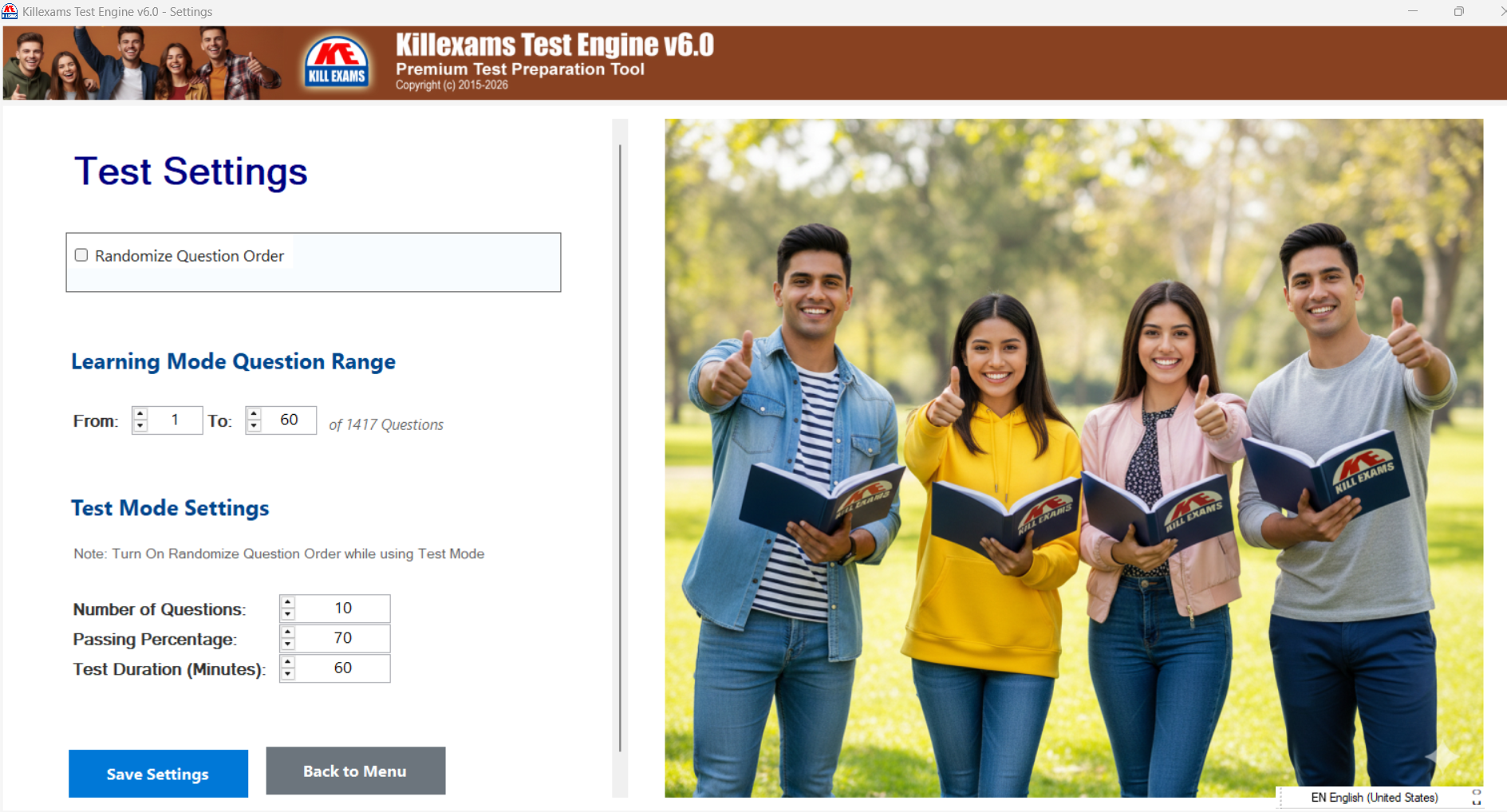
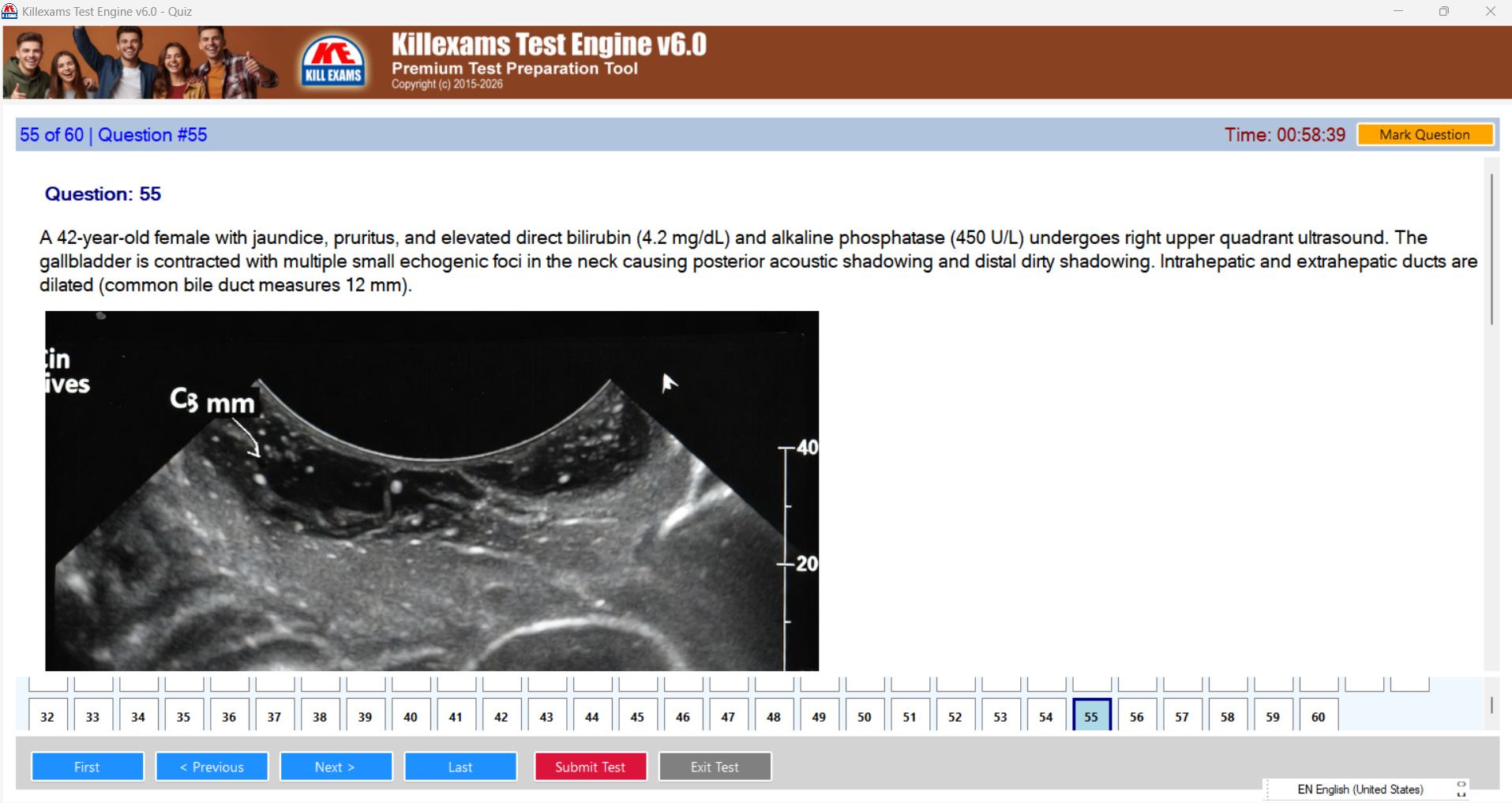
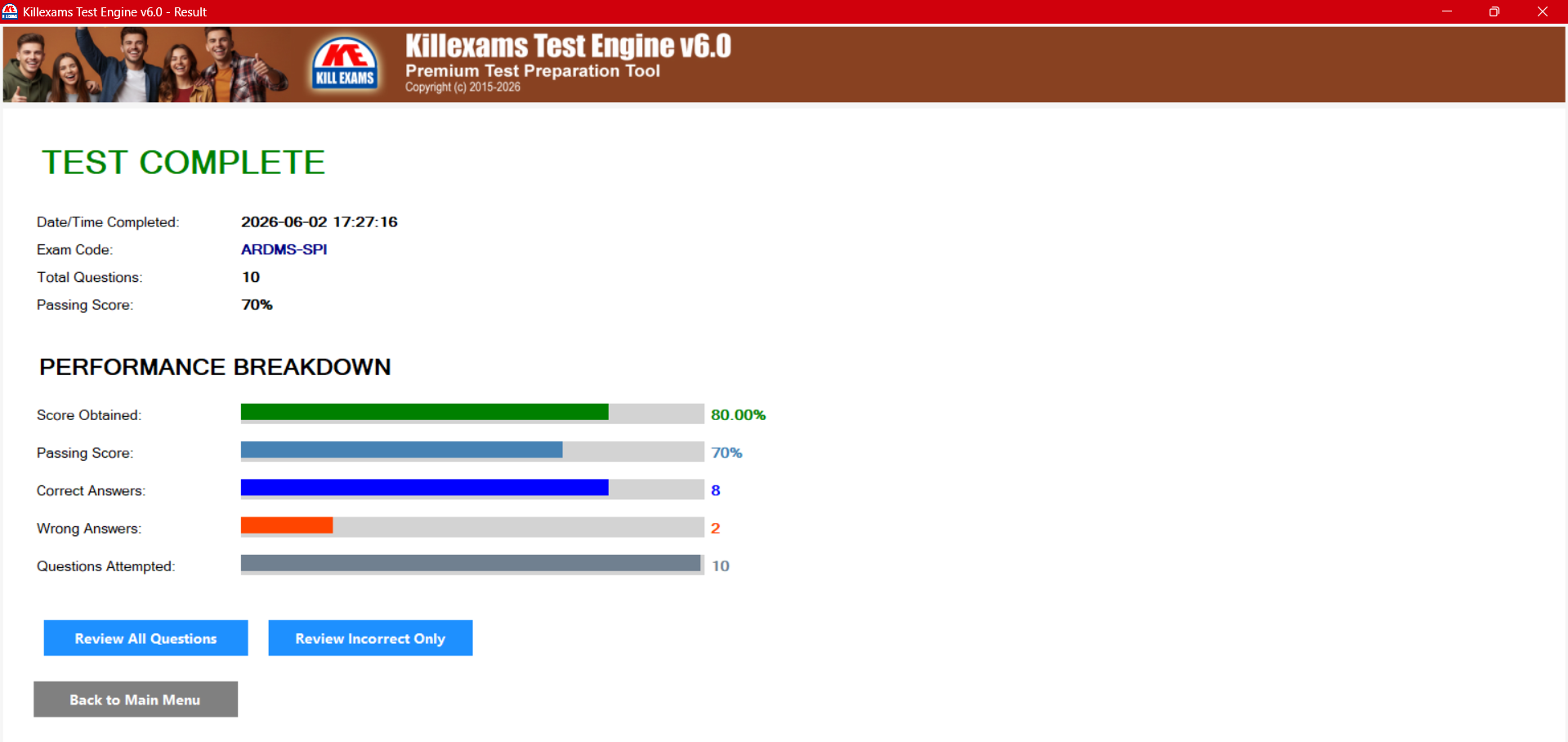

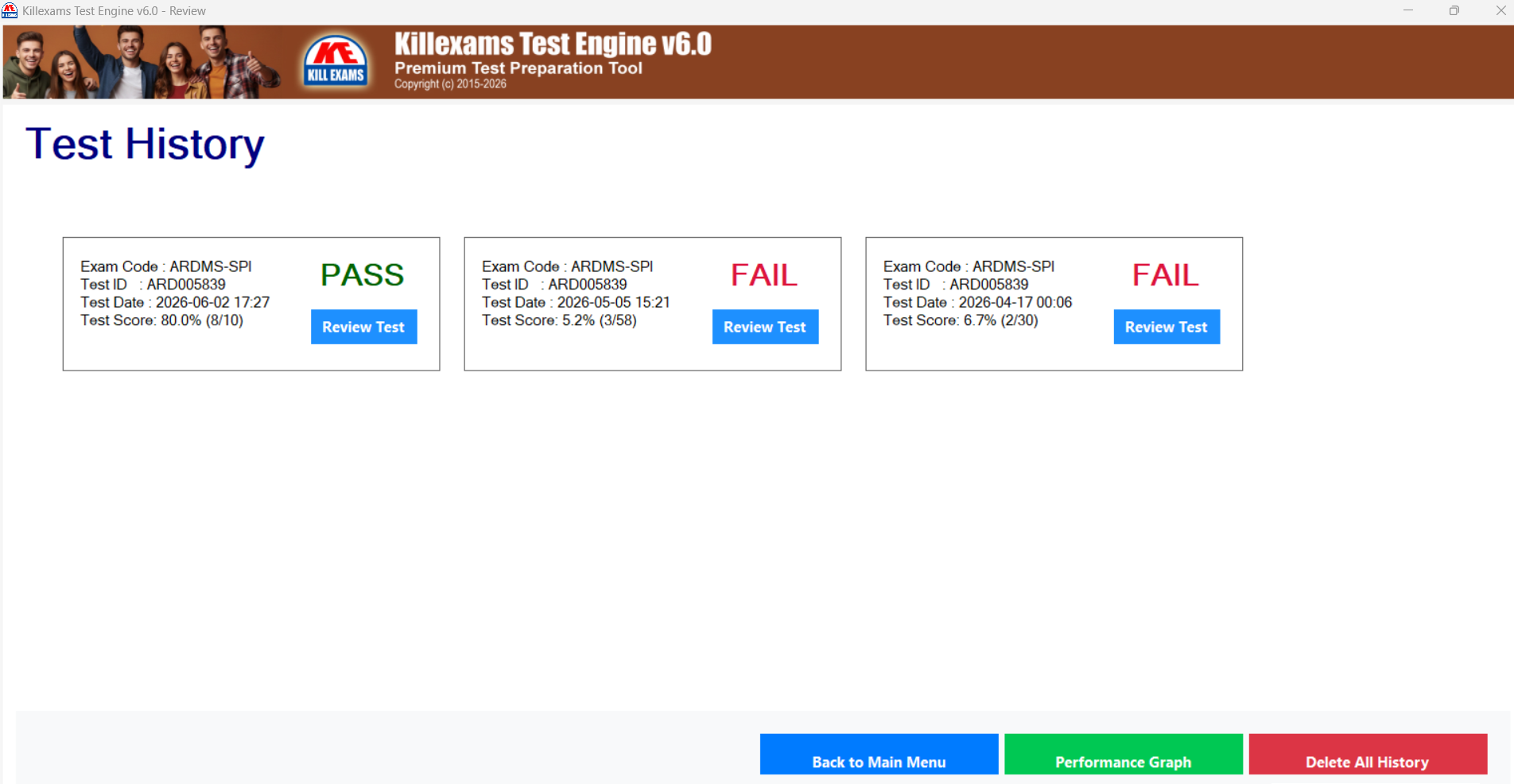
The Desktop Exam Simulator records practice history, performance summaries, and graphical progress reports. Where available, questions may include explanations or reference information to support understanding of correct and incorrect answers. The simulator content is reviewed and updated periodically to remain aligned with current exam objectives and syllabus requirements.
|
3 Months Update
|
6 Months Update
|
12 Months Update
|
|
|---|---|---|---|
What is 3 Months Update?
During 3 months, all future updates in PDF and Test Engine will be provided in your MyAccount with download links. An Intimation email on each update will be sent to you to re-download the updated exam files.
|
What is 6 Months Update?
During 6 months, all future updates in PDF and Test Engine will be provided in your MyAccount with download links. An Intimation email on each update will be sent to you to re-download the updated exam files.
|
What is 12 Months Update?
During 12 months, all future updates in PDF and Test Engine will be provided in your MyAccount with download links. An Intimation email on each update will be sent to you to re-download the updated exam files.
|
|
| Files | PDF / Test Engines | PDF / Test Engines | PDF / Test Engines |
| Premium Access | ✔ | ✔ | ✔ |
| Online Test Engine | ✔ | ✔ | ✔ |
| Instant Download Access | ✔ | ✔ | ✔ |
| Comprehensive Q&A | ✔ | ✔ | ✔ |
| Latest Topics | ✔ | ✔ | ✔ |
| Updated Regularly | ✔ | ✔ | ✔ |
| Portable Files | ✔ | ✔ | ✔ |
| Unlimited Download | ✔ | ✔ | ✔ |
| 100% Secured | ✔ | ✔ | ✔ |
| Confidentiality | 100% | 100% | 100% |
| Syllabus Coverage | Latest | Latest | Latest |
| Any Hidden Cost | No | No | No |
| Auto Renewal | No | No | No |
| Updates Intimation | by Email | by Email | by Email |
| Technical Support | Free | Free | Free |
| PDF Compatibility | Windows, Mac, Android, iOS, Linux | Windows, Mac, Android, iOS, Linux | Windows, Mac, Android, iOS, Linux |
| Desktop Test Engine Compatibility | Windows All Versions | Windows All Versions | Windows All Versions |
| Online Test Engine Compatibility | Mac / Windows / Android / iOS / Linux | Mac / Windows / Android / iOS / Linux | Mac / Windows / Android / iOS / Linux |
CQE Exam Format | Course Contents | Course Outline | Exam Syllabus | Exam Objectives
- Quality Philosophies and Foundations
- continuous improvement tools
- lean
- Six Sigma
- statistical process control (SPC)
- total quality management.Understand how modern quality has evolved from quality control through statistical process control (SPC) to total quality management and leadership principles.
- The Quality Management System (QMS)
- Strategic planning Identify and define top management’s responsibility for the QMS- including establishing policies- and objectives- setting organization-wide goals- and supporting quality initiatives.
- Deployment techniques Define- describe- and use various deployment tools in support of the QMS such as:
- Benchmarking (Define the concept of benchmarking and why it may be used.)
- Stakeholder (Define- describe- and use stakeholder identification and analysis.)
- Performance (Define- describe- and use performance measurement tools such as cost-benefit analysis.)
- Project management (Define- describe- and use project management tools- including Gantt charts and the responsible- accountable- consulted and informed matrix (RACI))
- Quality information system (QIS)
- Identify and describe the basic elements of a QIS- including who will contribute data- the kind of data to be managed- who will have access to the data- the level of flexibility for future information needs- and data analysis.
- ASQ Code of Ethics for Professional Conduct
- Determine appropriate behavior in situations requiring ethical decisions.
- Leadership Principles and Techniques
- Analyze various principles and techniques for developing and organizing teams and leading quality initiatives
- Facilitation Principles and Techniques
- Roles and responsibilities
- Describe the facilitator’s roles and responsibilities on a team.
- Facilitation tools
- Apply various tools used with teams- including brainstorming- nominal group technique- conflict resolution- and force-field analysis.
- Communication Skills
- Identify and distinguish between specific communication methods that are used for delivering information and messages in a variety of situations across all levels of the organization.
- Customer Relations
- Define- apply- and analyze the results of customer relation tools such as customer satisfaction surveys.
- Supplier Management
- Techniques
- Apply various supplier management techniques- including supplier qualification- certification- and evaluation.
- Improvement
- Analyze supplier ratings and performance improvement results.
- Risk
- Understand business continuity- resiliency- and contingency planning.
- Barriers to Quality Improvement
- Identify barriers to quality improvement- analyze their causes and impact- and implement methods for improvement.
- The Quality System
- Elements of the Quality System
- Basic elements
- Interpret the basic elements of a quality system- including planning- control- and improvement- from product and process design through quality cost systems and audit programs.
- Design
- Analyze the design and alignment of interrelated processes to the strategic plan and core processes.
- Documentation of the Quality System
- Document components
- Identify and describe quality system documentation components- including quality policies and procedures to support the system.
- Document control
- Evaluate configuration management- maintenance- and document control to manage work instructions and quality records.
- Quality Standards and Other Guidelines
- Apply national and international standards and other requirements and guidelines- including the Malcolm Baldrige National Quality Award (MBNQA)- and describe key points of the ISO 9000 series of standards. (Note: Industry-specific standards will not be tested.)
- Quality Audits
- Types of audits
- Describe and classify the various types of quality audits such as product- process- management (system)- registration (certification)- compliance (regulatory)- first- second- and third party.
- Roles and responsibilities in audits
- Identify and define roles and responsibilities for audit participants such as audit team (leader and members)- client- and auditee.
- Audit planning and implementation
- Describe and apply the stages of a quality audit- from audit planning- including assessing risks through conducting an audit.
- Audit reporting and follow-up
- Apply the steps of audit reporting and follow-up- including the need to verify corrective action.
- Cost of Quality (COQ)
- Identify and apply COQ concepts- including cost categorization- data collection- reporting- and interpreting results.
- Quality Training
- Identify and apply key elements of a training program- including conducting a needs analysis- preparing curricula and materials- and determining the program’s effectiveness.
- Product- Process- and Service Design
- Classification of Quality Characteristics
- Define- interpret- assess- and classify quality characteristics for new and existing products- processes- and services.
- Design Inputs- Techniques- and Review
- Inputs
- Classify design inputs such as customer needs- regulatory requirements- critical to quality- and risk assessment into robust design using techniques such as failure mode and effects analysis (FMEA).
- Techniques
- Apply Design for X (DFX)- Design for Six Sigma (DFSS)- and requirements traceability.
- Review
- Identify and apply common elements of the design review process- including roles and responsibilities of participants.
- Technical Drawings and Specifications
- Interpret specification requirements in relation to product and process characteristics and technical drawings- including characteristics such as views- title blocks- dimensioning and tolerancing- and geometric dimensioning and tolerance symbols (GD&T).
- Verification and Validation
- Interpret the results of evaluations and tests used to verify and validate the design of products- processes and services- such as installation qualification (IQ)- operational qualification (OQ)- and process qualification (PQ).
- Reliability and Maintainability
- Predictive and preventive maintenance tools
- Describe and apply the tools and techniques used to maintain and improve process and product reliability.
- Reliability and maintainability indices
- Apply indices such as mean time to failure (MTTF)- mean time between failure (MTBF)- mean time to repair (MTTR)- availability- and failure rate.
- Reliability models
- Classify and apply the basic elements of reliability models such as exponential- Weibull- and bathtub curve.
- Reliability/Safety/Hazard Assessment Tools
- Define- construct- and interpret the results of failure mode and effects analysis (FMEA)- design FMEA (dFMEA)- process FMEA (pFMEA)- use FMEA (uFMEA)- failure mode- effects- and criticality analysis (FMECA)- and hazard analysis.
- Product and Process Control
- Methods
- Implement product and process control methods such as control plan development- critical control point identification- and work instruction development and validation.
- Material Control
- Material identification- status- and traceability
- Define and distinguish between these concepts- and describe methods for applying them in various situations.
- Material segregation
- Describe material segregation and its importance- and evaluate appropriate methods for applying it in various situations.
- Material classification
- Assess and classify product and process defects and nonconformities.
- Material review board (MRB)
- Describe the purpose and function of an MRB- and evaluate nonconforming product or material to make a disposition decision in various situations.
- Acceptance Sampling
- Sampling concepts
- Apply the concepts of producer and consumer risk- and related terms- including operating characteristic (OC) curves- acceptable quality limit (AQL)- and lot tolerance percent defective (LTPD).
- Sampling standards and plans
- Identify- interpret- and apply ANSI/ASQ Z1.4 and Z1.9 standards for attributes and variables sampling.
- Sample integrity
- Identify and apply techniques for establishing and maintaining sample integrity.
- Measurement and Test
- Measurement tools
- Select and describe appropriate uses of inspection tools such as gage blocks- calipers- micrometers- optical comparators- and coordinate measuring machines (CMM).
- Destructive and nondestructive tests
- Identify when destructive and nondestructive measurement test methods should be used and apply the methods appropriately.
- Metrology
- Apply metrology techniques such as calibration- traceability to calibration standards- measurement error and its sources- and control and maintenance of measurement standards and devices.
- Measurement System
- Analysis (MSA)
- Calculate- analyze- and interpret repeatability and reproducibility (gage R&R) studies- measurement correlation- capability- bias- linearity- precision- stability and accuracy- using MSA quantitative and graphical methods.
- Quality Control Tools
- Select- construct- apply- and interpret the following quality control tools:
- Flowcharts
- Pareto charts
- Cause and effect diagrams
- Control charts
- Check sheets
- Scatter diagrams
- Histograms (Analyze)
- Quality Management and Planning Tools
- Select- construct- apply- and interpret the following quality management and planning tools:
- Affinity diagrams and force field analysis
- Tree diagrams
- Process decision program charts (PDPC)
- Matrix diagrams
- Interrelationship digraphs
- Prioritization matrices
- Activity network diagrams
- Continuous Improvement Methodologies
- Define- describe- and apply the following continuous improvement methodologies:
- Total quality management (TQM)
- Kaizen
- Plan-do-check-act (PDCA)
- Six Sigma
- Lean tools
- Define- describe- and apply the following lean tools:
- 5S
- Value stream mapping
- Kanban
- Visual control
- 8 Wastes
- Standardized work
- Takt time
- Single minute exchange of die (SMED)
- Overall equipment effectiveness (OEE)
- Corrective Action
- Identify- describe- and apply elements of the corrective action process- including problem identification- failure analysis- root cause analysis- 5 Whys- problem correction- recurrence control- and verification of effectiveness.
- Preventive Action
- Identify- describe- and apply various preventive action tools such as error proofing/poka-yoke- and robust design- and analyze their effectiveness.
- Collecting and Summarizing Data
- Types of data Define- classify- and compare discrete (attributes) and continuous (variables) data.
- Measurement scales Define and describe nominal- ordinal- interval- and ratio scales.
- Data collection methods Describe various methods for collecting data- including tally or check sheets- data coding- automatic gaging- data automation- database integration- and identify the strengths and weaknesses of the methods.
- Data accuracy and integrity
- Identify factors that can influence data accuracy such as source/resource issues- flexibility- versatility- inconsistency- inappropriate interpretation of data values- and redundancy to ensure data accuracy and integrity.
- Data visualization techniques
- Apply and interpret data visualization techniques using dashboards- and select the appropriate metrics for dashboards.
- Descriptive statistics
- Describe- calculate- and interpret measures of central tendency and dispersion- apply the central limit theorem- and construct and interpret frequency distributions- including simple- categorical- grouped- ungrouped- and cumulative.
- Graphical methods for depicting distributions
- Apply and interpret diagrams such as probability plots for normal and other distributions.
- Quantitative Concepts
- Terminology
- Define and apply quantitative terms- including population- parameter- sample- statistic- random sampling- and expected value.
- Drawing statistical conclusions
- Distinguish between numeric and analytical studies. Assess the validity of statistical conclusions by analyzing the assumptions used and the robustness of the technique used.
- Probability terms and concepts
- Describe concepts such as independence- mutual exclusivity- multiplication rules- complementary probability- and joint occurrence of events.
- Probability Distributions
- Continuous distributions
- Define and distinguish between these distributions such as normal- uniform- exponential- lognormal- Weibull- Student’s t- and F.
- Discrete distributions
- Define and distinguish between these distributions such as binomial- Poisson- hypergeometric- and multinomial.
- Statistical Decision-Making
- Point estimates and confidence intervals
- Define- describe- and assess the bias of estimators. Calculate and interpret standard error- tolerance intervals- and confidence intervals.
- Hypothesis testing
- Define- interpret- and apply hypothesis tests for means- variances- and proportions. Apply and interpret the concepts of significance level- power- type I- and type II errors.
- Define and distinguish between statistical and practical significance.
- Paired-comparison tests
- Define and use paired-comparison (parametric) hypothesis tests and interpret the results.
- Goodness-of-fit tests
- Define and use chi square and other goodness-of-fit tests and understand the results.
- Analysis of variance (ANOVA)
- Define- use- and interpret ANOVA and interpret the results.
- Contingency tables
- Define and use contingency tables to evaluate statistical significance.
- Relationships Between Variables
- Linear regression
- Calculate simple linear regression models. Illustrate hypothesis tests for regression statistics. Use linear regression models for estimation and prediction.
- Simple linear correlation
- Calculate the correlation coefficient and its confidence interval and illustrate a hypothesis for correlation statistics.
- Time-series analysis
- Define- describe- and use time- series analysis- including moving average to identify trends and seasonal or cyclical variation.
- Statistical Process Control (SPC)
- Objectives and benefits
- Identify and explain the objectives and benefits of SPC.
- Common and special causes
- Describe- identify- and distinguish between these types of causes.
- Selection of variable
Identify and select variable characteristics for monitoring by control charts.
- Rational subgrouping
- Define and apply the principles of rational subgrouping.
- Control charts
- Identify- select- construct- and use various control charts- including X-R- X-s- individuals and moving range (ImR or XmR)- moving average and moving range (MamR)- p- np- c- and u.
- Control chart analysis
- Read and interpret control charts and use rules for determining statistical control.
- Short-run SPC
Identify and define short-run SPC rules.
- Process and Performance Capability
- Process capability studies
- Define- describe- calculate- and use process capability studies- including identifying characteristics- specifications and tolerances- developing sampling plans for such studies- and establishing statistical control.
- Process performance vs. specifications
- Distinguish between natural process limits and specification limits- and calculate percent defective- defects per million opportunities (DPMO)- and parts per million (PPM).
- Process capability indices
- Define- select- and calculate Cp- Cpk- Cpm- and Cr- and evaluate process capability.
- Process performance indices
- Define- select- and calculate Pp and Ppk- and evaluate process performance.
- Design and Analysis of Experiments
- Terminology
- Define terms such as dependent and independent variables- factors- levels- response- treatment- error- and replication.
- Planning and organizing experiments
- Identify the basic elements of designed experiments- including determining the experiment objective- selecting factors- responses- and measurement methods- and choosing the appropriate design.
- Design principles
- Define and apply the principles of power and sample size- balance- replication- order- efficiency- randomization- blocking- interaction- and confounding.
- Full-factorial experiments
- Construct full-factorial designs and use computational and graphical methods to analyze the significance of results.
- Two-level fractional factorial experiments
- Construct two-level fractional factorial designs and apply computational and graphical methods to analyze the significance of results.
- Risk Fundamentals
- Risk terminology
- Define- describe- and apply risk terminology such as risk- risk management- severity- occurrence- detection- and risk-based thinking.
- Types of risk management
- Understand and apply various types of enterprise (strategic- software- business- regulatory- medical- audit)- operational (supplier- supply chain- safety- project- manufacturing- operations- service- quality system)- and product (design- process- use- safety) risk management.
- Risk Planning and Assessment
- Risk management plan
- Analyze and interpret a risk management plan and its components (objectives- risk criteria- stakeholder identification- and team member roles/responsibilities) to identify and prioritize risks.
- Risk assessment
- Apply categorization methods and evaluation tools to assess risk such as failure mode and effects analysis.
- Identify and apply evaluation metrics including the use of risk matrices- risk priority numbers- and acceptability criteria.
- Risk Treatment- Control- and Monitoring
- Identification and documentation
- Identify risks- gaps- and controls and document with tools such as a risk register.
- Risk management system evaluation
- Apply auditing techniques and testing of controls to evaluate a risk management system.
- Risk treatment strategies
- Understand and apply risk treatment strategies- such as avoid- mitigate- transfer- and accept.
- Risk monitoring
- Apply risk monitoring techniques such as- complaint tracking- trending- and post-market surveillance.
- Mitigation planning
- Apply and interpret risk mitigation plan.
Reviews (1)5.00 Overall
★★★★★
100%
★★★★
0%
★★★
0%
★★
0%
★
0%
|
Submit ReviewYou must be logged in to submit a review. Sign In to Submit Review |
Customer Reviews
CQE Exam FAQs
How many questions are on the CQE exam?
The CQE exam has 160 questions.
How long is the CQE exam?
You have 5.5 hours to complete the CQE exam.
What topics does the CQE exam cover, and how are they weighted?
The CQE exam covers 7 sections: Management and Leadership; Quality System; Product, Process and Service Design; Product and Process Control; Continuous Improvement; Quantitative Methods and Tools; Risk Management.
How should I prepare for CQE?
Start with the official CQE exam outline and study materials from ASQ, then build exam readiness with timed practice. A killexams.com premium account gives you the full pool of 1,302 CQE practice questions and answers in PDF and Test Engine formats, so you can practice every objective and review the answers before exam day.
How long does it take to prepare for CQE?
At a steady pace of 100 practice questions a day, working through all 1,302 CQE questions takes about 14 days. Add extra days to repeat the questions you got wrong.
Is CQE hard? Who is it for?
The Certified Quality Engineer credential from ASQ recognizes engineers who understand product and process quality, statistics, reliability and quality systems.
How many practice questions do you have for CQE?
The killexams.com CQE practice test contains 1,302 questions and answers.
Is there a free CQE sample?
Yes. A free CQE sample PDF is available on this page, so you can review the question style before you buy.
What formats are included in the CQE practice test?
The CQE practice test is available as a PDF, an Online Test Engine and a Desktop Test Engine.
Do the CQE practice questions cover the current exam objectives?
Yes. The CQE practice questions cover the complete syllabus and current exam objectives.
How do I get the files after purchase, and how long is access valid?
Your MyAccount login details are delivered by email. You can download the files from the member area until your account expires, after 3, 6 or 12 months depending on the plan you bought.
Can I use the CQE Test Engine on Mac or mobile?
Yes, with the Online Test Engine, which runs on Mac, iOS, Android, Linux and other platforms. The Desktop Test Engine is for Windows only.
What if I fail the CQE exam after using your material?
You can choose one of three options: 1) a refund, 2) a free 3-month account extension, or 3) a new exam of your choice.
How many practice questions are available for CQE?
The CQE practice test contains 1,302 practice questions and answers covering the current exam objectives.
What formats are available for CQE preparation?
The CQE practice test is available as PDF, Online Test Engine, Desktop Test Engine. All formats can be downloaded instantly after purchase.
Is there a free CQE sample?
Yes. You can preview and download a free CQE sample PDF on this page before you buy.