


CCSP Exam Questions PDF
| Questions and Answers | 1186 (Complete Set) |
| File Format | |
| Latest Update | November 20, 2026 |
| Files Delivery | Instant (5 to 10 min.) |
| Compatibility | All Desktop and Mobile Devices |
| Delivery Method | Download Account |
The Certified Cloud Security Professional credential from ISC2 validates advanced cloud security skills.
Holding Certified Cloud Security Professional helps security professionals move into more senior or specialized roles, and it can satisfy contractual or regulatory requirements for qualified staff. Continuing education requirements also keep holders current with a fast changing field.
Security roles require proof of skill, and Certified Cloud Security Professional is one of the ways employers and clients judge whether a professional understands threats, controls and governance. Many organizations map this credential to job roles in their security frameworks.
Preparing for the CCSP exam requires not only understanding the exam topics but also practicing with exam style questions. Our Certified Cloud Security Professional exam questions in practice tests help candidates review key concepts and familiarize themselves with the format and difficulty of exam.
At Killexams.com, our team works to maintain up-to-date practice content for exam preparation. We continuously review and refine our question sets and explanations to cover the latest relevant syllabus areas and help learners strengthen their understanding of core topics before facing the official exam. These Practice tests allow you to identify areas where you need improvement by measuring your readiness, and provide you exam questions to polish those areas.
CCSP Exam Questions Preview
CCSP has 125 questions over three hours.
Candidates preparing for CCSP usually benefit from a topic by topic schedule. Start with Cloud Data Security, which carries about 20% of the exam, and then Cloud Concepts, Architecture and Design at about 17%. Spending your first weeks on the heaviest sections gives the biggest return on study time. After that, move through Cloud Platform and Infrastructure Security; Cloud Application Security; Cloud Security Operations; and Legal, Risk and Compliance, keeping short notes of definitions and examples for each. In the last week, switch from reading to timed mixed practice so the exam pace feels familiar.
In the last weeks before CCSP, use timed practice tests to build stamina and reduce second guessing. Review explanations to understand why distractors are wrong, which is often where the real learning happens.
For CCSP, map each domain to real controls and incidents you have seen or read about. Security exams often ask for the best or first action, so practice ranking options by risk, policy and business impact.
| Detail | Information |
|---|---|
| Questions | 125 |
| Duration | 3 hours |
| Provider | ISC2 |
To help you evaluate our material, you may download free sample pdf with example questions and answers that we provide. This sample allows you to review content and approach before deciding on Premium materials..
The Certified Cloud Security Professional practice test files contains 1186 Questions, are compatible with multiple devices, including Windows, macOS, iOS, and Android, and can be used for both online and offline study. The PDF format is printable, making it easy to study during travel or when away from a computer. Access to updated materials is available through your online account.
After purchase, you will receive your username and password immediately, allowing you to log in and download your study files without delay. Our goal is to support exam preparation at your pace with practice content designed for reinforcement and understanding of key concepts.
The killexams.com CCSP question bank covers cloud security with explanations.
The killexams.com CCSP practice material is organized around the same outline, with questions on Cloud Concepts, Architecture and Design; Cloud Data Security; Cloud Platform and Infrastructure Security; and Cloud Application Security. Score reports after each session show which section needs more work, and the explanations turn mistakes into learning.
The CCSP material from killexams.com is available as a PDF for reading on any device and as practice test software that simulates the exam environment, with timed sessions, review marking and score reports. Many candidates read the questions and answers during the week and use the practice test at weekends to measure progress.
The killexams.com CCSP questions and answers work well alongside official study guides and hands on practice. Use the study guide to learn concepts, then use the question bank to test whether you can apply them under exam conditions.
Online Test Engine
| Exam Questions | 1186 (Complete Set) |
| Testing Limit | Unlimited |
| Access Type | Online |
| Latest Update | November 20, 2026 |
| Access Activation | Instant (5 to 10 min.) |
| Supported OS | Mac, Windows, Android, iPhone / iPad, Linux |
| Delivery Method | Username / Password |
Killexams.com provides an Online Test Engine designed to help candidates practice exam questions in a structured and interactive environment. The Test Engine is compatible with iPhone, iPad, Android, Windows, and Mac, allowing you to study and practice on the device that best fits your schedule.
The CCSP Online Test Engine enables candidates to simulate exam-style practice sessions, review answers, and track progress over time. This learning approach helps users practice exam questions, question formats and improve time management while preparing for the Certified Cloud Security Professional exam.
The Test Engine includes features that support effective learning, such as customizable practice sessions, question review modes, and progress tracking. These tools are designed to assist candidates in identifying knowledge gaps and reinforcing key concepts through repeated practice rather than memorization alone.
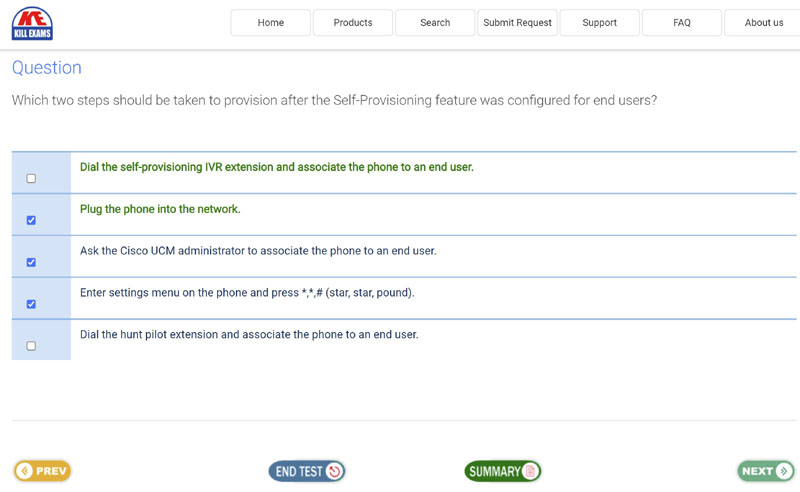
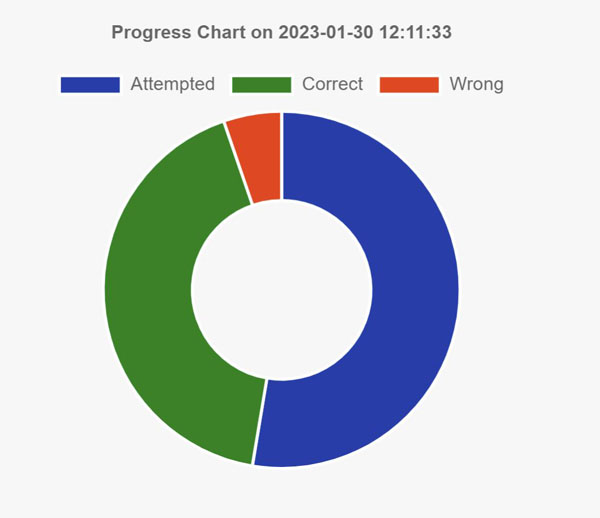
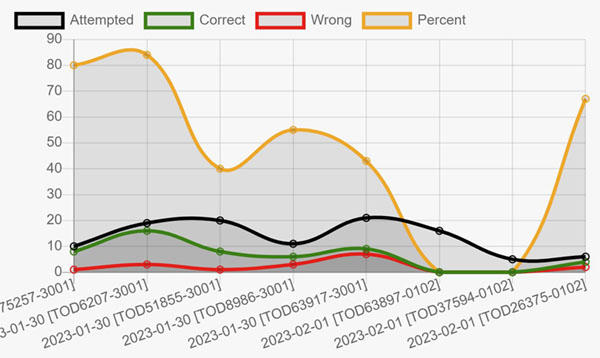
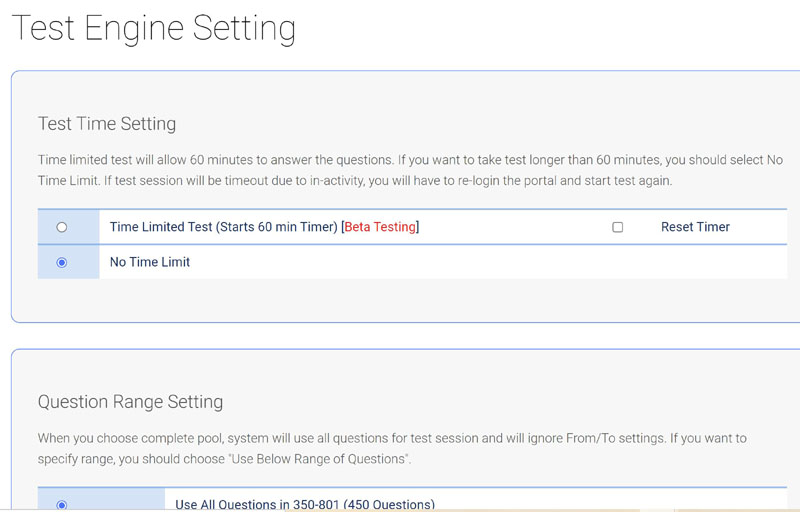
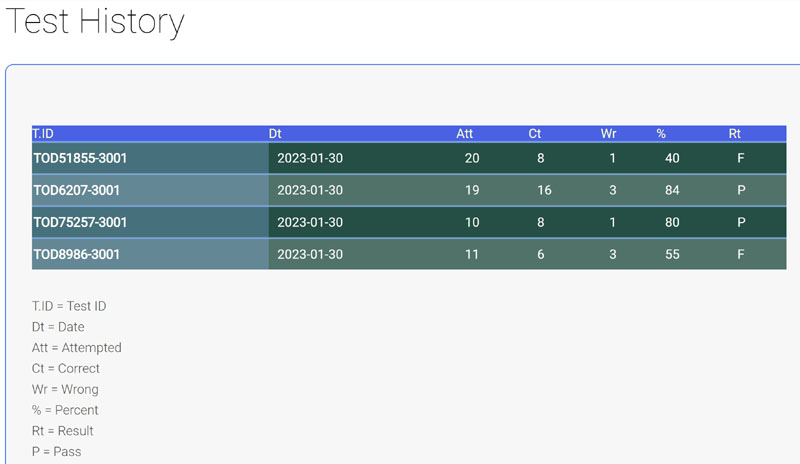
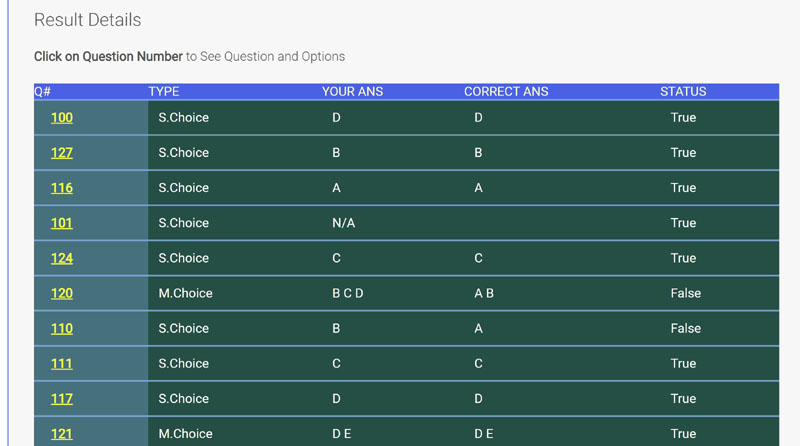
The Online Test Engine maintains practice history, performance summaries, and visual progress reports. Where available, questions may include explanations or reference information to support better understanding of exam topics. Content is reviewed and updated periodically to reflect relevant syllabus changes and maintain consistency with exam objectives.
Desktop Test Engine
| Exam Questions | 1186 (Complete Set) |
| Software Version | 2026 |
| Access | Unlimited |
| Latest Update | November 20, 2026 |
| Access Activation | Instant (5 to 10 min.) |
| Supported OS | Windows (All Versions) |
| Delivery Method | Username / Password |
| Test Engine Trial Software | Killexams Test Engine 2026 |
The Killexams Desktop Test Engine (version 2026) is a dedicated test preparation software designed to support candidates preparing for the CCSP exam. The simulator provides a structured desktop based practice environment that allows users to work through exam style questions and review their performance in detail.
By practicing with the Certified Cloud Security Professional Exam Simulator, candidates can become familiar with question formats, exam navigation, and time based testing conditions similar to those used in official exams. This experience helps users build confidence across testing environment, time management, exam topics and identify areas that may require additional study.
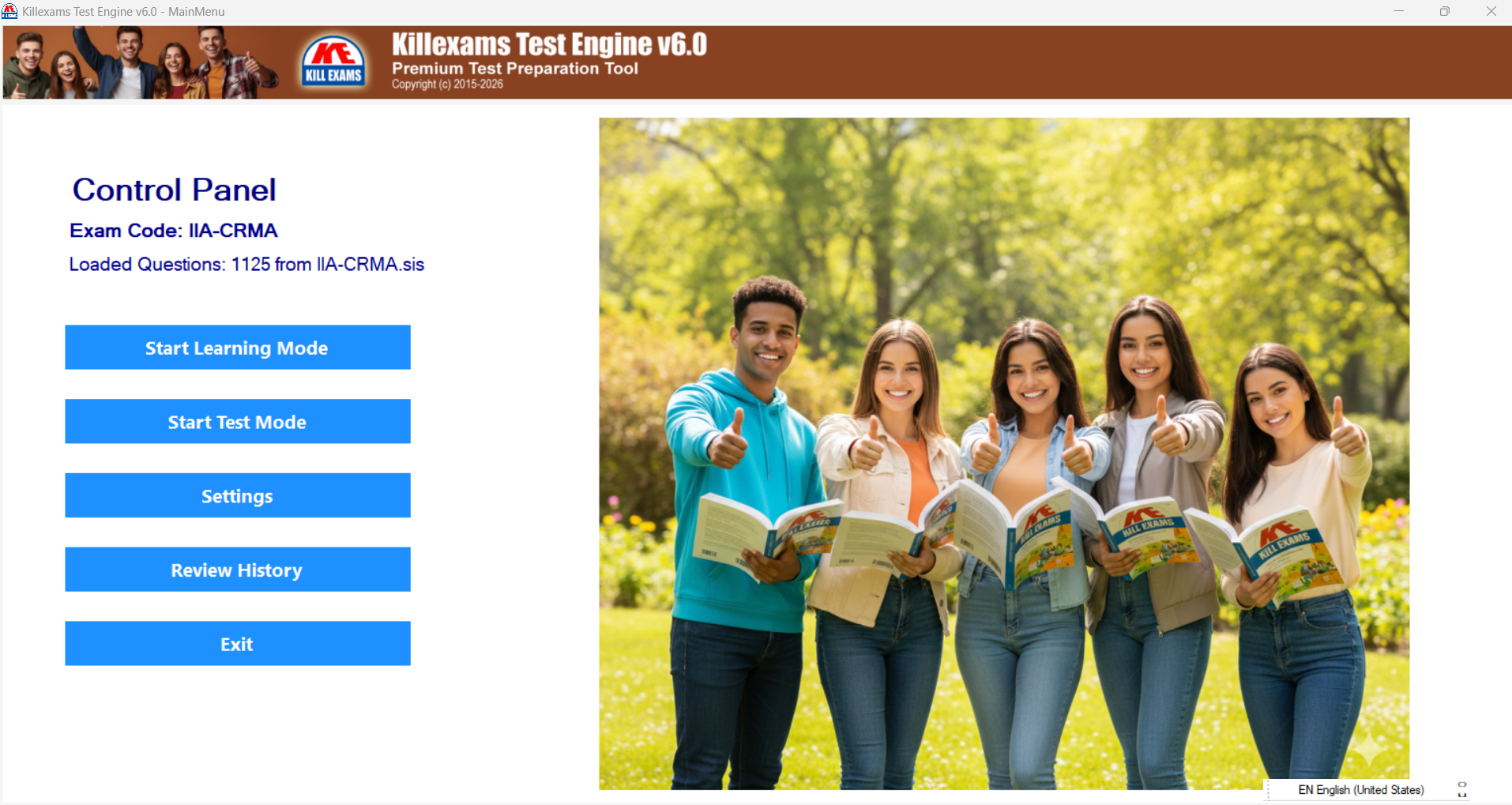
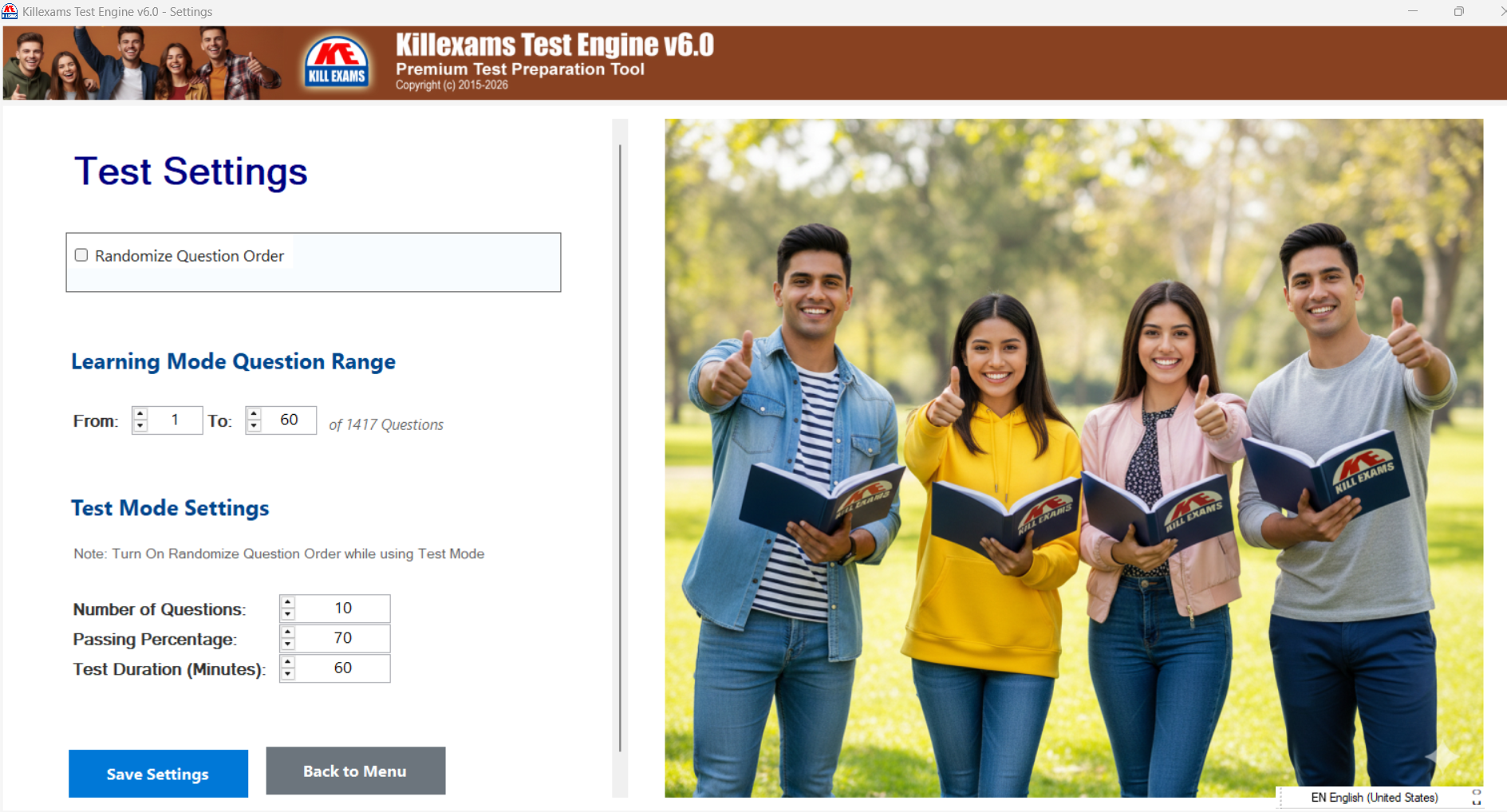
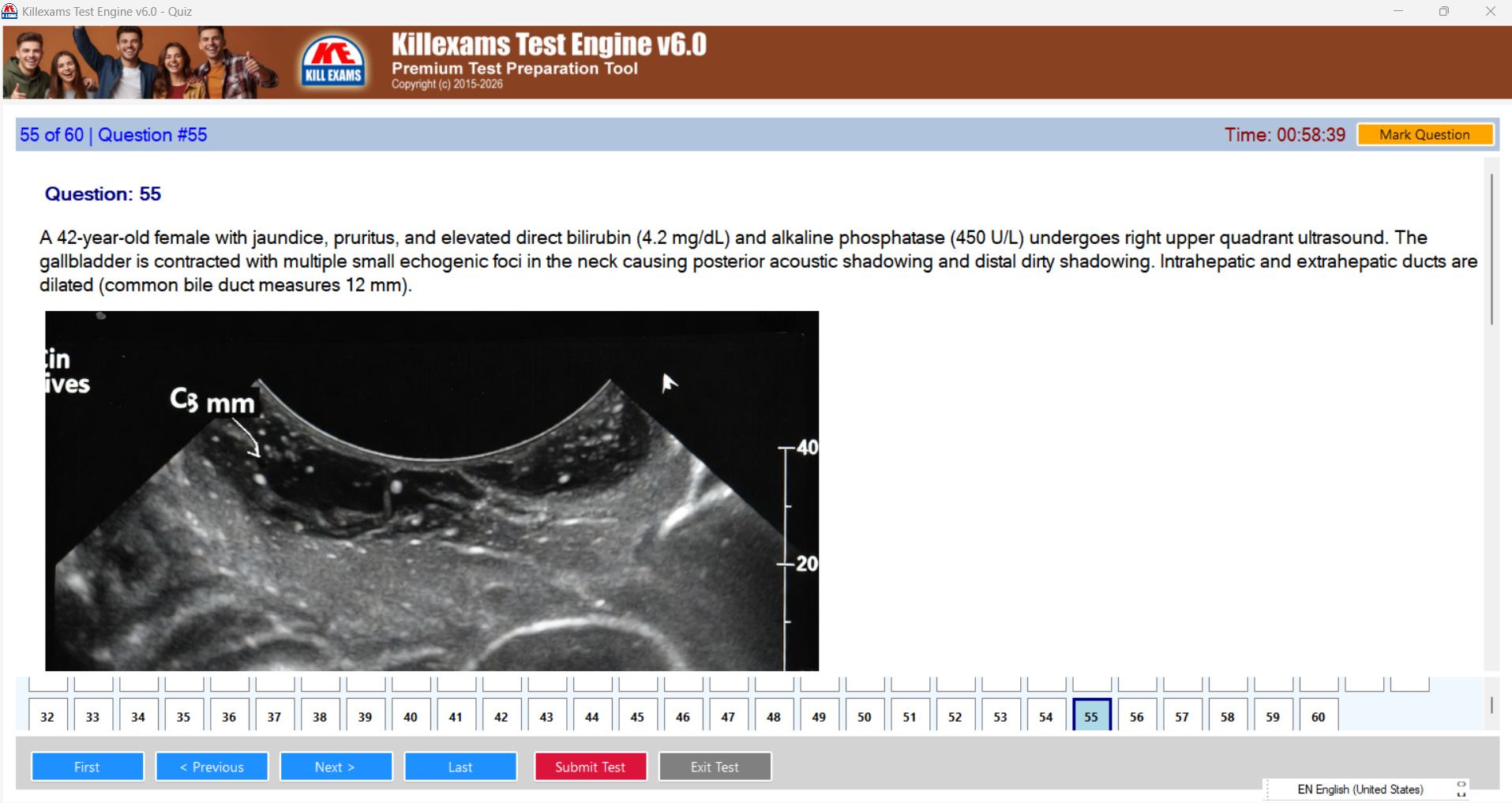
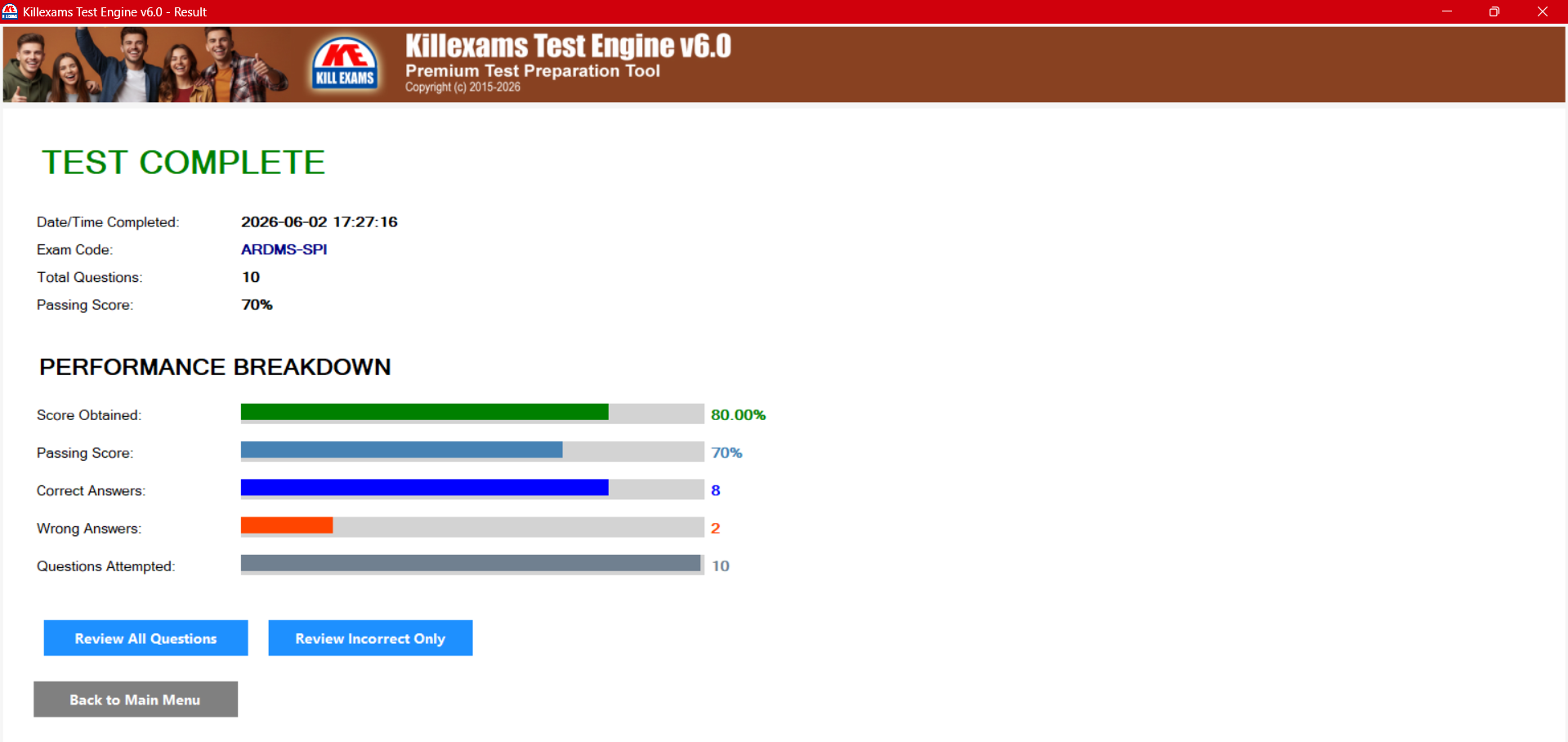

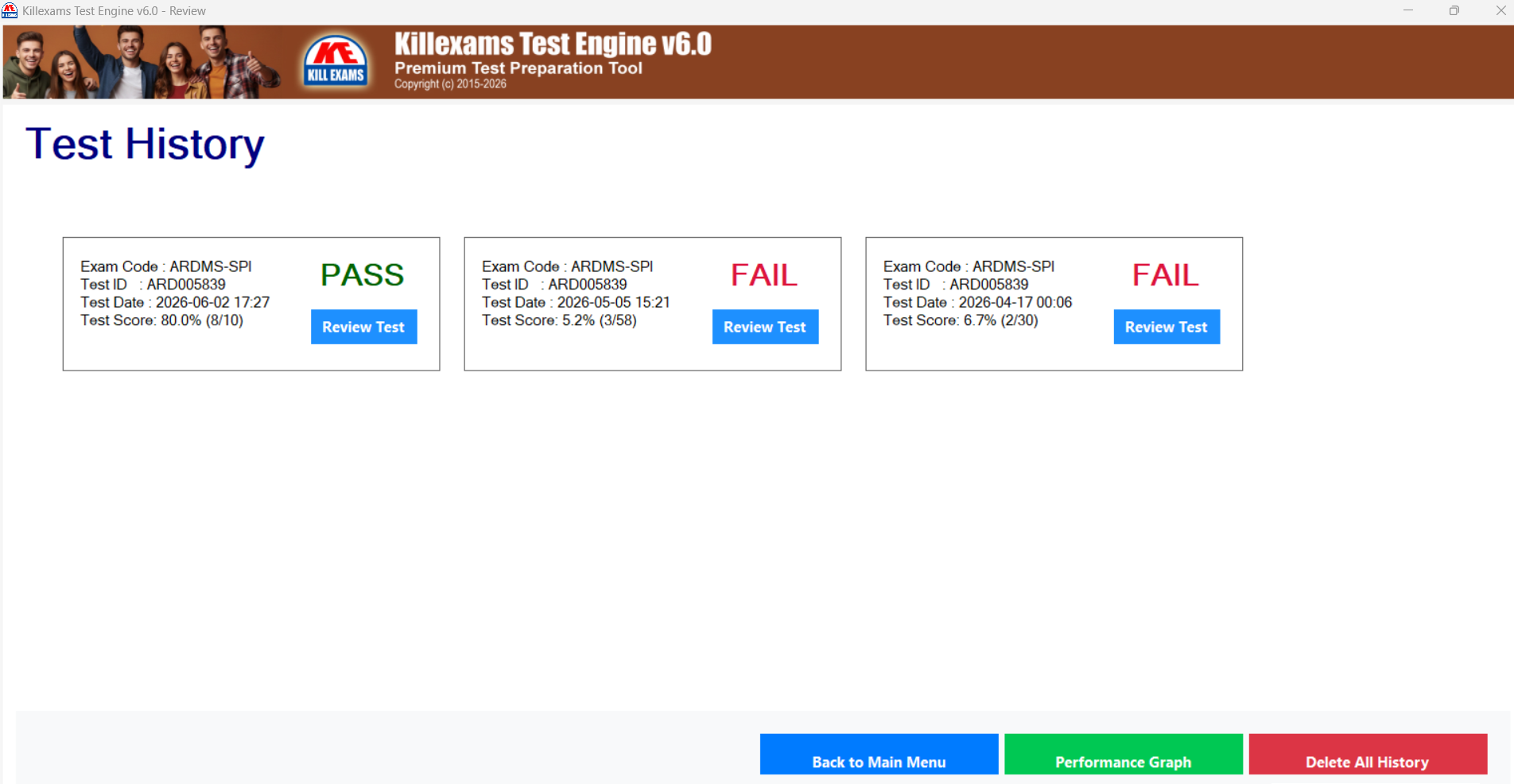
The Desktop Exam Simulator records practice history, performance summaries, and graphical progress reports. Where available, questions may include explanations or reference information to support understanding of correct and incorrect answers. The simulator content is reviewed and updated periodically to remain aligned with current exam objectives and syllabus requirements.
Certification Information
Other ISC2 Practice Exams
ISC2-CC | CGRC | CCSP | CISSP | View all ›
|
3 Months Update
|
6 Months Update
|
12 Months Update
|
|
|---|---|---|---|
What is 3 Months Update?
During 3 months, all future updates in PDF and Test Engine will be provided in your MyAccount with download links. An Intimation email on each update will be sent to you to re-download the updated exam files.
|
What is 6 Months Update?
During 6 months, all future updates in PDF and Test Engine will be provided in your MyAccount with download links. An Intimation email on each update will be sent to you to re-download the updated exam files.
|
What is 12 Months Update?
During 12 months, all future updates in PDF and Test Engine will be provided in your MyAccount with download links. An Intimation email on each update will be sent to you to re-download the updated exam files.
|
|
| Files | PDF / Test Engines | PDF / Test Engines | PDF / Test Engines |
| Premium Access | ✔ | ✔ | ✔ |
| Online Test Engine | ✔ | ✔ | ✔ |
| Instant Download Access | ✔ | ✔ | ✔ |
| Comprehensive Q&A | ✔ | ✔ | ✔ |
| Latest Topics | ✔ | ✔ | ✔ |
| Updated Regularly | ✔ | ✔ | ✔ |
| Portable Files | ✔ | ✔ | ✔ |
| Unlimited Download | ✔ | ✔ | ✔ |
| 100% Secured | ✔ | ✔ | ✔ |
| Confidentiality | 100% | 100% | 100% |
| Syllabus Coverage | Latest | Latest | Latest |
| Any Hidden Cost | No | No | No |
| Auto Renewal | No | No | No |
| Updates Intimation | by Email | by Email | by Email |
| Technical Support | Free | Free | Free |
| PDF Compatibility | Windows, Mac, Android, iOS, Linux | Windows, Mac, Android, iOS, Linux | Windows, Mac, Android, iOS, Linux |
| Desktop Test Engine Compatibility | Windows All Versions | Windows All Versions | Windows All Versions |
| Online Test Engine Compatibility | Mac / Windows / Android / iOS / Linux | Mac / Windows / Android / iOS / Linux | Mac / Windows / Android / iOS / Linux |
CCSP Exam Format | Course Contents | Course Outline | Exam Syllabus | Exam Objectives
Cloud Concepts, Architecture and Design
1.1 Understand cloud computing concepts
» Cloud computing definitions
» Cloud computing roles and responsibilities (e.g., cloud service customer, cloud service provider, cloud service partner, cloud service broker, regulator)
» Key cloud computing characteristics (e.g., on-demand self-service, broad network access, multi-tenancy, rapid elasticity and scalability, resource pooling, measured service)
» Building block technologies (e.g., virtualization, storage, networking, databases, orchestration)
1.2 Describe cloud reference architecture
1.3 Understand security concepts relevant to cloud computing
1.4 Understand design principles of secure cloud computing
» Cloud secure data lifecycle
» Cloud-based business continuity (BC) and disaster recovery (DR) plan
» Business impact analysis (BIA) (e.g., cost-benefit analysis, return on investment (ROI))
» Functional security requirements (e.g., portability, interoperability, vendor lock-in)
» Security considerations and responsibilities for different cloud categories (e.g., Software as a Service (SaaS), Infrastructure as a Service (IaaS), Platform as a Service (PaaS))
» Cloud design patterns (e.g., SANS security principles, Well-Architected Framework, Cloud Security Alliance (CSA) Enterprise Architecture)
» DevOps security
1.5 Evaluate cloud service providers
» Verification against criteria (e.g., International Organization for Standardization/International Electrotechnical Commission (ISO/IEC) 27017, Payment Card Industry Data Security Standard (PCI DSS))
» System/subsystem product certifications (e.g., Common Criteria (CC), Federal Information Processing Standard (FIPS) 140-2)
» Cryptography and key management
» Identity and access control (e.g., user access, privilege access, service access)
» Data and media sanitization (e.g., overwriting, cryptographic erase)
» Network security (e.g., network security groups, traffic inspection, geofencing, zero trust network)
» Virtualization security (e.g., hypervisor security, container security, ephemeral computing, serverless technology)
» Common threats
» Security hygiene (e.g., patching, baselining)
» Cloud computing activities
» Cloud service capabilities (e.g., application capability types, platform capability types, infrastructure capability types)
» Cloud service categories (e.g., Software as a Service (SaaS), Infrastructure as a Service (IaaS), Platform as a Service (PaaS))
» Cloud deployment models (e.g., public, private, hybrid, community, multi-cloud)
» Cloud shared considerations (e.g., interoperability, portability, reversibility, availability, security, privacy, resiliency, performance, governance, maintenance and versioning, service levels and service-level agreements (SLA), auditability, regulatory, outsourcing)
» Impact of related technologies (e.g., data science, machine learning, artificial intelligence (AI), blockchain, Internet of Things (IoT), containers, quantum computing, edge computing, confidential computing, DevSecOps)
2.1 Describe cloud data concepts
» Cloud data life cycle phases
» Data dispersion
» Data flows
2.2 Design and implement cloud data storage architectures
» Storage types (e.g., long-term, ephemeral, raw storage)
» Threats to storage types
2.3 Design and apply data security technologies and strategies
2.4 Implement data discovery
» Structured data
» Unstructured data
» Semi-structured data
» Data location
2.5 Plan and implement data classification
2.6 Design and implement Information Rights Management (IRM)
» Objectives (e.g., data rights, provisioning, access models)
» Appropriate tools (e.g., issuing and revocation of certificates)
Domain 2:Cloud Data Security
» Encryption and key management
» Hashing
» Data obfuscation (e.g., masking, anonymization)
» Tokenization
» Data loss prevention (DLP)
» Keys, secrets and certificates management
» Data classification policies
» Data mapping
» Data labeling
2.7 Plan and implement data retention, deletion and archiving policies
» Data retention policies
» Data deletion procedures and mechanisms
» Data archiving procedures and mechanisms
» Legal hold
2.8 Design and implement auditability, traceability and accountability of data events
» Definition of event sources and requirement of event attributes (e.g., identity, Internet Protocol (IP) address, geolocation)
» Logging, storage and analysis of data events
» Chain of custody and non-repudiation
3.1 Comprehend cloud infrastructure and platform components
3.2 Design a secure data center
» Logical design (e.g., tenant partitioning, access control)
» Physical design (e.g., location, buy or build)
» Environmental design (e.g., Heating, Ventilation, and Air Conditioning (HVAC), multi-vendor pathway connectivity)
» Design resilient
3.3 Analyze risks associated with cloud infrastructure and platforms
3.4 Plan and implementation of security controls
3.5 Plan business continuity (BC) and disaster recovery (DR)
Domain 3:Cloud Platform and Infrastructure
Security
» Physical environment
» Network and communications
» Compute
» Virtualization
» Storage
» Management plane
» Risk assessment (e.g., identification, analysis)
» Cloud vulnerabilities, threats and attacks
» Risk mitigation strategies
» Physical and environmental protection (e.g., on-premises)
» System, storage and communication protection
» Identification, authentication and authorization in cloud environments
» Audit mechanisms (e.g., log collection, correlation, packet capture)
» Business continuity (BC) / disaster recovery (DR) strategy
» Business requirements (e.g., Recovery Time Objective (RTO), Recovery Point Objective (RPO), recovery service level)
» Creation, implementation and testing of plan
4.1 Advocate training and awareness for application security
» Cloud development basics
» Common pitfalls
» Common cloud vulnerabilities (e.g., Open Web Application Security Project (OWASP) Top-10, SANS Top-25)
4.2 Describe the Secure Software Development Life Cycle (SDLC) process
» Business requirements
» Phases and methodologies (e.g., design, code, test, maintain, waterfall vs. agile)
4.3 Apply the Secure Software Development Life Cycle (SDLC)
4.4 Apply cloud software assurance and validation
» Functional and non-functional testing
» Security testing methodologies (e.g., blackbox, whitebox, static, dynamic, Software Composition Analysis (SCA), interactive application security testing (IAST))
» Quality assurance (QA)
» Abuse case testing
4.5 Use verified secure software
» Securing application programming interfaces (API)
» Supply-chain management (e.g., vendor assessment)
» Third-party software management (e.g., licensing)
» Validated open-source software
Domain 4:Cloud Application Security
» Cloud-specific risks
» Threat modeling (e.g., Spoofing, Tampering, Repudiation, Information Disclosure, Denial of Service, and Elevation of Privilege (STRIDE), Disaster, Reproducibility, Exploitability, Affected Users, and Discoverability (DREAD), Architecture, Threats, Attack Surfaces, and Mitigations (ATASM), Process for Attack Simulation and Threat Analysis (PASTA))
» Avoid common vulnerabilities during development
» Secure coding (e.g., Open Web Application Security Project (OWASP) Application Security Verification Standard (ASVS), Software Assurance Forum for Excellence in Code (SAFECode))
» Software configuration management and versioning
4.6 Comprehend the specifics of cloud application architecture
» Supplemental security components (e.g., web application firewall (WAF), Database Activity Monitoring (DAM), Extensible Markup Language (XML) firewalls, application programming interface (API) gateway)
» Cryptography
» Sandboxing
» Application virtualization and orchestration (e.g., microservices, containers)
4.7 Design appropriate identity and access management (IAM) solutions
» Federated identity
» Identity providers (IdP)
» Single sign-on (SSO)
» Multi-factor authentication (MFA)
» Cloud access security broker (CASB)
» Secrets management
5.1 Build and implement physical and logical infrastructure for cloud environment
» Hardware specific security configuration requirements (e.g., hardware security module (HSM) and Trusted Platform Module (TPM))
» Installation and configuration of management tools
» Virtual hardware specific security configuration requirements (e.g., network, storage, memory, central processing unit (CPU), Hypervisor type 1 and 2)
» Installation of guest operating system (OS) virtualization toolsets
5.2 Operate and maintain physical and logical infrastructure for cloud environment
Domain 5:Cloud Security Operations
» Access controls for local and remote access (e.g.,Remote Desktop Protocol (RDP), secure terminal access, Secure Shell (SSH), console-based access
mechanisms, jumpboxes, virtual client)
» Secure network configuration (e.g., virtual local area networks (VLAN), Transport Layer Security (TLS), Dynamic Host Configuration Protocol (DHCP), Domain Name System Security Extensions (DNSSEC), virtual private network (VPN))» Network security controls (e.g., firewalls, intrusion detection systems (IDS), intrusion prevention systems (IPS), honeypots, vulnerability assessments, network security groups, bastion host)
» Operating system (OS) hardening through the application of baselines, monitoring and remediation (e.g., Windows, Linux, VMware)
» Patch management
» Infrastructure as Code (IaC) strategy
» Availability of clustered hosts (e.g., distributed resource scheduling, dynamic optimization, storage clusters, maintenance mode, high availability (HA))
» Availability of guest operating system (OS)
» Performance and capacity monitoring (e.g., network, compute, storage, response time)
» Hardware monitoring (e.g., disk, central processing unit (CPU), fan speed, temperature)
» Configuration of host and guest operating system (OS) backup and restore functions
» Management plane (e.g., scheduling, orchestration, maintenance) CCSP Certification Exam Outline 11
5.3 Implement operational controls and standards (e.g., Information Technology Infrastructure Library (ITIL), International Organization for Standardization/International Electrotechnical Commission (ISO/IEC) 20000-1)
5.4 Support digital forensics
5.5 Manage communication with relevant parties
» Vendors
» Customers
» Partners
» Regulators
» Other stakeholders
5.6 Manage security operations
» Forensic data collection methodologies
» Evidence management
» Collect, acquire, and preserve digital evidence
» Security operations center (SOC)
» Intelligent monitoring of security controls (e.g., firewalls, intrusion detection systems (IDS), intrusion prevention systems (IPS), honeypots, network security groups, artificial intelligence (AI))
» Log capture and analysis (e.g., security information and event management (SIEM), log management)
» Incident management
» Vulnerability assessments
» Change management
» Continuity management
» Information security management
» Continual service improvement management
» Incident management
» Problem management
» Release management
» Deployment management
» Configuration management
» Service level management
» Availability management
» Capacity management
6.1 Articulate legal requirements and unique risks within the cloud environment
6.2 Understand privacy issues
» Difference between contractual and regulated private data (e.g., protected health information (PHI), personally identifiable information (PII))
» Country-specific legislation related to private data (e.g., protected health information (PHI), personally identifiable information (PII))
» Jurisdictional differences in data privacy
» Standard privacy requirements (e.g., International Organization for Standardization/International Electrotechnical Commission (ISO/IEC) 27018, Generally Accepted Privacy Principles (GAPP), General Data Protection Regulation (GDPR))
» Privacy Impact Assessments (PIA)
6.3 Understand audit process, methodologies, and required adaptations for a cloud environment
Domain 6:Legal, Risk and Compliance
» Conflicting international legislation
» Evaluation of legal risks specific to cloud computing
» Legal framework and guidelines
» eDiscovery (e.g., International Organization for Standardization/International Electrotechnical Commission (ISO/IEC) 27050, Cloud Security Alliance (CSA) Guidance)
» Forensics requirements
» Internal and external audit controls
» Impact of audit requirements
» Identify assurance challenges of virtualization and cloud
» Types of audit reports (e.g., Statement on Standards for Attestation Engagements (SSAE), Service Organization Control (SOC), International Standard on AssuranceEngagements (ISAE))
» Restrictions of audit scope statements (e.g., Statement on Standards for Attestation Engagements (SSAE), International Standard on Assurance Engagements (ISAE))
» Gap analysis (e.g., control analysis, baselines)
» Audit planning
» Internal information security management system
» Internal information security controls system
» Policies (e.g., organizational, functional, cloud computing)
» Identification and involvement of relevant stakeholders
» Specialized compliance requirements for highly-regulated industries (e.g., North American Electric Reliability Corporation / Critical Infrastructure Protection (NERC / CIP), Health Insurance Portability and Accountability Act (HIPAA), Health Information Technology for Economic and Clinical Health (HITECH) Act, Payment Card Industry (PCI))
» Impact of distributed information technology (IT) model (e.g., diverse geographical locations and crossing over legal jurisdictions)
6.4 Understand implications of cloud to enterprise risk management
6.5 Understand outsourcing and cloud contract design
» Business requirements (e.g., service-level agreement (SLA), master service agreement (MSA), statement of work (SOW))
» Vendor management (e.g., vendor assessments, vendor lock-in risks, vendor viability, escrow)
» Contract management (e.g., right to audit, metrics, definitions, termination, litigation, assurance, compliance, access to cloud/data, cyber risk insurance)
» Supply-chain management (e.g., International Organization for Standardization/International Electrotechnical Commission (ISO/IEC) 27036)
» Assess providers risk management programs (e.g., controls, methodologies, policies, risk profile, risk appetite)
» Difference between data owner/controller vs. data custodian/processor
» Regulatory transparency requirements (e.g., breach notification, Sarbanes-Oxley (SOX), General Data Protection Regulation (GDPR))
» Risk treatment (i.e., avoid, mitigate, transfer, share, acceptance)
» Different risk frameworks
» Metrics for risk management
» Assessment of risk environment (e.g., service, vendor, infrastructure, business)
Reviews (2)3.50 Overall
★★★★★
0%
★★★★
50%
★★★
50%
★★
0%
★
0%
|
Submit ReviewYou must be logged in to submit a review. Sign In to Submit Review |
Customer Reviews
CCSP Exam FAQs
How many questions are on the CCSP exam?
The CCSP exam has 125 questions.
How long is the CCSP exam?
You have 3 hours to complete the CCSP exam.
What topics does the CCSP exam cover, and how are they weighted?
The CCSP exam covers 6 sections with these weightings: Cloud Concepts, Architecture and Design (17%); Cloud Data Security (20%); Cloud Platform and Infrastructure Security (17%); Cloud Application Security (17%); Cloud Security Operations (16%); Legal, Risk and Compliance (13%).
How should I prepare for CCSP?
Start with the official CCSP exam outline and study materials from ISC2, then build exam readiness with timed practice. A killexams.com premium account gives you the full pool of 1,186 CCSP practice questions and answers in PDF and Test Engine formats, so you can practice every objective and review the answers before exam day.
How long does it take to prepare for CCSP?
At a steady pace of 100 practice questions a day, working through all 1,186 CCSP questions takes about 12 days. Add extra days to repeat the questions you got wrong.
Is CCSP hard? Who is it for?
The Certified Cloud Security Professional credential from ISC2 validates advanced cloud security skills.
How many practice questions do you have for CCSP?
The killexams.com CCSP practice test contains 1,186 questions and answers.
Is there a free CCSP sample?
Yes. A free CCSP sample PDF is available on this page, so you can review the question style before you buy.
What formats are included in the CCSP practice test?
The CCSP practice test is available as a PDF, an Online Test Engine and a Desktop Test Engine.
Do the CCSP practice questions cover the current exam objectives?
Yes. The CCSP practice questions cover the complete syllabus and current exam objectives.
How do I get the files after purchase, and how long is access valid?
Your MyAccount login details are delivered by email. You can download the files from the member area until your account expires, after 3, 6 or 12 months depending on the plan you bought.
Can I use the CCSP Test Engine on Mac or mobile?
Yes, with the Online Test Engine, which runs on Mac, iOS, Android, Linux and other platforms. The Desktop Test Engine is for Windows only.
What if I fail the CCSP exam after using your material?
You can choose one of three options: 1) a refund, 2) a free 3-month account extension, or 3) a new exam of your choice.
How many practice questions are available for CCSP?
The CCSP practice test contains 1,186 practice questions and answers covering the current exam objectives.
What formats are available for CCSP preparation?
The CCSP practice test is available as PDF, Online Test Engine, Desktop Test Engine. All formats can be downloaded instantly after purchase.
Is there a free CCSP sample?
Yes. You can preview and download a free CCSP sample PDF on this page before you buy.