


CISSP Exam Questions PDF
| Questions and Answers | 1508 (Complete Set) |
| File Format | |
| Latest Update | November 27, 2026 |
| Files Delivery | Instant (5 to 10 min.) |
| Compatibility | All Desktop and Mobile Devices |
| Delivery Method | Download Account |
The Certified Information Systems Security Professional credential from ISC2 is one of the most respected security certifications. It covers eight domains spanning security management, architecture, operations and software security.
Security roles require proof of skill, and Certified Information Systems Security Professional is one of the ways employers and clients judge whether a professional understands threats, controls and governance. Many organizations map this credential to job roles in their security frameworks.
The Certified Information Systems Security Professional exam covers both concepts and practical judgment, asking what a security professional should do first, what control best fits a risk, or how to respond to an incident. Questions often have several plausible answers, so careful reading is essential.
Preparing for the CISSP exam requires not only understanding the exam topics but also practicing with exam style questions. Our Certified Information Systems Security Professional exam questions in practice tests help candidates review key concepts and familiarize themselves with the format and difficulty of exam.
At Killexams.com, our team works to maintain up-to-date practice content for exam preparation. We continuously review and refine our question sets and explanations to cover the latest relevant syllabus areas and help learners strengthen their understanding of core topics before facing the official exam. These Practice tests allow you to identify areas where you need improvement by measuring your readiness, and provide you exam questions to polish those areas.
CISSP Exam Questions Preview
CISSP is computer adaptive with 100 to 150 questions over three hours. A score of 700 out of 1000 is required. Eligibility requires five years of experience in two or more domains.
Candidates preparing for CISSP usually benefit from a topic by topic schedule. Start with Security and Risk Management, which carries about 16% of the exam, and then Security Architecture and Engineering at about 13%. Spending your first weeks on the heaviest sections gives the biggest return on study time. After that, move through Asset Security; Communication and Network Security; Identity and Access Management; and Security Assessment and Testing, keeping short notes of definitions and examples for each. Before booking, make sure your practice scores are steady across every section rather than strong in only one or two.
In the last weeks before CISSP, use timed practice tests to build stamina and reduce second guessing. Review explanations to understand why distractors are wrong, which is often where the real learning happens.
For CISSP, map each domain to real controls and incidents you have seen or read about. Security exams often ask for the best or first action, so practice ranking options by risk, policy and business impact.
| Detail | Information |
|---|---|
| Questions | 100 to 150 |
| Duration | 3 hours |
| Passing Score | 700 of 1000 |
| Provider | ISC2 |
To help you evaluate our material, you may download free sample pdf with example questions and answers that we provide. This sample allows you to review content and approach before deciding on Premium materials..
The Certified Information Systems Security Professional practice test files contains 1508 Questions, are compatible with multiple devices, including Windows, macOS, iOS, and Android, and can be used for both online and offline study. The PDF format is printable, making it easy to study during travel or when away from a computer. Access to updated materials is available through your online account.
After purchase, you will receive your username and password immediately, allowing you to log in and download your study files without delay. Our goal is to support exam preparation at your pace with practice content designed for reinforcement and understanding of key concepts.
Killexams.com CISSP questions and answers cover all eight domains with explanations.
Killexams.com CISSP practice sets cover Security and Risk Management; Asset Security; Security Architecture and Engineering; and Communication and Network Security, so each study session maps directly to a part of the exam. Explanations accompany every answer, and repeated timed sessions build the speed and confidence needed on exam day.
Killexams.com keeps the CISSP question bank current by reviewing it when the exam outline changes, and each question includes an explanation so you learn the reasoning, not just the answer. The practice test can be repeated with questions in a different order, which helps you focus on understanding rather than memorizing positions.
Candidates who use the killexams.com CISSP question bank often begin with a diagnostic session to see which sections need the most attention, then return to those sections repeatedly before taking a final full length practice test.
Online Test Engine
| Exam Questions | 1508 (Complete Set) |
| Testing Limit | Unlimited |
| Access Type | Online |
| Latest Update | November 27, 2026 |
| Access Activation | Instant (5 to 10 min.) |
| Supported OS | Mac, Windows, Android, iPhone / iPad, Linux |
| Delivery Method | Username / Password |
Killexams.com provides an Online Test Engine designed to help candidates practice exam questions in a structured and interactive environment. The Test Engine is compatible with iPhone, iPad, Android, Windows, and Mac, allowing you to study and practice on the device that best fits your schedule.
The CISSP Online Test Engine enables candidates to simulate exam-style practice sessions, review answers, and track progress over time. This learning approach helps users practice exam questions, question formats and improve time management while preparing for the Certified Information Systems Security Professional exam.
The Test Engine includes features that support effective learning, such as customizable practice sessions, question review modes, and progress tracking. These tools are designed to assist candidates in identifying knowledge gaps and reinforcing key concepts through repeated practice rather than memorization alone.
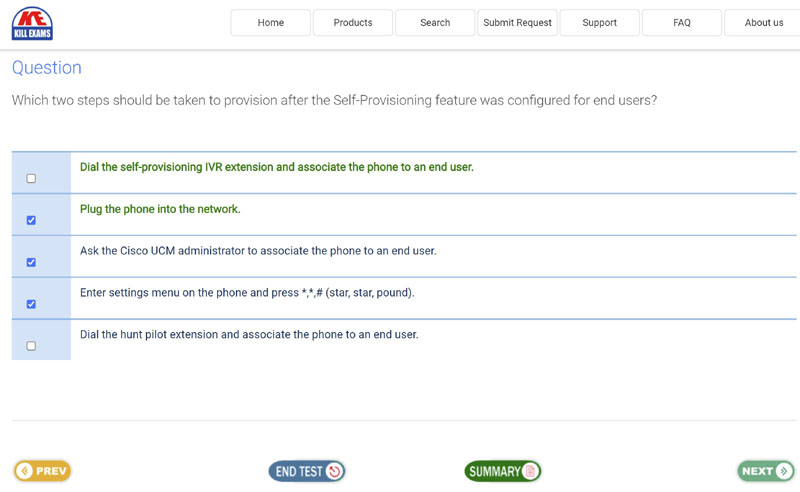
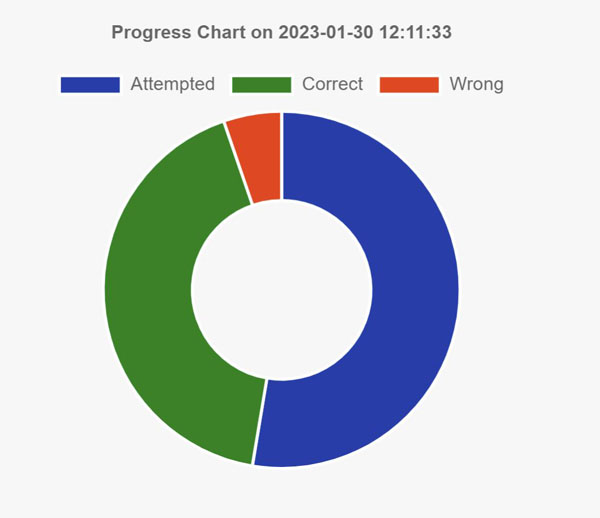
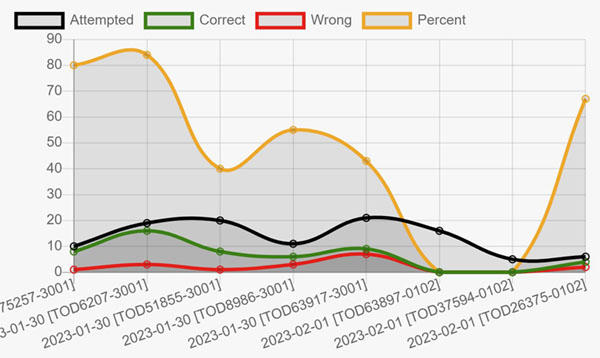
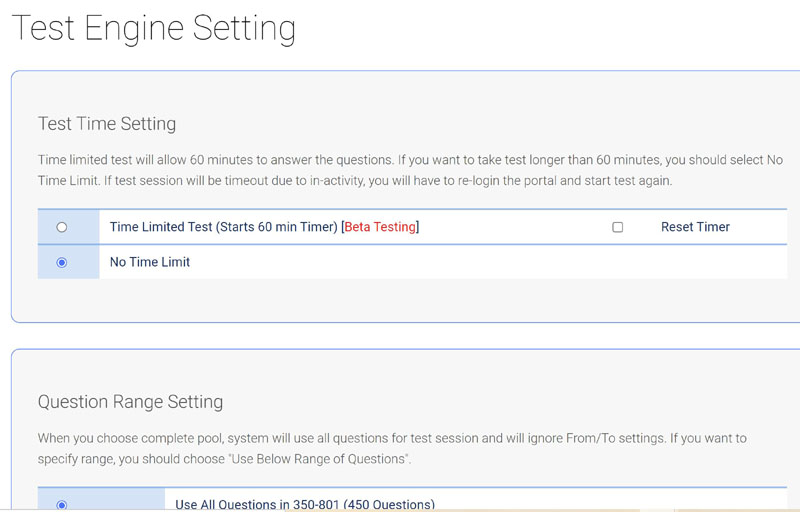
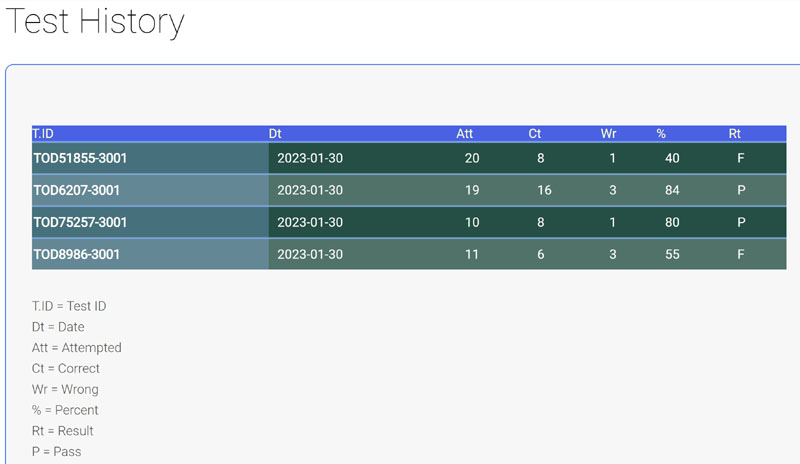
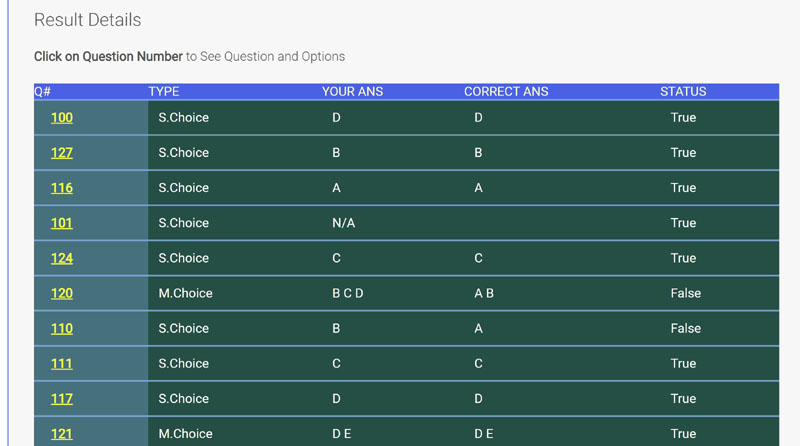
The Online Test Engine maintains practice history, performance summaries, and visual progress reports. Where available, questions may include explanations or reference information to support better understanding of exam topics. Content is reviewed and updated periodically to reflect relevant syllabus changes and maintain consistency with exam objectives.
Desktop Test Engine
| Exam Questions | 1508 (Complete Set) |
| Software Version | 2026 |
| Access | Unlimited |
| Latest Update | November 27, 2026 |
| Access Activation | Instant (5 to 10 min.) |
| Supported OS | Windows (All Versions) |
| Delivery Method | Username / Password |
| Test Engine Trial Software | Killexams Test Engine 2026 |
The Killexams Desktop Test Engine (version 2026) is a dedicated test preparation software designed to support candidates preparing for the CISSP exam. The simulator provides a structured desktop based practice environment that allows users to work through exam style questions and review their performance in detail.
By practicing with the Certified Information Systems Security Professional Exam Simulator, candidates can become familiar with question formats, exam navigation, and time based testing conditions similar to those used in official exams. This experience helps users build confidence across testing environment, time management, exam topics and identify areas that may require additional study.


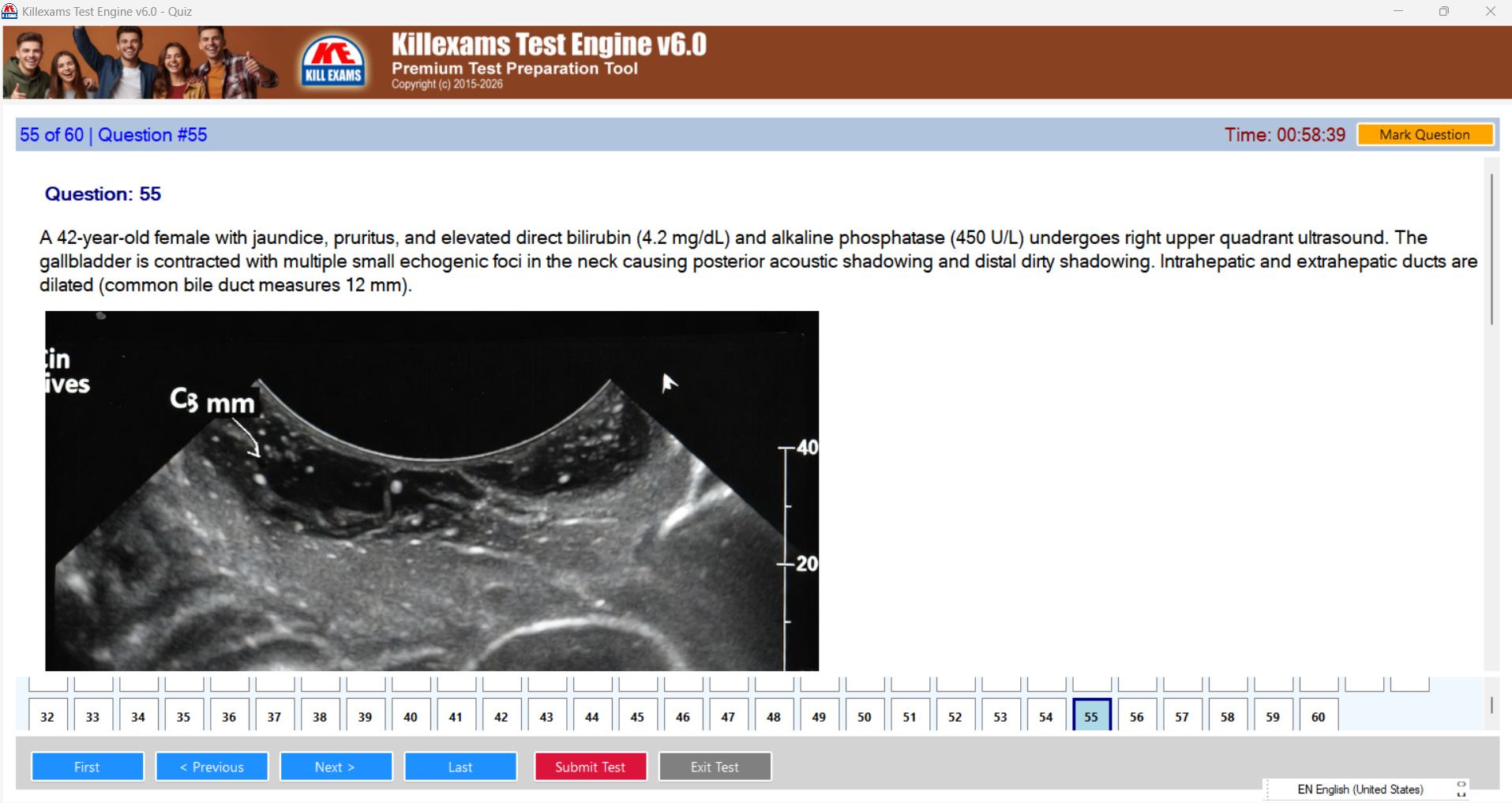
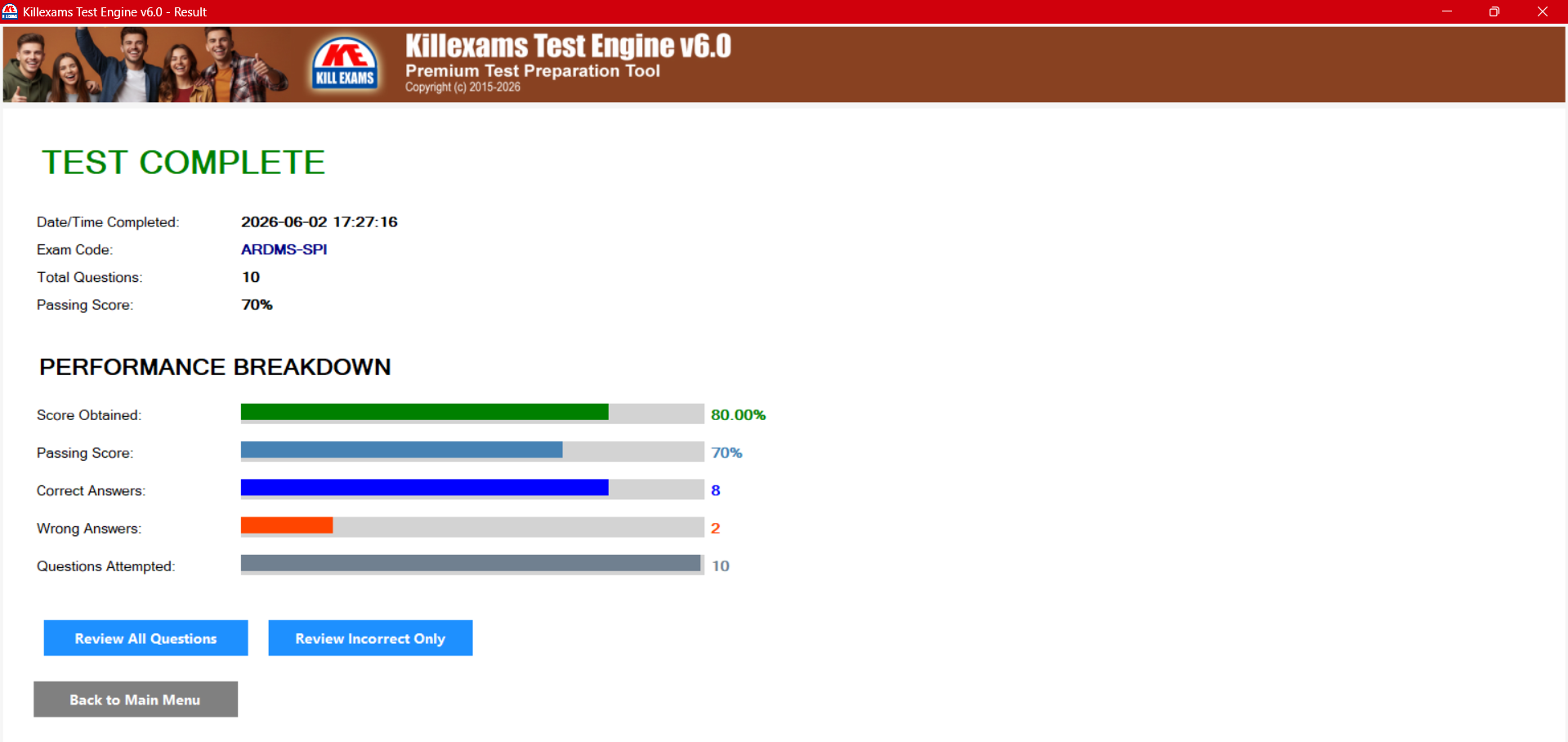

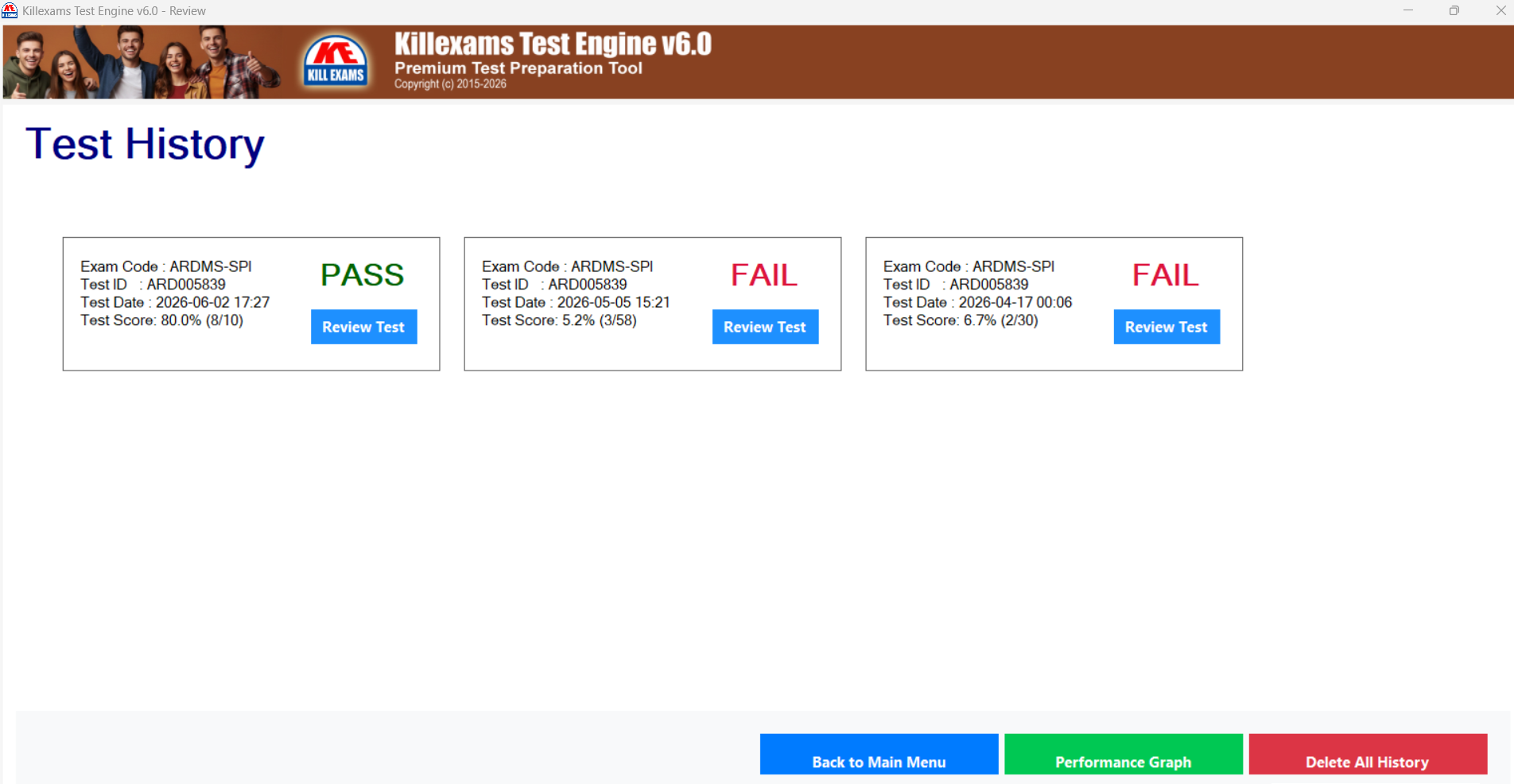
The Desktop Exam Simulator records practice history, performance summaries, and graphical progress reports. Where available, questions may include explanations or reference information to support understanding of correct and incorrect answers. The simulator content is reviewed and updated periodically to remain aligned with current exam objectives and syllabus requirements.
Certification Information
Other ISC2 Practice Exams
ISC2-CC | CGRC | CCSP | CISSP | View all ›
|
3 Months Update
|
6 Months Update
|
12 Months Update
|
|
|---|---|---|---|
What is 3 Months Update?
During 3 months, all future updates in PDF and Test Engine will be provided in your MyAccount with download links. An Intimation email on each update will be sent to you to re-download the updated exam files.
|
What is 6 Months Update?
During 6 months, all future updates in PDF and Test Engine will be provided in your MyAccount with download links. An Intimation email on each update will be sent to you to re-download the updated exam files.
|
What is 12 Months Update?
During 12 months, all future updates in PDF and Test Engine will be provided in your MyAccount with download links. An Intimation email on each update will be sent to you to re-download the updated exam files.
|
|
| Files | PDF / Test Engines | PDF / Test Engines | PDF / Test Engines |
| Premium Access | ✔ | ✔ | ✔ |
| Online Test Engine | ✔ | ✔ | ✔ |
| Instant Download Access | ✔ | ✔ | ✔ |
| Comprehensive Q&A | ✔ | ✔ | ✔ |
| Latest Topics | ✔ | ✔ | ✔ |
| Updated Regularly | ✔ | ✔ | ✔ |
| Portable Files | ✔ | ✔ | ✔ |
| Unlimited Download | ✔ | ✔ | ✔ |
| 100% Secured | ✔ | ✔ | ✔ |
| Confidentiality | 100% | 100% | 100% |
| Syllabus Coverage | Latest | Latest | Latest |
| Any Hidden Cost | No | No | No |
| Auto Renewal | No | No | No |
| Updates Intimation | by Email | by Email | by Email |
| Technical Support | Free | Free | Free |
| PDF Compatibility | Windows, Mac, Android, iOS, Linux | Windows, Mac, Android, iOS, Linux | Windows, Mac, Android, iOS, Linux |
| Desktop Test Engine Compatibility | Windows All Versions | Windows All Versions | Windows All Versions |
| Online Test Engine Compatibility | Mac / Windows / Android / iOS / Linux | Mac / Windows / Android / iOS / Linux | Mac / Windows / Android / iOS / Linux |
CISSP Exam Format | Course Contents | Course Outline | Exam Syllabus | Exam Objectives
- Understand, adhere to, and promote professional ethics
- ISC2 Code of Professional Ethics
- Organizational code of ethics
- Understand and apply security concepts
- Confidentiality, integrity, and availability, authenticity, and nonrepudiation (5 Pillars of Information Security)
- Evaluate and apply security governance principles
- Alignment of the security function to business strategy, goals, mission, and objectives
- Organizational processes (e.g., acquisitions, divestitures, governance committees)
- Organizational roles and responsibilities
- Security control frameworks (e.g., International Organization for Standardization (ISO), National Institute of Standards and Technology (NIST), Control Objectives for Information and Related Technology (COBIT), Sherwood Applied Business Security Architecture (SABSA), Payment Card Industry (PCI), Federal Risk and Authorization Management Program (FedRAMP))
- Due care/due diligence
- Understand legal, regulatory, and compliance issues that pertain to information security in a holistic context
- Cybercrimes and data breaches
- Licensing and Intellectual Property requirements
- Import/export controls
- Transborder data flow
- Issues related to privacy (e.g., General Data Protection Regulation (GDPR), California Consumer Privacy Act, Personal Information Protection Law, Protection of Personal Information Act)
- Contractual, legal, industry standards, and regulatory requirements
- Understand requirements for investigation types (i.e., administrative, criminal, civil, regulatory, industry standards)
- Develop, document, and implement security policy, standards, procedures, and guidelines
- Identify, analyze, assess, prioritize, and implement Business Continuity (BC) requirements
- Business impact analysis (BIA)
- External dependencies
- Contribute to and enforce personnel security policies and procedures
- Candidate screening and hiring
- Employment agreements and policy driven requirements
- Onboarding, transfers, and termination processes
- Vendor, consultant, and contractor agreements and controls
- Understand and apply risk management concepts
- Threat and vulnerability identification
- Risk analysis, assessment, and scope
- Risk response and treatment (e.g., cybersecurity insurance)
- Applicable types of controls (e.g., preventive, detection, corrective)
- Control assessments (e.g., security and privacy)
- Continuous monitoring and measurement
- Reporting (e.g., internal, external)
- Continuous improvement (e.g., risk maturity modeling)
- Risk frameworks (e.g., International Organization for Standardization (ISO), National Institute of Standards and Technology (NIST), Control Objectives for Information and Related Technology (COBIT), Sherwood Applied Business Security Architecture (SABSA), Payment Card Industry (PCI))
- Understand and apply threat modeling concepts and methodologies
- Apply Supply Chain Risk Management (SCRM) concepts
- Risks associated with the acquisition of products and services from suppliers and providers (e.g., product tampering, counterfeits, implants)
- Risk mitigations (e.g., third-party assessment and monitoring, minimum security requirements, service level requirements, silicon root of trust, physically unclonable function, software bill of materials)
- Establish and maintain a security awareness, education, and training program
- Methods and techniques to increase awareness and training (e.g., social engineering, phishing, security champions, gamification)
- Periodic content reviews to include emerging technologies and trends (e.g., cryptocurrency, artificial intelligence (AI), blockchain)
- Program effectiveness evaluation
- Identify and classify information and assets
- Data classification
- Asset Classification
- Establish information and asset handling requirements
- Provision information and assets securely
- Information and asset ownership
- Asset inventory (e.g., tangible, intangible)
- Asset management
- Manage data lifecycle
- Data roles (i.e., owners, controllers, custodians, processors, users/subjects)
- Data collection
- Data location
- Data maintenance
- Data retention
- Data remanence
- Data destruction
- Ensure appropriate asset retention (e.g., End of Life (EOL), End of Support)
- Determine data security controls and compliance requirements
- Data states (e.g., in use, in transit, at rest)
- Scoping and tailoring
- Standards selection
- Data protection methods (e.g., Digital Rights Management (DRM), Data Loss Prevention (DLP), Cloud Access Security Broker (CASB))
- Research, implement and manage engineering processes using secure design principles
- Threat modeling
- Least privilege
- Defense in depth
- Secure defaults
- Fail securely
- Segregation of Duties (SoD)
- Keep it simple and small
- Zero trust or trust but verify
- Privacy by design
- Shared responsibility
- Secure access service edge
- Understand the fundamental concepts of security models (e.g., Biba, Star Model, Bell-LaPadula)
- Select controls based upon systems security requirements
- Understand security capabilities of Information Systems (IS) (e.g., memory protection, Trusted Platform Module (TPM), encryption/decryption)
- Assess and mitigate the vulnerabilities of security architectures, designs, and solution elements
- Client-based systems
- Server-based systems
- Database systems
- Cryptographic systems
- Industrial Control Systems (ICS)
- Cloud-based systems (e.g., Software as a Service (SaaS), Infrastructure as a Service (IaaS), Platform as a Service (PaaS))
- Distributed systems
- Internet of Things (IoT)
- Microservices (e.g., application programming interface (API))
- Containerization
- Serverless
- Embedded systems
- High-Performance Computing systems
- Edge computing systems
- Virtualized systems
- Select and determine cryptographic solutions
- Cryptographic life cycle (e.g., keys, algorithm selection)
- Cryptographic methods (e.g., symmetric, asymmetric, elliptic curves, quantum)
- Public key infrastructure (PKI) (e.g., quantum key distribution)
- Understand methods of cryptanalytic attacks
- Brute force
- Ciphertext only
- Known plaintext
- Frequency analysis
- Chosen ciphertext
- Implementation attacks
- Side-channel
- Fault injection
- Timing
- Man-in-the-Middle (MITM)
- Pass the hash
- Kerberos exploitation
- Ransomware
- Apply security principles to site and facility design
- Design site and facility security controls
- Wiring closets/intermediate distribution facilities
- Server rooms/data centers
- Media storage facilities
- Evidence storage
- Restricted and work area security
- Utilities and Heating, Ventilation, and Air Conditioning (HVAC)
- Environmental issues (e.g., natural disasters, man-made)
- Fire prevention, detection, and suppression
- Power (e.g., redundant, backup)
- Manage the information system lifecycle
- Stakeholders needs and requirements
- Requirements analysis
- Architectural design
- Development /implementation
- Integration
- Verification and validation
- Transition/deployment
- Operations and maintenance/sustainment
- Retirement/disposal
- Apply secure design principles in network architectures
- Open System Interconnection (OSI) and Transmission Control Protocol/Internet Protocol (TCP/IP) models
- Internet Protocol (IP) version 4 and 6 (IPv6) (e.g., unicast, broadcast, multicast, anycast)
- Secure protocols (e.g., Internet Protocol Security (IPSec), Secure Shell (SSH), Secure Sockets Layer (SSL)/ Transport Layer Security (TLS))
- Implications of multilayer protocols
- Converged protocols (e.g., Internet Small Computer Systems Interface (iSCSI), Voice over Internet Protocol (VoIP), InfiniBand over Ethernet, Compute Express Link)
- Transport architecture (e.g., topology, data/control/management plane, cut-through/store-and-forward)
- Performance metrics (e.g., bandwidth, latency, jitter, throughput, signal-to-noise ratio)
- Traffic flows (e.g., north-south, east-west)
- Physical segmentation (e.g., in-band, out-of-band, air-gapped)
- Micro-segmentation (e.g., network overlays/encapsulation; distributed firewalls, routers, intrusion detection system (IDS)/intrusion prevention system (IPS), zero trust)
- Edge networks (e.g., ingress/egress, peering)
- Wireless networks (e.g., Bluetooth, Wi-Fi, Zigbee, satellite)
- Cellular/mobile networks (e.g., 4G, 5G)
- Content distribution networks (CDN)
- Software defined networks (SDN), (e.g., application programming interface (API), Software-Defined Wide- Area Network, network functions virtualization)
- Virtual Private Cloud (VPC)
- Monitoring and management (e.g., network observability, traffic flow/shaping, capacity management, fault detection and handling)
- Secure network components
- Operation of infrastructure (e.g., redundant power, warranty, support)
- Transmission media (e.g., physical security of media, signal propagation quality)
- Network Access Control (NAC) systems (e.g., physical, and virtual solutions)
- Endpoint security (e.g., host-based)
- Implement secure communication channels according to design
- Voice, video, and collaboration (e.g., conferencing, Zoom rooms)
- Remote access (e.g., network administrative functions)
- Data communications (e.g., backhaul networks, satellite)
- Third-party connectivity (e.g., telecom providers, hardware support)
- Control physical and logical access to assets
- Information
- Systems
- Devices
- Facilities
- Applications
- Services
- Design identification and authentication strategy (e.g., people, devices, and services)
- Groups and Roles
- Authentication, Authorization and Accounting (AAA) (e.g., multi-factor authentication (MFA), password-less authentication)
- Session management
- Registration, proofing, and establishment of identity
- Federated Identity Management (FIM)
- Credential management systems (e.g., Password vault)
- Single sign-on (SSO)
- Just-In-Time
- Federated identity with a third-party service
- On-premise
- Cloud
- Hybrid
- Implement and manage authorization mechanisms
- Role-based access control (RBAC)
- Rule based access control
- Mandatory access control (MAC)
- Discretionary access control (DAC)
- Attribute-based access control (ABAC)
- Risk based access control
- Access policy enforcement (e.g., policy decision point, policy enforcement point)
- Manage the identity and access provisioning lifecycle
- Account access review (e.g., user, system, service)
- Provisioning and deprovisioning (e.g., on /off boarding and transfers)
- Role definition and transition (e.g., people assigned to new roles)
- Privilege escalation (e.g., use of sudo, auditing its use)
- Service accounts management
- Implement authentication systems
- Design and validate assessment, test, and audit strategies
- Internal (e.g., within organization control)
- External (e.g., outside organization control)
- Third-party (e.g., outside of enterprise control)
- Location (e.g., on-premises, cloud, hybrid)
- Conduct security control testing
- Vulnerability assessment
- Penetration testing (e.g., red, blue, and/or purple team exercises)
- Log reviews
- Synthetic transactions/benchmarks
- Code review and testing
- Misuse case testing
- Coverage analysis
- Interface testing (e.g., user interface, network interface, application programming interface (API))
- Breach attack simulations
- Compliance checks
- Collect security process data (e.g., technical and administrative)
- Account management
- Management review and approval
- Key performance and risk indicators
- Backup verification data
- Training and awareness
- Disaster Recovery (DR) and Business Continuity (BC)
- Analyze test output and generate report
- Remediation
- Exception handling
- Ethical disclosure
- Conduct or facilitate security audits
- Internal (e.g., within organization control)
- External (e.g., outside organization control)
- Third-party (e.g., outside of enterprise control)
- Location (e.g., on-premises, cloud, hybrid)
- Understand and comply with investigations
- Evidence collection and handling
- Reporting and documentation
- Investigative techniques
- Digital forensics tools, tactics, and procedures
- Artifacts (e.g., data, computer, network, mobile device)
- Conduct logging and monitoring activities
- Intrusion detection and prevention (IDPS)
- Security Information and Event Management (SIEM)
- Continuous monitoring and tuning
- Egress monitoring
- Log management
- Threat intelligence (e.g., threat feeds, threat hunting)
- User and Entity Behavior Analytics (UEBA)
- Perform Configuration Management (CM) (e.g., provisioning, baselining, automation)
- Apply foundational security operations concepts
- Need-to-know/least privilege
- Separation of Duties (SoD) and responsibilities
- Privileged account management
- Job rotation
- Service-level agreements (SLA)
- Apply resource protection
- Media management
- Media protection techniques
- Data at rest/data in transit
- Conduct incident management
- Detection
- Response
- Mitigation
- Reporting
- Recovery
- Remediation
- Lessons learned
- Operate and maintain detection and preventative measures
- Firewalls (e.g., next generation, web application, network)
- Intrusion Detection Systems (IDS) and Intrusion Prevention Systems (IPS)
- Whitelisting/blacklisting
- Third-party provided security services
- Sandboxing
- Honeypots/honeynets
- Anti-malware
- Machine learning and Artificial Intelligence (AI) based tools
- Implement and support patch and vulnerability management
- Understand and participate in change management processes
- Implement recovery strategies
- Backup storage strategies (e.g., cloud storage, onsite, offsite)
- Recovery site strategies (e.g., cold vs. hot, resource capacity agreements)
- Multiple processing sites
- System resilience, high availability (HA), Quality of Service (QoS), and fault tolerance
- Implement Disaster Recovery (DR) processes
- Response
- Personnel
- Communications (e.g., methods)
- Assessment
- Restoration
- Training and awareness
- Lessons learned
- Test Disaster Recovery Plans (DRP)
- Read-through/tabletop
- Walkthrough
- Simulation
- Parallel
- Full interruption
- Communications (e.g., stakeholders, test status, regulators)
- Participate in Business Continuity (BC) planning and exercises
- Implement and manage physical security
- Perimeter security controls
- Internal security controls
- Address personnel safety and security concerns
- Travel
- Security training and awareness (e.g., insider threat, social media impacts, two-factor authentication (2FA) fatigue)
- Emergency management
- Duress
- Understand and integrate security in the Software Development Life Cycle (SDLC)
- Development methodologies (e.g., Agile, Waterfall, DevOps, DevSecOps, Scaled Agile Framework)
- Maturity models (e.g., Capability Maturity Model (CMM), Software Assurance Maturity Model (SAMM))
- Operation and maintenance
- Change management
- Integrated Product Team
- Identify and apply security controls in software development ecosystems
- Programming languages
- Libraries
- Tool sets
- Integrated Development Environment
- Runtime
- Continuous Integration and Continuous Delivery (CI/CD)
- Software configuration management (CM)
- Code repositories
- Application security testing (e.g., static application security testing (SAST), dynamic application security testing (DAST), software composition analysis, Interactive Application Security Test (IAST))
- Assess the effectiveness of software security
- Auditing and logging of changes
- Risk analysis and mitigation
- Assess security impact of acquired software
- Commercial-off-the-shelf (COTS)
- Open source
- Third-party
- Managed services (e.g., enterprise applications)
- Cloud services (e.g., Software as a Service (SaaS), Infrastructure as a Service (IaaS), Platform as a Service (PaaS))
- Define and apply secure coding guidelines and standards
- Security weaknesses and vulnerabilities at the source-code level
- Security of application programming interfaces (API)
- Secure coding practices
- Software-defined security
Reviews (55)4.11 Overall
★★★★★
51%
★★★★
29%
★★★
9%
★★
2%
★
9%
|
Submit ReviewYou must be logged in to submit a review. Sign In to Submit Review |
Customer Reviews
CISSP Exam FAQs
How many questions are on the CISSP exam?
The CISSP exam has 100 to 150 questions.
How long is the CISSP exam?
You have 3 hours to complete the CISSP exam.
What is the passing score for CISSP?
The passing score for CISSP is 700 of 1000.
What topics does the CISSP exam cover, and how are they weighted?
The CISSP exam covers 8 sections with these weightings: Security and Risk Management (16%); Asset Security (10%); Security Architecture and Engineering (13%); Communication and Network Security (13%); Identity and Access Management (13%); Security Assessment and Testing (12%); Security Operations (13%); Software Development Security (10%).
How should I prepare for CISSP?
Start with the official CISSP exam outline and study materials from ISC2, then build exam readiness with timed practice. A killexams.com premium account gives you the full pool of 1,508 CISSP practice questions and answers in PDF and Test Engine formats, so you can practice every objective and review the answers before exam day.
How long does it take to prepare for CISSP?
At a steady pace of 100 practice questions a day, working through all 1,508 CISSP questions takes about 16 days. Add extra days to repeat the questions you got wrong.
Is CISSP hard? Who is it for?
The Certified Information Systems Security Professional credential from ISC2 is one of the most respected security certifications.
How many practice questions do you have for CISSP?
The killexams.com CISSP practice test contains 1,508 questions and answers.
Is there a free CISSP sample?
Yes. A free CISSP sample PDF is available on this page, so you can review the question style before you buy.
What formats are included in the CISSP practice test?
The CISSP practice test is available as a PDF, an Online Test Engine and a Desktop Test Engine.
Do the CISSP practice questions cover the current exam objectives?
Yes. The CISSP practice questions cover the complete syllabus and current exam objectives.
How do I get the files after purchase, and how long is access valid?
Your MyAccount login details are delivered by email. You can download the files from the member area until your account expires, after 3, 6 or 12 months depending on the plan you bought.
Can I use the CISSP Test Engine on Mac or mobile?
Yes, with the Online Test Engine, which runs on Mac, iOS, Android, Linux and other platforms. The Desktop Test Engine is for Windows only.
What if I fail the CISSP exam after using your material?
You can choose one of three options: 1) a refund, 2) a free 3-month account extension, or 3) a new exam of your choice.
How many practice questions are available for CISSP?
The CISSP practice test contains 1,508 practice questions and answers covering the current exam objectives.
What formats are available for CISSP preparation?
The CISSP practice test is available as PDF, Online Test Engine, Desktop Test Engine. All formats can be downloaded instantly after purchase.
Is there a free CISSP sample?
Yes. You can preview and download a free CISSP sample PDF on this page before you buy.