


ARDMS-SPI Exam Questions PDF
| Questions and Answers | 1417 (Complete Set) |
| File Format | |
| Latest Update | November 13, 2026 |
| Files Delivery | Instant (5 to 10 min.) |
| Compatibility | All Desktop and Mobile Devices |
| Delivery Method | Download Account |
The Sonography Principles and Instrumentation exam is the physics examination every sonographer must pass to earn ARDMS credentials such as RDMS, RDCS, RVT and RMSK. It tests whether you understand how ultrasound images are created and how to control the machine safely. Key topics include sound wave properties such as frequency, wavelength, propagation speed and attenuation, transducer construction, beam formation and focusing, resolution, pulse echo instrumentation, image processing, artifacts, Doppler principles including spectral, color and power Doppler, hemodynamics, aliasing and the Nyquist limit. Biological effects, the ALARA principle, thermal and mechanical indices, quality assurance and patient safety complete the content.
SPI can be taken by students in accredited sonography programs and by graduates, and it remains valid for five years while candidates complete a specialty exam. Passing SPI plus a specialty exam such as Abdomen, OB/GYN, Breast, Adult Echocardiography or Vascular Technology earns the corresponding ARDMS credential. Strong physics knowledge also leads to better images and safer scanning in daily practice.
Preparing for the ARDMS-SPI exam requires not only understanding the exam topics but also practicing with exam style questions. Our Sonography Principles & Instrumentation exam questions in practice tests help candidates review key concepts and familiarize themselves with the format and difficulty of exam.
At Killexams.com, our team works to maintain up-to-date practice content for exam preparation. We continuously review and refine our question sets and explanations to cover the latest relevant syllabus areas and help learners strengthen their understanding of core topics before facing the official exam. These Practice tests allow you to identify areas where you need improvement by measuring your readiness, and provide you exam questions to polish those areas.
ARDMS-SPI Exam Questions Preview
The SPI exam has about 110 multiple choice questions, including some interactive image based items, and a two hour time limit. ARDMS reports scores on a scale from 300 to 700, and 555 is required to pass. Physics questions reward understanding relationships rather than memorizing numbers, so practice how changing frequency, depth or PRF affects resolution, penetration and frame rate. Learn the most common artifacts and what causes each, since image based questions often show them. Doppler questions frequently ask how to fix aliasing, so know every option from raising the scale to lowering frequency. Keep formulas such as the range equation and Doppler shift in your head, and practice with timed sets.
Doppler concepts carry about a third of the exam, so give them the most time. Use a dedicated SPI review book and practice problems with formulas. Learn knobology by relating each control to what it changes on the screen. Take timed practice tests and review explanations for every miss.
Preparation for ARDMS-SPI works best when it mirrors the exam outline. Start with Apply Doppler Concepts, which carries about 34% of the exam, and then Optimize Sonographic Images at about 26%. Spending your first weeks on the heaviest sections gives the biggest return on study time. After that, move through Perform Ultrasound Examinations; Manage Ultrasound Transducers; and Provide Clinical Safety and Quality Assurance, keeping short notes of definitions and examples for each. Before booking, make sure your practice scores are steady across every section rather than strong in only one or two.
| Detail | Information |
|---|---|
| Questions | About 110 multiple choice |
| Duration | 2 hours |
| Passing Score | 555 on a 300 to 700 scale |
| Delivery | Pearson VUE |
| Awarding Body | ARDMS |
To help you evaluate our material, you may download free sample pdf with example questions and answers that we provide. This sample allows you to review content and approach before deciding on Premium materials..
The Sonography Principles & Instrumentation practice test files contains 1417 Questions, are compatible with multiple devices, including Windows, macOS, iOS, and Android, and can be used for both online and offline study. The PDF format is printable, making it easy to study during travel or when away from a computer. Access to updated materials is available through your online account.
After purchase, you will receive your username and password immediately, allowing you to log in and download your study files without delay. Our goal is to support exam preparation at your pace with practice content designed for reinforcement and understanding of key concepts.
Sonography students and working sonographers rely on killexams.com questions and answers to master SPI physics. The question bank covers wave physics, transducers, instrumentation, artifacts, Doppler, hemodynamics, bioeffects and QA, following the latest ARDMS outline. Each MCQ is explained in plain terms so physics concepts finally make sense. Timed practice tests mirror the two hour exam and show where you need more work. Many candidates use these updated questions to prepare for the SPI exam with confidence.
Killexams.com offers SPI questions and answers as a PDF and test engine, updated with the latest ARDMS content outline. Regular practice helps candidates prepare with confidence.
Questions in the killexams.com ARDMS-SPI bank are grouped to match the exam sections, including Perform Ultrasound Examinations, Manage Ultrasound Transducers, Optimize Sonographic Images and Apply Doppler Concepts. Explanations accompany every answer, and repeated timed sessions build the speed and confidence needed on exam day.
Online Test Engine
| Exam Questions | 1417 (Complete Set) |
| Testing Limit | Unlimited |
| Access Type | Online |
| Latest Update | November 13, 2026 |
| Access Activation | Instant (5 to 10 min.) |
| Supported OS | Mac, Windows, Android, iPhone / iPad, Linux |
| Delivery Method | Username / Password |
Killexams.com provides an Online Test Engine designed to help candidates practice exam questions in a structured and interactive environment. The Test Engine is compatible with iPhone, iPad, Android, Windows, and Mac, allowing you to study and practice on the device that best fits your schedule.
The ARDMS-SPI Online Test Engine enables candidates to simulate exam-style practice sessions, review answers, and track progress over time. This learning approach helps users practice exam questions, question formats and improve time management while preparing for the Sonography Principles & Instrumentation exam.
The Test Engine includes features that support effective learning, such as customizable practice sessions, question review modes, and progress tracking. These tools are designed to assist candidates in identifying knowledge gaps and reinforcing key concepts through repeated practice rather than memorization alone.
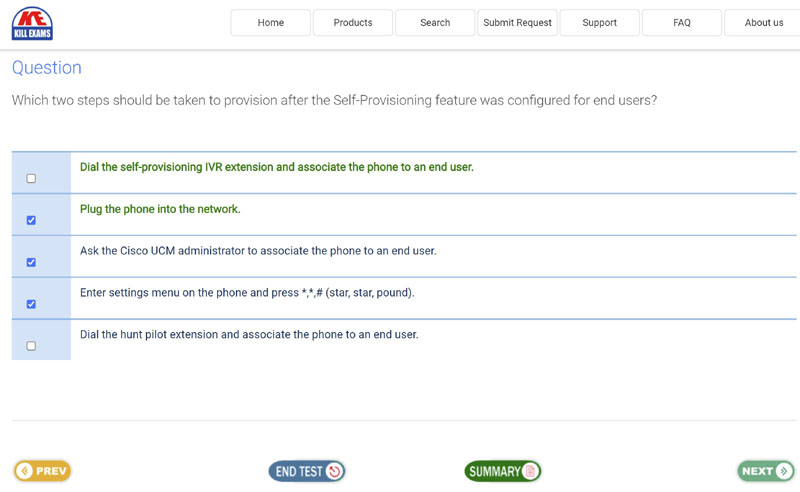
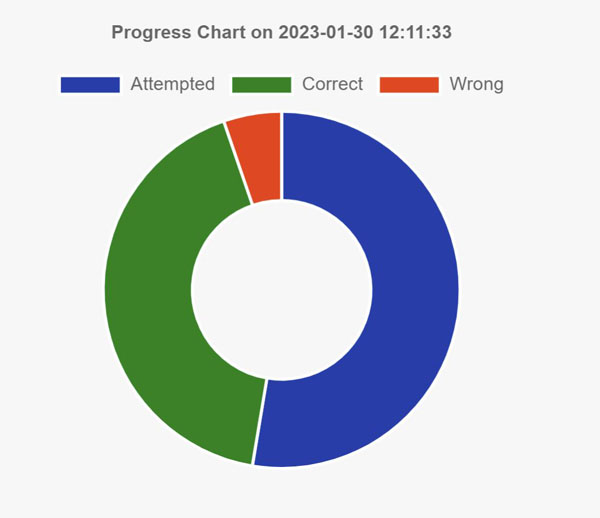
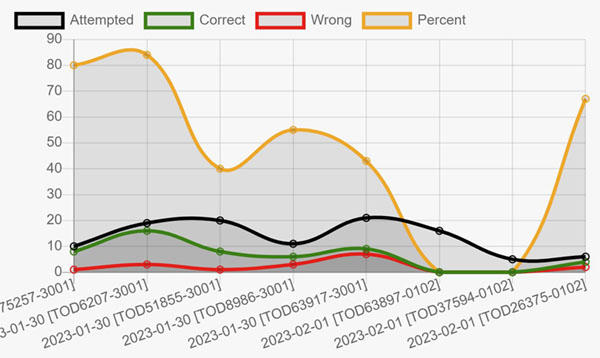
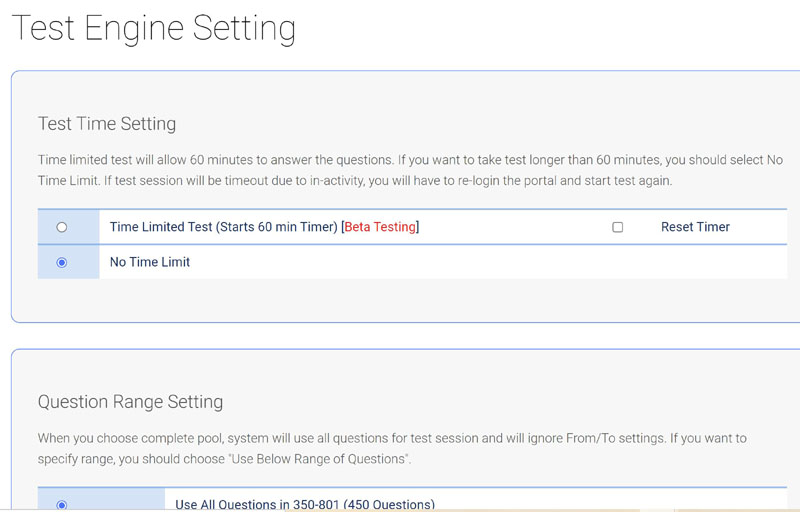
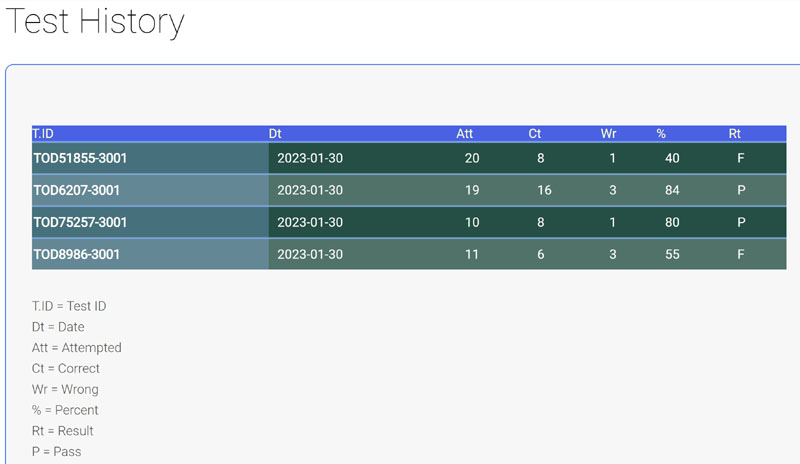
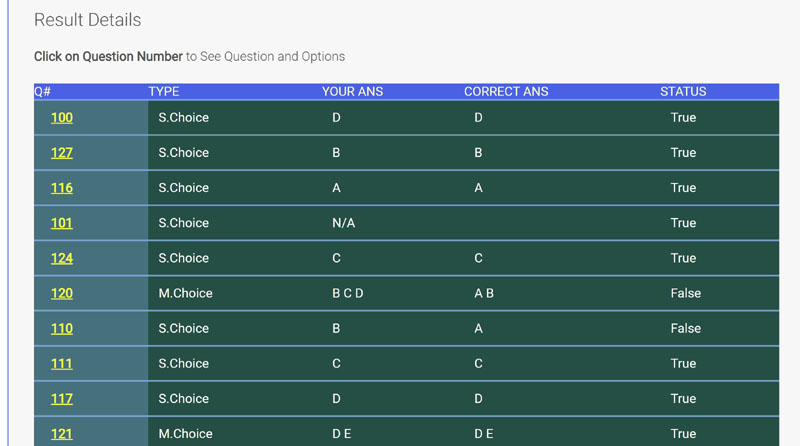
The Online Test Engine maintains practice history, performance summaries, and visual progress reports. Where available, questions may include explanations or reference information to support better understanding of exam topics. Content is reviewed and updated periodically to reflect relevant syllabus changes and maintain consistency with exam objectives.
Desktop Test Engine
| Exam Questions | 1417 (Complete Set) |
| Software Version | 2026 |
| Access | Unlimited |
| Latest Update | November 13, 2026 |
| Access Activation | Instant (5 to 10 min.) |
| Supported OS | Windows (All Versions) |
| Delivery Method | Username / Password |
| Test Engine Trial Software | Killexams Test Engine 2026 |
The Killexams Desktop Test Engine (version 2026) is a dedicated test preparation software designed to support candidates preparing for the ARDMS-SPI exam. The simulator provides a structured desktop based practice environment that allows users to work through exam style questions and review their performance in detail.
By practicing with the Sonography Principles & Instrumentation Exam Simulator, candidates can become familiar with question formats, exam navigation, and time based testing conditions similar to those used in official exams. This experience helps users build confidence across testing environment, time management, exam topics and identify areas that may require additional study.
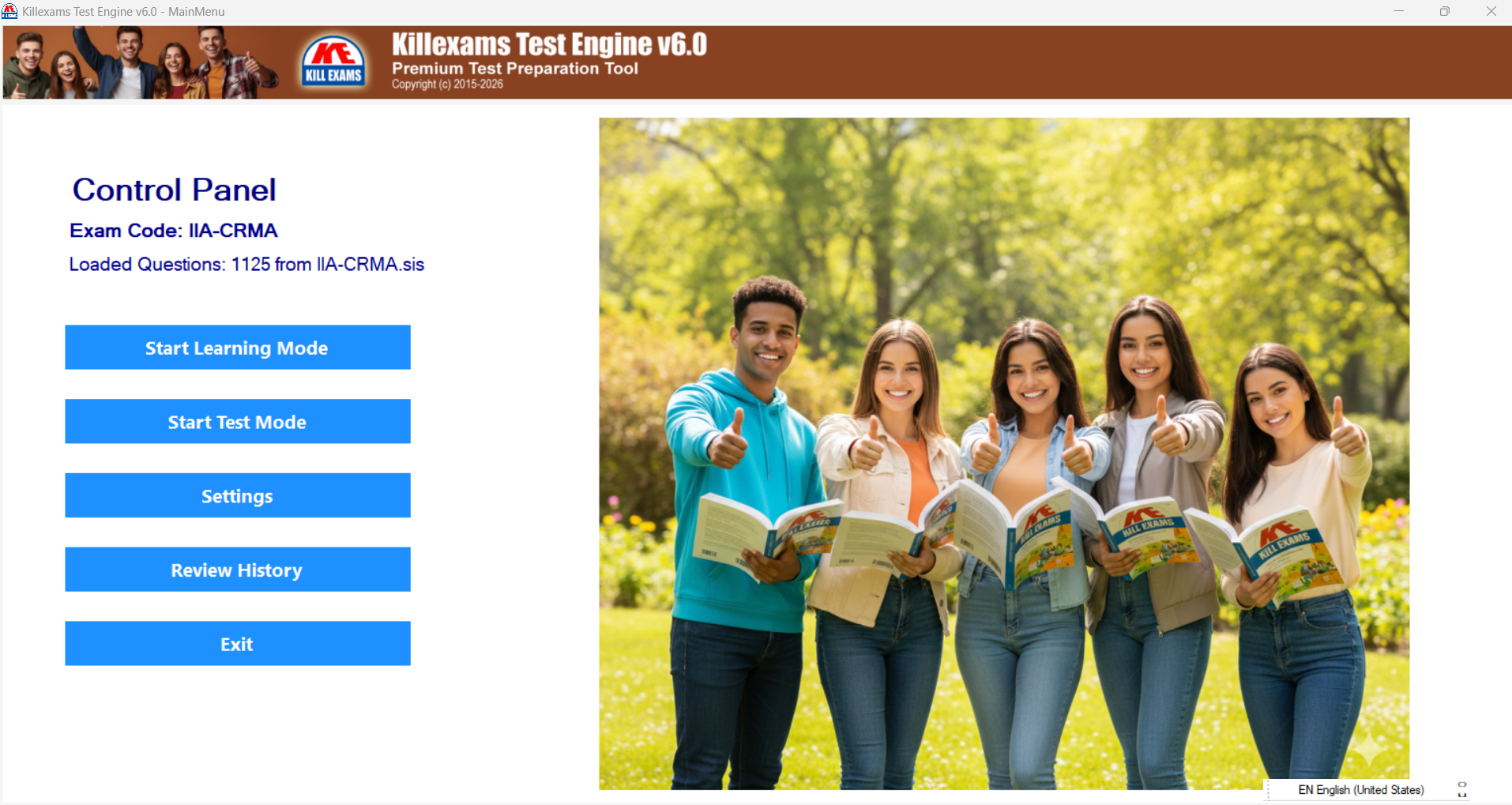
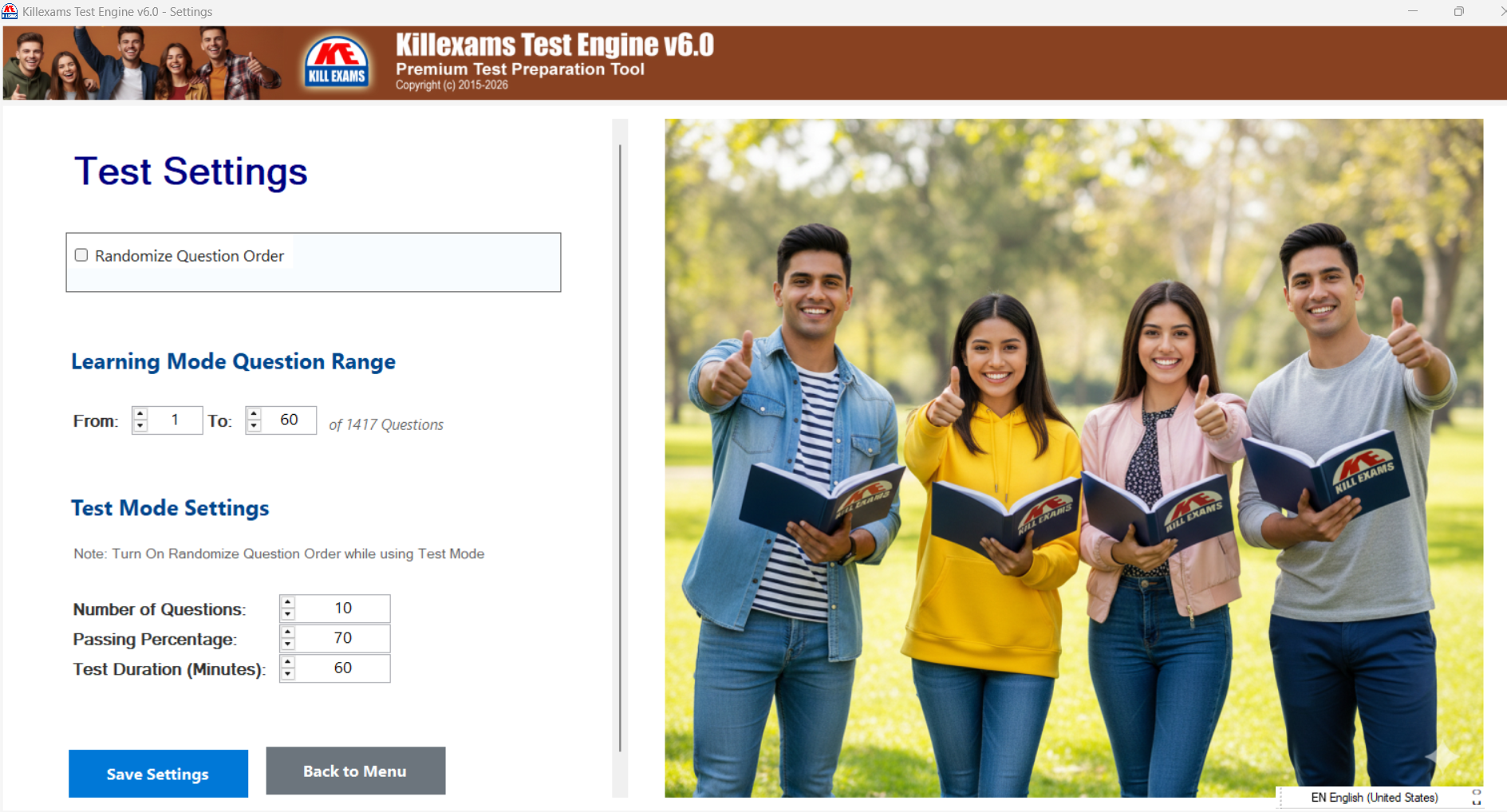
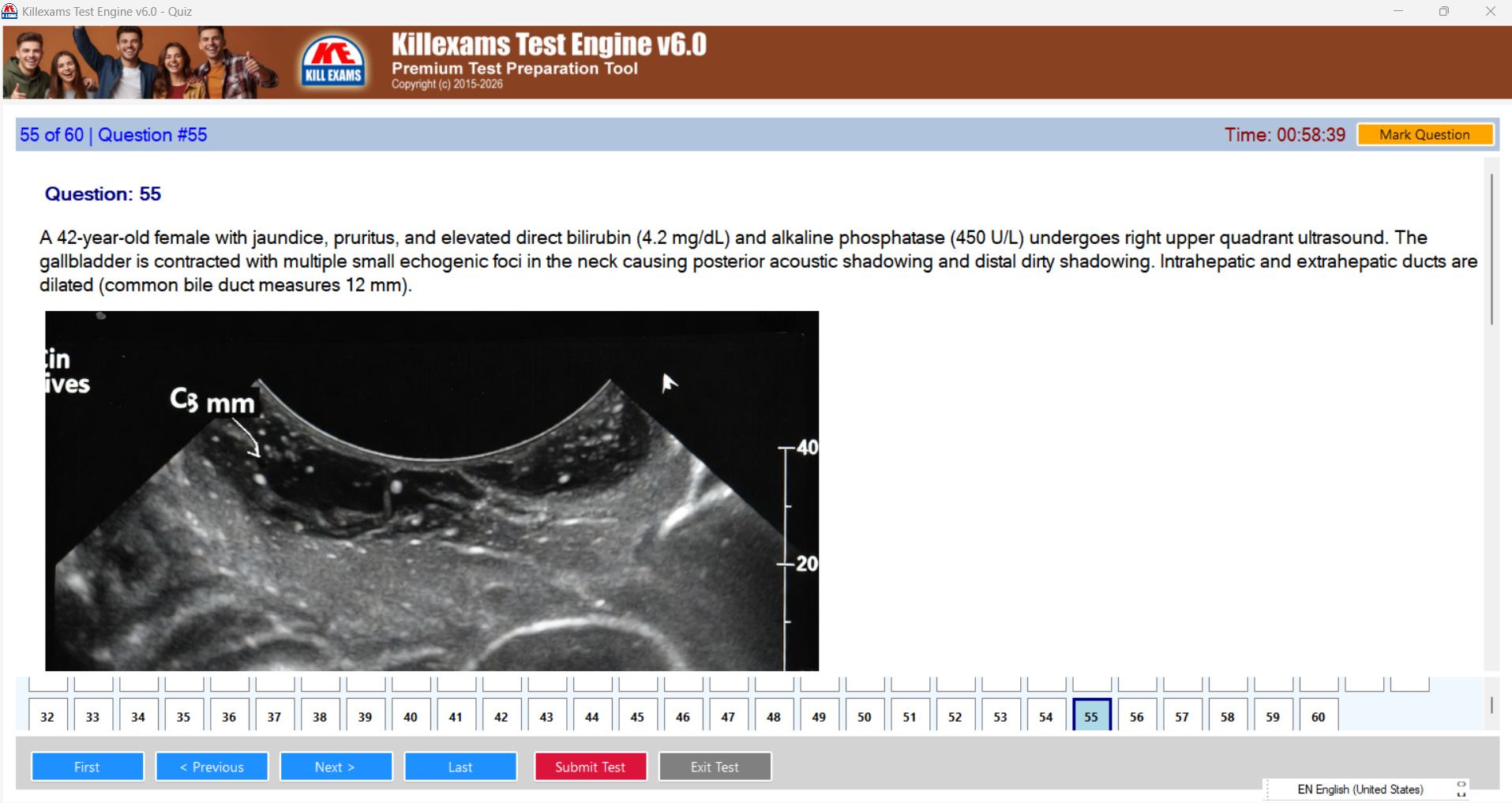
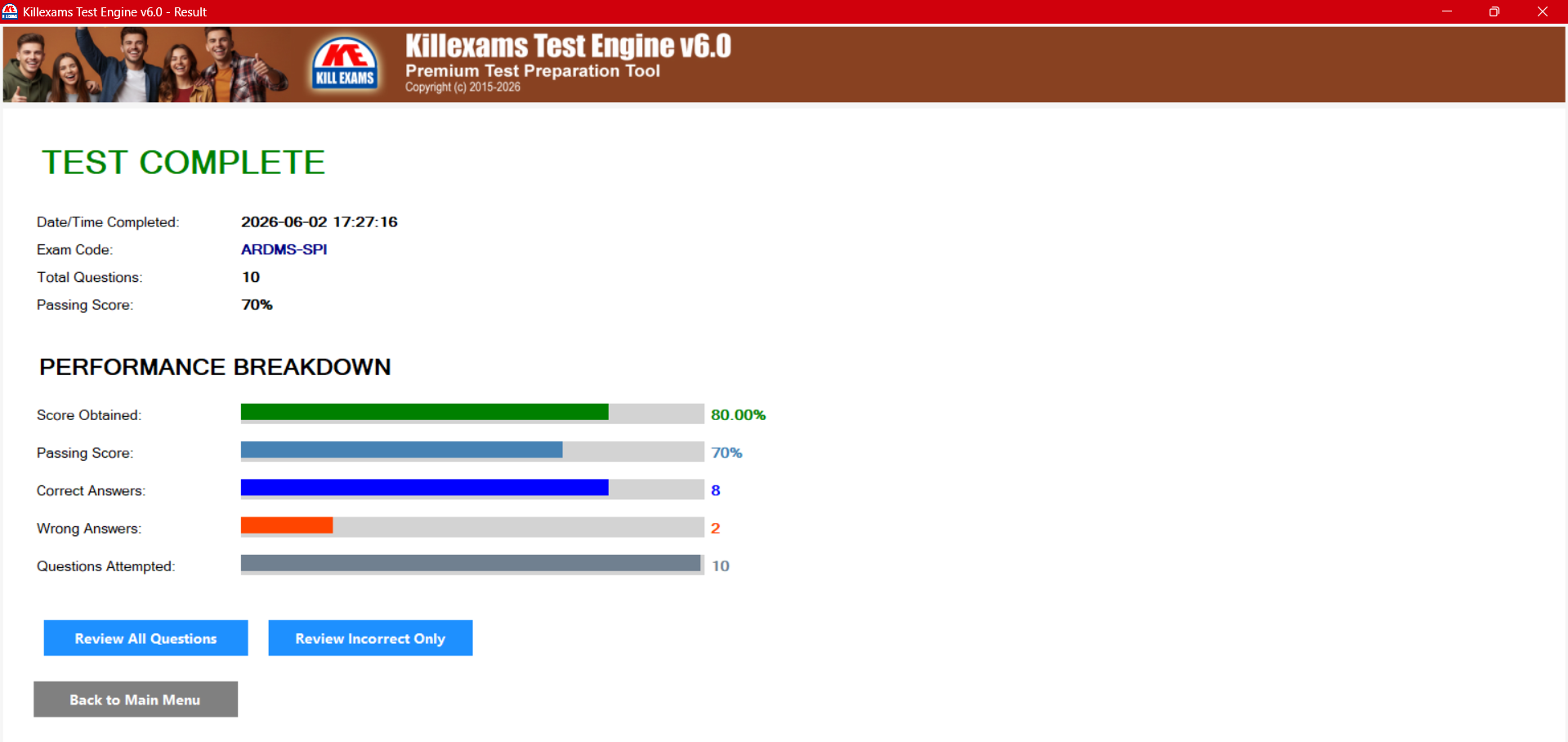

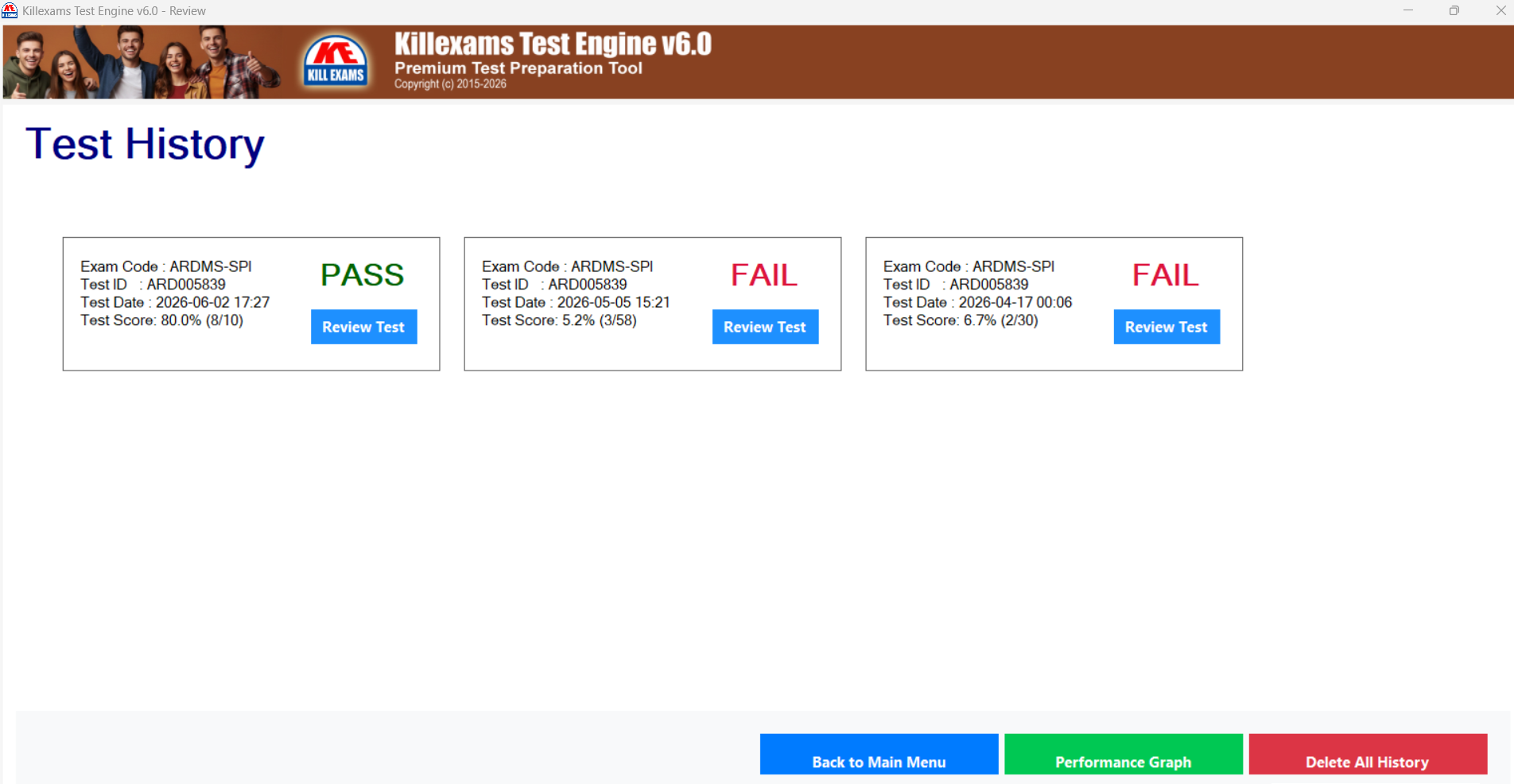
The Desktop Exam Simulator records practice history, performance summaries, and graphical progress reports. Where available, questions may include explanations or reference information to support understanding of correct and incorrect answers. The simulator content is reviewed and updated periodically to remain aligned with current exam objectives and syllabus requirements.
|
3 Months Update
|
6 Months Update
|
12 Months Update
|
|
|---|---|---|---|
What is 3 Months Update?
During 3 months, all future updates in PDF and Test Engine will be provided in your MyAccount with download links. An Intimation email on each update will be sent to you to re-download the updated exam files.
|
What is 6 Months Update?
During 6 months, all future updates in PDF and Test Engine will be provided in your MyAccount with download links. An Intimation email on each update will be sent to you to re-download the updated exam files.
|
What is 12 Months Update?
During 12 months, all future updates in PDF and Test Engine will be provided in your MyAccount with download links. An Intimation email on each update will be sent to you to re-download the updated exam files.
|
|
| Files | PDF / Test Engines | PDF / Test Engines | PDF / Test Engines |
| Premium Access | ✔ | ✔ | ✔ |
| Online Test Engine | ✔ | ✔ | ✔ |
| Instant Download Access | ✔ | ✔ | ✔ |
| Comprehensive Q&A | ✔ | ✔ | ✔ |
| Latest Topics | ✔ | ✔ | ✔ |
| Updated Regularly | ✔ | ✔ | ✔ |
| Portable Files | ✔ | ✔ | ✔ |
| Unlimited Download | ✔ | ✔ | ✔ |
| 100% Secured | ✔ | ✔ | ✔ |
| Confidentiality | 100% | 100% | 100% |
| Syllabus Coverage | Latest | Latest | Latest |
| Any Hidden Cost | No | No | No |
| Auto Renewal | No | No | No |
| Updates Intimation | by Email | by Email | by Email |
| Technical Support | Free | Free | Free |
| PDF Compatibility | Windows, Mac, Android, iOS, Linux | Windows, Mac, Android, iOS, Linux | Windows, Mac, Android, iOS, Linux |
| Desktop Test Engine Compatibility | Windows All Versions | Windows All Versions | Windows All Versions |
| Online Test Engine Compatibility | Mac / Windows / Android / iOS / Linux | Mac / Windows / Android / iOS / Linux | Mac / Windows / Android / iOS / Linux |
ARDMS-SPI Exam Format | Course Contents | Course Outline | Exam Syllabus | Exam Objectives
Exam Name: ARDMS Sonography Principles and Instrumentation (SPI) Examination
Number of Questions: The exam consists of exactly 110 multiple-choice questions.
Time Allotted: Total examination time: 2 hours (120 minutes).
Passing Marks and Scoring System: Primary Result: The exam yields a simple PASS or FAIL decision
Scaled Scoring: In addition to the pass/fail outcome, a scaled score is provided, ranging from 300 (minimum) to 700 (maximum)
Anatomy, Perfusion, and Function 30%
Assess physical characteristics of anatomic structures (normal anatomy, anatomic variants, congenital anomalies)
- Biliary system
- Breast
- Chest
- Liver
- Neck (including: thyroid, parathyroid, salivary glands, lymph nodes)
- Pancreas
- Penis
- Peritoneal cavity (including: stomach, bowel, appendix)
- Prostate
- Retroperitoneum (including: great vessels & branches)
- Scrotum
- Spleen
- Superficial structures (for example: abdominal wall & subcutaneous tissue)
- Urinary system
• Knowledge of normal anatomy, anatomic regions, and anatomic variants
• Knowledge of sonographic appearance of anatomic structures
• Ability to recognize and utilize anatomic landmarks in obtaining and documenting diagnostic images
• Ability to recognize and apply proper scan technique in obtaining and documenting diagnostic images
• Ability to recognize, evaluate and document congenital anomalies
Assess perfusion and function of anatomic structures
- Biliary system
- Chest
- Liver
- Neck (including: thyroid, parathyroid, salivary glands, lymph nodes)
- Penis
- Peritoneal cavity (including: stomach, bowel, appendix)
- Prostate
- Retroperitoneum (including: great vessels & branches)
- Scrotum
- Spleen
- Superficial structures (for example: abdominal wall & subcutaneous tissue)
- Urinary system
• Knowledge of normal vascular anatomy and hemodynamics
• Ability to recognize appearance of normal vascular flow patterns
• Ability to recognize and utilize anatomic landmarks in evaluating and documenting perfusion and function
• Ability to recognize and apply proper scan technique in evaluating and documenting perfusion and function
Pathology, Vascular Abnormalities, Trauma, and Postoperative Anatomy 42%
Assess anatomic structures for pathology
- Abdominal wall for hernia (for example: ventral, inguinal, incisional)
- Adrenal glands for masses, hemorrhage, etc.
- Biliary system for infection, masses, metastatic disease, obstructions, etc.
- Breast for infection, abscess, masses, etc.
- Chest for fluid, masses, etc.
- Gastrointestinal system for masses, obstruction, pyloric stenosis, intussusception, etc.
- Joints for abnormalities (for example: fluid)
- Liver for hepatitis, fatty infiltration, cirrhosis, neoplasm, abscess, cyst, etc.
- Neck (including: thyroid, parathyroid, salivary glands, lymph nodes) for diffuse parenchymal disease, inflammation, masses, etc.
- Pancreas for infection, masses, obstruction, etc.
- Penis for abnormalities
- Peritoneal cavity (including: stomach, bowel, appendix) for fluid
- Popliteal fossa for abnormalities (for example: masses, fluid)
- Prostate for parenchymal disease or masses (for example: benign prostatic hypertrophy)
- Retroperitoneum (including: great vessels & branches) for fibrosis, lymphadenopathy, etc.
- Scrotum for fluid, hernia, masses, infection, parenchymal disease, etc.
- Spleen for splenomegaly, parenchymal changes, masses, etc.
- Superficial structures (for example: abdominal wall, subcutaneous tissue) for foreign bodies, infection, fluid, masses, etc.
- Urinary system for masses, obstruction, parenchymal disease, infection, etc
• Knowledge of etiology/pathophysiology of abnormal perfusion and function
• Ability to recognize ultrasound findings related to abnormalities of anatomy, perfusion, and function in obtaining and documenting diagnostic images
• Ability to recognize and apply proper scan technique in evaluating and documenting pathology
• Ability to recognize foreign bodies, infection, fluid, masses, etc.
• Knowledge of hernia types and their sonographic appearance
Assess anatomic structures for vascular abnormalities
- Liver for Budd-Chiari syndrome, arteriovenous fistula, portal vein thrombosis, collateralization, etc.
- Retroperitoneum (including: great vessels and branches) for aneurysm, dissection, thrombus, etc.
- Scrotum for torsion, varicocele, etc.
- Spleen for infarction, hemangiomas, etc.
- Urinary system for renal artery stenosis, arteriovenous fistulas, etc.
• Knowledge of anatomic and vascular changes associated with vascular abnormities
• Knowledge of sonographic findings associated with vascular abnormalities
• Ability to recognize and apply proper scan technique in evaluating and documenting vascular abnormalities
Assess anatomic structures for trauma-related abnormalities
- Hepatic system • Knowledge of sonographic appearance as a result of trauma
- Penis
- Scrotum
- Spleen
- Superficial structures (for example: abdominal wall, subcutaneous tissue)
- Urinary system
- Focused assessment for free fluid related to traumatic events
• Ability to rapidly prioritize and evaluate sonographic findings due to trauma
• Ability to perform focused assessment for free fluid following a traumatic event
• Ability to recognize and apply proper scan technique in evaluating and documenting trauma
Assess aspects related to postoperative anatomy
- Anatomy of transplanted organs • Knowledge of hemodynamics of transplanted organs
- Perfusion and function of transplanted organs
- Complications related to organ transplants
- Abnormalities in postsurgical anatomy • Ability to adjust scan technique based on patient condition and surgical history
- Abnormalities in postsurgical breast
- Abnormalities (for example: recurrent disease, lymphadenopathy) in postsurgical neck
- Implanted medical devices (for example: transjugular intrahepatic portosystemic shunt [TIPS])
• Ability to distinguish characteristics of common anastomosis sites
• Ability to recognize fluid collections
• Ability to interpret and integrate surgical history with sonographic findings
• Knowledge of surgical procedures used in organ transplant
• Knowledge of surgical zones of the neck
• Ability to evaluate and document findings within surgical zones of the neck
• Knowledge of patterns and sonographic appearance of disease recurrence
• Ability to evaluate transjugular intrahepatic portosystemic shunts (TIPS)
• Ability to recognize and apply proper scan technique in evaluating and documenting postsurgical findings
• Knowledge of common causes of transplant failure
• Ability to recognize signs of rejection
Abdominal Physics 8%
Apply concepts of equipment/image optimization
- Use appropriate transducer (for example: curvilinear, linear, phased array)
- Use two-dimensional, real-time, gray-scale imaging (for example: B-mode, compound, harmonic)
- Use Doppler (for example: color, power, pulsed wave)
• Ability to select the appropriate transducer and machine presets based on body habitus
• Ability to use acoustic windows creatively to optimize visualization
• Ability to adjust machine settings to maximize penetration while minimizing resolution loss
• Knowledge of appropriate application of Doppler techniques
• Ability to manipulate color, power, and pulsed wave settings to accurately display and measure blood flow
Apply concepts of imaging artifacts
- Assess artifacts of gray-scale imaging (for example: shadowing, resonance, comet tail)
- Assess artifacts of Doppler imaging (for example: twinkle, spectral broadening)
• Ability to recognize artifacts and correlate them with anatomy and pathology
• Ability to manipulate machine settings to enhance or minimize artifacts
Clinical Care, Practice, and Quality Assurance 20%
Incorporate clinical data with performed study
- Assess indications for examination requested
- Evaluate images from other imaging modalities (for example: computed tomography, magnetic resonance imaging, nuclear medicine, x-ray)
- Assess relevant clinical lab values for examination being performed
- Assess relevant family history and patient signs/symptoms for examination being performed
- Correlate ultrasound findings with previous imaging results
• Knowledge of appropriate indications and contraindications for a specific exam and/or procedure
• Knowledge of potential effects of patient medications on an exam or procedure
• Knowledge of lab values relevant to specific examinations
• Ability to obtain and evaluate patient history relevant to the exam
• Ability to assimilate patient’s signs and symptoms and modify the exam/or describe the findings
• Ability to modify the exam based on information from other modalities
• Ability to localize pathology for sonographic correlation
• Ability to modify the exam based on real-time findings
• Knowledge of modalities associated with the exam being performed
• Ability to utilize resources, such as physicians, literature, or peers
Incorporate clinical standard/guidelines with performed study
- Communicate effectively with the patient, physician, and others, including communication of findings that require immediate action
- Inform patient or referring practitioner of examination preparations (for example: fasting for biliary imaging)
- Maintain and protect patient confidentiality/privacy
- Modify the examination based on patient condition and/or sonographic findings
- Use multiple patient positions and scan planes to evaluate anatomic structures
• Ability to communicate with patient in a professional and appropriate manner to effectively explain procedures, deal with inappropriate behavior, and
engage patient cooperation • Ability to communicate using appropriate medical terminology
• Ability to modify exam preparation, patient position, and/or image acquisition based on patient condition and/or sonographic findings
• Ability to recognize findings and/or situations that require immediate action and respond effectively
• Knowledge of appropriate patient preparation for an exam and knowledge of factors that may affect patient preparation (for example: patient history, patient condition, sequencing requirements of multiple modality exams)
• Knowledge of sonographer scope of practice and regulations regarding patient information and interactions
Obtain accurate measurements
- Obtain measurements of anatomic structures • Knowledge of normal measurement ranges
- Obtain measurements of Doppler waveforms
• Knowledge of proper techniques for measuring anatomic structures
• Knowledge of hemodynamics
• Knowledge of normal and abnormal Doppler waveforms
• Ability to analyze Doppler measurements
• Ability to distinguish artifacts from actual blood flow
• Ability to apply knowledge of measurement techniques (for example: Doppler and gray-scale)
Assist/support during procedures
- Obtain consent form and patient lab results prior to the procedure
- Provide ultrasound guidance for procedures
- Evaluate for post-procedural changes/complications
• Knowledge of sonographer's role in obtaining consent
• Ability to verify and document patient consent
• Ability to verify correct patient, side (laterality), and site
• Knowledge of contraindications for specific procedures
• Knowledge of proper safety precautions in interventional procedures
• Knowledge of equipment and materials used for a specific procedure
• Knowledge of interventional procedures and sonographer's role
• Knowledge of protocols during surgical procedures, related to the sonographer's role
• Ability to adapt protocol due to different circumstances
• Ability to optimally display the needle path and tip
• Ability to recognize implanted medical devices
• Knowledge of potential post-procedural complications
Reviews (10)4.40 Overall
★★★★★
40%
★★★★
60%
★★★
0%
★★
0%
★
0%
|
Submit ReviewYou must be logged in to submit a review. Sign In to Submit Review |
Customer Reviews
FAQs about ARDMS-SPI Practice Test
| Question: Can I still use the ARDMS-SPI PDF and Desktop Exam Simulator if my killexams account expires? Answer: Yes, You can use PDF and Desktop Exam Simulator after your account expires. There is no expiry of ARDMS-SPI PDF and Desktop Exam Simulator that you have already downloaded. Killexams exam PDF and Exam simulator keep on working even after expiry but you can not download updated test files after your account expires. But the previous one keeps on working. And there is no limit on several times you practice the questions. |
| Question: If I do not use my account for several months, what happens? Answer: Killexams.com does not ask you to log in to your account within a specified period to make it work. You can log in to your account anytime during your validity period. If you do not need to login, it will not be blocked or suspended due to less activity. |
| Question: Do you recommend me to use this reliable resource of the latest ARDMS-SPI practice test? Answer: We highly recommend these ARDMS-SPI exam questions to study and master before you go for the ARDMS-SPI certification exam because this ARDMS-SPI question bank contains up-to-date and fully verified ARDMS-SPI exam preparation materials with the new syllabus. |
| Question: The same questions, Is it possible? Answer: Yes, it is possible. These exam questions are developed according to official exam objectives, making them sufficient for your preparation. While textbooks provide broader context, these questions focus on the certification requirements. |
| Question: The same questions in the ARDMS-SPI exam, Is it possible? Answer: Yes, It is possible and it is happening. Killexams take these questions from Question Bank sources, thats why these exam questions are sufficient to read and pass the exam. Although you can use other sources also for improvement of knowledge like textbooks and other aid material these questions are sufficient to pass the exam. |
| Question: How many months I will be able to download the latest questions? Answer: You can choose from 3 months, 6 months and 12 months download accounts. During this period you will be able to download your ARDMS-SPI practice test as much time as you can. All the updates during this time will be provided in your account. |
| Question: Is passing exam in first attempt really works? Answer: Yes, It really works. ARDMS-SPI Questions and Answers provided by killexams are taken from question bank. You need to just download and read these ARDMS-SPI exam preparation material. We recommend you to take your time to study and practice ARDMS-SPI practice test that we provide, until you are sure that you can answer all the questions that will be asked in the ARDMS-SPI exam questions. For this visit killexams.com and register to download the complete question bank of ARDMS-SPI exam exam preparation material. These ARDMS-SPI exam questions are taken from official sources, thats why these ARDMS-SPI exam questions are sufficient to read and pass the exam. |